Showing posts with label Game. Show all posts

Tuesday, April 16, 2013

Shall we play a game (part III) - Demographics and Hidden Curriculum

In the first part of the series we explored Game Goals and how they influence the educational impact.
http://geekreflection.blogspot.com/2013/04/shall-we-play-game-part-ii-why-game.html
After today, there is probably about one more post in this series, namely because I am hoping to share feedback that I have received from teachers and gamers about the series so far, but it may take a back seat to my need to rant about PARCC tech requirements soon. Fair warning.

People are not Lemmings:
Considering the Demographics of Gamification

Popular Puzzle Platform Game Lemmings challenged players to solve
the puzzle before the lemming followed each other to their doom.
In the last post, we dissected the millions of hour played by gamers in the United States and distinguished the games by type, noting that the educational value, particularly what is noted in the research, refers to specific types of games that make up a portion of the games that are a) played or (as some have pointed out on social media) b) may be appropriate to be advocated in a school.

Additionally, there is a lot of data being collected about how different types of games appeal to different people. Genre preferences have been noted with regard to age, access to computers, and family income.  Some of the best data has been scraped from Facebook by the folks at Data Genetics regarding gameplay by age and gender (from 2010):

Call of Duty 4, a First-Person Shooter style game with a strong collaborative component (local or over the internet) is one of the strongest gender-biased games tracked, with over 92% of players being male. Conversely, the infinite matching game Bejeweled Blitz is a casual game that flips the demographic to almost 80% female. Similar analysis shows that changing the subject or theme of the game (but keeping similar mechanics) only slightly shifts the demographics. Casual games tend to trend female (although there is cross-gender appeal) while non-casual games heavily favor male interests.

Thus, as we begin to consider educational technology that leverages the "gaming" label, we have to understand that not only are games not created equal in terms of mechanics and desired skills, but that the appeal of certain games will not be universal in the classroom. Simply put, just because it is a "Game" does not mean that every student will be drawn to it like killer robots to surviving humans (ROBOTRON 2084, how i loath thee)


It's A Secret: Identifying the Hidden Curriculum when It is All Hidden

In the last post, we identified game genre by mechanics. Mechanics are important because that is what you DO in the game (hence, that is the skill that is developed through practice). We have also noted that mechanics is a huge driver in terms of appeal to various demographics. But it is important to note that mechanics is only a part of the overall game. Games are comprised of characters, setting, and in many cases plot and theme. These story elements are the subject of our next consideration.

Most people going through a traditional education program get exposed to the deconstructionists and their ideas of the hidden agenda. I remember in 3rd grade getting new textbooks that suddenly had names of Hispanic origin and girls playing dress-up as doctors and lawyers. A hidden curriculum that had revolved around Caucasian dominance and stereotypical gender roles in the workforce was being, at least, partially addressed in my Grammar textbook.

"Gaming-as-Learning" is full of hidden agendas. In fact, it is even marketed as such. How many ads have been in recent flyers/vendor halls/edtech magazines with catch phrases like "She won't even know she's learning" -- At the point that we have to keep the idea of learning under a bushel, our ears should begin to perk up.

Interlude: A Fashionista Nightmare
My 10 year old was playing a game on her phone (Top Model - Correction: I was informed by my now 11 year old that the game was actually TOP GIRL - The fact that both of these games are in my app store is sad) with a consistency that I found disturbing.  It was a casual game where the player took on the role of a fashion model. While the initial concern was one of screen time, when we sat down with our daughter, she began to describe the game-play:
A Casual Game with a Message -
Just the wrong one
  • When models were doing a photoshoot, they were judged based on the STYLE of clothing, skimpier the better - points awarded accordingly
  • After the photoshoot, they have to run down and get food. If they spend money on SANDWICHES instead of COFFEE and CELERY, they will gain weight and not fit in the clothes worth the most points.
  • In order to avoid paying real money for "upgrades", you may need to rely on your BOYFRIEND who was also able to sit in judgment based on weight, attitude, style, etc.
In discussion, my daughter was able to identify the game mechanics that she liked (choices, casual play, achieving goals, virtual interaction with characters), but did not pick up on the messaging until it was drawn out. The discussion continued as we identified traits in herself and her friends that the game was reinforcing or discouraging. After a long discussion, sometimes awkward discussion, she removed the game from her phone (and discovered the SIMS)
End Interlude

Teachers who use educational games are conveying messages beyond the skills taught in the classroom. Hidden agendas can be as simple as the choice of badge (candy vs. smiley faces) for correctly solving a math problem, the amount of violence and gore that is acceptable in the name of strategic gameplay, or stereotypes that may be present in any number of plot lines.The content of the game can convey messages more effectively than passive worksheets or textbooks ever could for the same reasons that gaming itself is so persuasive -- behavior is modified to accomplish the goals -- in other words, students are taught to ACT differently based on game cues!

But there is an opportunity here: Schools, classes, teachers, and students should be encouraged to approach
the game as a subject for study as well as a tool for skill development or an amusing distraction. At some level, we have to be cautious that we are not letting bad messages get the official school seal-of-approval. But we should also use the games as artifacts for deconstruction. By teaching students to ask critical questions about story and mechanics and feedback, we teach them much more about critical thinking than they might be exposed to when deciding if the best way to kill the pig is with the red bird or the blue one (although to be fair, the red one can carry a light saber).


Up Next (final part???):

  • Creativity vs. Linear Gaming - The MineCraft Effect
  • Gamers' Views on Classroom Gaming


Friday, April 12, 2013

Shall We Play A Game? part II - Why Game Mechanics Matters


wow. Response to the last post has been impressive. thanks for the comments and feedback on part I (Gaming goals and Profit Motive). Let's keep it going...

Where in the World... are All These Gamers
Carmen Sandiago constantly reinvents itself for new ages
Jane McGonigal tells us there are 3 Billion hours of games played per week worldwide (183 million hours in the US). In her TED talk, she rightly calls this number of hours a parallel curriculum of learning. #Edtech vendors use this number to convince schools that "...students will WANT to do it!".

But before we spend more money on educational technology, lets press pause on on the purchase order and deconstruct that impressive number a little bit. Not all games are created equal.

Avoiding Dysentery: Thoughts on Game Mechanics
Recent Shirt sold on Woot.com pays homage to THE OREGON TRAIL
Game mechanics are the sets of rules, human actions, and game responses that make up the game (I am simplifying, you can get really in-depth here). The more complicated the mechanics, the more complicated the game. Conversely, CASUAL GAMEs are those with simple mechanics, lots of repetitive action, and low  time-investment.

Information from the Casual Games Association indicates that in 2010, 26 million people spent $6 billion dollars on games played on phones, tablets, Facebook and computers. According to NewZoo, this accounts for 39% of all that game time in the US (2011 Report).

Understanding Mechanics

Brick/Breakout Games
One of the earliest Atari video games, Breakout, provides a good example identifying game
mechanics. The basic design of the game is a series of "bricks" at the top of the screen that can be removed by a ball that crashes into it. The player moves a bar at the bottom of the screen to left or the right to bounce the ball into the walls or top of the screen. If they player misses the ball, it travels off the bottoms of the screen. Simple, right?

Game Mechanics:
  • Hand-eye coordination. User must able to sync hand/finger movements with visual cues
  • Elementary Physics (reflection). User should predict where a ball will travel after hitting an object
  • Mechanical operation: Move Joystick Left. Move Joystick Right.
Peggle from PopCap is a new version
of a Brick Style ARCADE Game
While game elements get more complicated (different shapes, obstacles, speed of the ball, etc.), the basic mechanics do not change. This style of game and mechanics is part of the ARCADE GAME GENRE. A person could (and from personal experience, actually has) spend hundreds of hours attempting to master Brick-style arcade games in all of their forms. 

But the questions for educators, and this is important, is what skills or knowledge can be gained from this combination of Game skills (shift left, shift right); Required thought (if the ball bounces here, where will it end up?), and goals (clear the screen). Because, while thousands of hours were spent playing PEGGLE in the last two years, it has limited educational value (yes, Devil's Advocate, there are some limited applications in physics/science as well as as basic computer familiarity).


Trivial Compute: A very popular education game when the genre was first being developed was WHERE IN THE WORLD/USA/TIME IS CARMEN SANDIEGO?. This game was popular enough to spawn a game show, a theme song, a cartoon, and a love-interest meme with WHERE'S WALDO?

In the original version of this game, players were investigators in pursuit of a band of criminals. Investigators would find clues that would allow them to find move from location to location until a criminal (including the ever-elusive Carmen) could be captured.

Original Game Mechanics:
  • Mechanical Operation: multiple choice selection
  • Knowledge/Memory/Note Taking: Clues and locations would repeat over the course of game play.
  • Research: Indexing, Keywords, Topic selection, etc. (one of the cooler elements of the original game was the inclusion of an old school Almanac used to find the answers to the clues left in the game).
Obviously, this game was conceived, marketed, sold, and played with an educational intent. It was one of the earliest examples of educational gaming. There was an inherent advantage in a player learning the answers to the geographical trivia questions that were asked through the form of (relatively simple) clues.

Another appeal was the lack of dexterity controls. While some people enjoy the need for fast or repetitive or complex button/joystick combinations (say it with me, geeks: UP UP DOWN DOWN LEFT RIGHT LEFT RIGHT B A Start), it is not for everyone.

It just keeps going...
Temple Run - It Just Keep Going: TEMPLE RUN is an example of a Never-Ending CHASE game (aracade genre) It was one of the most popular casual games of the last few years. It is a game that is high in timing, coordination, and reflexes. There are about three patterns to learn (the most complicated being: When the game gets too fast, "trip" over a branch to slow it down).

Game Mechanics:

  • Rapid Hand-Eye Coordination
  • Endurance
  • Mechnical Operation: Tilt left, Tilt right, Swipe Up, Swipe Down, Tap*

*the Tap feature is used to activate bonuses which can be "bought" with either game-earned points or real money

A Battle Screenshot from WoW: Cool graphics and lots of
Data to process and use
WOW - Another World of Gaming Complexity: The game referenced most often in the academic literature on Gamification is WORLD OF WARCRAFT. This game took elements of a number of genres including ADVENTURE (solving puzzles and increasing levels of complexity/challenge with experience), ACTION/ARCADE (control button patterns), FIRST PERSON SHOOTER (Targeting, selection, tactics), MUDs/Multi-User Domains (collaboration, teamwork, communication) and created a new type of immersive experience, The Massively Multi-player Online Role Playing Game (MMORPG).

Within this highly graphical system, players start with simple tasks and constantly "level up" by completing more and more complex quests that involve a variety of cognitive, collaborative, and strategic skills. Critical thinking is employed at every stage from quest selection to completing minor tasks to complete larger goals to planning multi-player attacks against enemies (both computer generated and other player).

This game genre is cited for both its complex multi-skill development and its tendency to lead to hours of (admittedly obsessive) game play.  Feedback is given to players in the form of computer-generated "Experience Points", new places and people to explore, and comments (of varying levels of appropriateness and geniality) from other players. The MMORPG genre is the ultimate prize in terms of development of complex and higher order thinking skills, investment of will and effort, and its ability to utilize real applications of communication and collaboration.


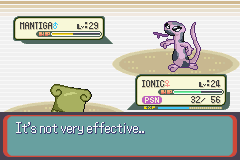
On Reflection: Regarding 10,000 hours, It's Not Very Effective

When evaluating educational gaming software, we need to avoid falling for the millions-of-hours hype that implies all games are created equal. One way to do this is to think about what our goals are for the classroom and how the experience of a game (or a lesson or a unit) will help us achieve those goals.

Many gamify--the-classroom fans like to quote Gladwell's idea from Outliers: The Story of Success about 10,000 hours. His claim is that if one practices a particular skill for 10,000 hours, one can become proficient. But for every World of Warcraft, there is a Tiny Castle. For every Carmen Sandiego there is a Temple Run. While many kids (and adults) have spent a good percentage of their 10,000 requisite hours becoming proficient at the game...at the end of the day they have mastered finger-swiping.

And that isn't even on the test.


Up Next:
Player demographics vs. Game genre; hidden agendas; creative vs. linear

References:
Most popular games of all time
Wikiepedia - Game Genres
Nielson 2009 Report on Casual Gaming

Tuesday, April 9, 2013

Shall we play a game? (part I) -- A Gamer's Initial Thoughts on #edtech Gamification


Ready Player One: Preparing for a Buzzword
A must read for Gamers
I can still recall sitting in my bedroom with the glow of a screen from the second level of Zelda. It was late, but I had pizza and Tab and a whole night ahead of me. I decided right then: Straight Through. No Break. No Dying. -- Time to save the princess.

So when I hear about the Gamification of learning, particularly from those who are passionate about the ability that it could have to transform the educational landscape, I become excited. If the same drive and will and energy that led me through those agonizing levels to defeat Gannon could be harnessed for the power of educational good -- EPIC WIN.

But as I begin to see "Gamification" making the same transition from innovative classroom technique to Edu.Vendor buzzword -- the same transition that "personalized" and "flipped classroom" made -- my excitement begins to slowly drain. My hyperkinetic eye movements (Pacman) and giddy shout of triumph (the first time I got Mario to bounce the turtles for 100 extra lives) are replaced by a sick feeling in the pit of my stomach: The sound of approaching doom ("I am SINISTAR")

It is thus with a nostalgic and hopeful mindset that I cautiously offer this multi-part prelection before I throw myself into Gaming as a tool to teach digital citizenship*:

*Note: Gamification encompasses a lot more than educational software and really a lot more than education in general. I am consciously limiting my focus for the purpose of this post.

Rescuing the Princess: Thinking about Goals
Gamers will go a long way for a goal
At the heart of gaming is a goal. It is this goal, and its similarity to a student's learning objective, that makes gamification appealing in the first place. After all, if a student will work voluntarily for hours to accomplish a virtual princess rescue, just imagine what we could pull off if we redirected it?

But goals are tricky things. First, they are only one part of a larger gaming landscape (we will cover other parts in the next post). A game can be burdened with a terrible ending, but can be overcome by excellent game mechanics (classroom activities) or even social features and scoreboards (group work, classroom leader boards).

Good game designers consider intermediate and long range goals carefully as they construct the overall product. The Gamification movement is about using built in structures such as rules and feedback loops to generate continued interest in the face of difficulty and challenge.

Simply saying "win the race by solving these math problems quickly" is not enough to qualify as an educational panacea, no matter how much you advertise the educational value of this particular prize. No virtual smiley faced "Badge" is particularly transformative in the long run. We have always known that kids love stickers and show them off with glee and pride.

Simply, there has to be a careful consideration about the GOAL OF THE GAME beyond THE GOAL AT THE END OF THE GAME. 


WOULD YOU HELP ME PLANT A PUMPKIN?:
The Other Goals of Gaming

There are also a number of "goals" at play in the big-picture of game-design that have little to do with saving the princess, but a lot to do with how the game is designed, marketed, played and replayed.

Interlude: Building a Tiny Castle
A casual game that leverages impatience to encourage spending
A new breed of game came along with social media websites that took "casual" to a whole new level. The goal of these environmental games might be to plant an attractive garden or build a farm. The ultimate goal though, is to get you to spend money.

In one version of this game-type, Tiny Castle, players are given extremely linear "quests". These quests might be to clear a forest, plant a specific type of tree, create a new species, or upgrade the castle. Each quest takes one or more of the essential game elements: food (to feed creatures), magic (to get rid of fog...just go with it), wishes (to become more powerful) and TIME. Lots and lots of real, one-second-at-a-time, TIME.

As we perform an analysis on the game mechanics, it would be easy to argue that the game could be an excellent way to develop time management skills and patience (i.e., if I set half of my denizens to work on a 3 hour goal and the other half to work on another 3 hour goal, I can finish two goals at the same time that will both be ready the next time I "check-in"). However, a careful look reveals a darker unstated goal. The most efficient way to grow fruit, gather dust, etc. is to be constantly plugged in, refreshing the mechanical action - strategy is replaced by repetitive clicking. Delayed gratification (setting things up and walking away) is discouraged by the game mechanic.

Know what constant clicking is? BORING!

So at any point a player can choose to supplement any of the slowly accumulating supplies by making an "in-game" purchase with real money. A player can even speed up an hours long building of a renovated castle with a wish/hour (and there are even "special sales" on wishes). To make matters worse, some of the QUESTS are completed by "making a purchase of new wishes" (but you know, the first taste is free).

Far from developing any sort of real-life transferable skill, the game discourages serious players from thinking of the game in that fashion. Even the in-game objectives lay the real objective bare: spend more real-life money on make-believe stuff.
End Interlude

While there are a number of people working on gamification (computer based and otherwise) who are passionate about learning and transformative classrooms, this prelection is a cautionary about what happens when the learning technique becomes "buzzworthy". I remember when I hit the vendor floor at ISTE last year and saw Interactive Whiteboard and Furniture vendors explaining how their equipment would help you "flip" the classroom.

The vendors are attacking "gamification" with a vengeance. We as educators need to be familiar with the strengths of Gaming before we are sold another in a long list of goods that have as much educational value as Treasure Chest of Apples or a new horse for a make-believe farm.

Up Next: 
Feel free to add, critique, comment, revise. This is relatively uncharted territory for this old school gamer and my thoughts are in flux.

Special thx to @40ishoracle (her latest post on collaboration rocks). She is the one who turned me onto Jane McGonigal, who is advocating games to save the world