Wednesday, July 10, 2013

Making Sure the Juice is Worth the Squeeze: A #BbWorld13 Rant

MMM. so much work
My wife has a simple rule about eating. She refuses to eat food, no matter how good it tastes, that is not worth the effort. No crab legs; no lobster. Fresh squeezed orange juice? right out. This typically works to my advantage since i get to look like a superhero just by cracking a lobster tail for her.


This thought was going through my head this morning as I started to reflect on the conversations that I had yesterday evening entering the vendor fair. If you have not been to one of these conferences, it is a sight to behold -- booths from all of the big names in Educational Technology: Blackboard (duh), Macmillan, Pearson -- you get the idea. If they have made money off of teachers and students (and, in this case, hook into the Blackboard ecosystem), they are here.


As I was walking in, I was wrapping up a conversation with two Blackboard administrators who were discussing the best practices for rolling out new versions of the software (a generally thankless task). They asked how we did this at Brebeuf Jesuit and I had to go into the elevator speech about why a school-geek would present at Blackboard World since we don't use Blackboard (our school uses the k-12 product that was acquired by the LMS-megalith two years ago: EdLine).


The conversation turned to our BYOT program and I made a comment along the lines of 
“but BYOT isn't limited to a device. We encourage our teachers to try new things and new products. They just need to link into it from the LMS so parents and students know what is going on." 
Sometimes these experiments cost a little money and sometimes the program grows big enough to warrant a site license or broader training and development (“Flipped Classrooms” are a good example of both of these).


The response was striking:
“That is a wonderful idea. That’s just how it should be. How do you pull in the data and activity from all of these different sources so that you can report it?”

My response: The juice isn’t worth the squeeze.


Interlude: #EdTech Worshiping at the  Altar of Analytics
My colleague’s question is legitimate in this day and age.  In modern education, if you can’t attach a number that can be processed as an analytic permutation that shows adequate yearly progress, personalized student growth metrics, or widgets per cognitive unit then your program is dead in the modern educational water.


We had a vendor who was very excited to come to our Jesuit school and show us a program that would give district level curriculum administrators incredible data with drill-down (a wonderfully popular buzzword) potential all the way down to the number of students within specific grade-bands who correctly answered a multiple choice question on an in-class quiz.


Think about that: Why would a district level admin need to know that 32 percent of students getting a "C" in Mr. Smith’s English classed missed question 3 on the pop quiz? She wouldn’t.


But that is what sells. Thanks Gates Foundation.
End Interlude.


My actual response:
"We don’t collect the data. Given the choice between forcing teachers to use only those products that can be effectively parsed for data of questionable value (see last year’s bbworld post on Analytics), we would rather err on the side of academic freedom."

But what I meant was "The Juice Isn’t Worth the Squeeze."


Some technologies being touted at Blackboard World ‘13:
  • Lockdown systems: create a browser that does NOT have access to the largest repository of human knowledge ever
  • Monitored Proctoring Systems: Use webcams to make sure that students are actually taking the test, paying attention, not using tools inappropriately
  • Lots and Lots of analytics w/ Drill-down
  • eTextbooks with student activity features including how many seconds each student spends on a particular page
  • "Flipped Classroom" video software that records the number of times a student watches a segment, quizzes them for attention, and notes the number of blinks per second (one of these might be snark).
All of these systems gather data and report it back in very pretty charts and graphs. Many of them, by nature of the blackboard ecosystem, can cross apply this data to grades and demographics.  Most of this makes data gurus (of which I am one) drool and harken to the Big Data Acolytes’ dreams of the future of education.


But very little of this has a practical application in the day-to-day life of the teacher. The day-to-day life of the teacher does not afford time to get through all of the class material, let alone parse and analyze data to find trends that might indicate an individual learning difference.


But it is for this data that we are willing to place handcuffs on the creativity of our teachers and our students and deny them access to emerging, innovative technology that is often free!
  • Before we invest in the newest product on the vendor floor...
  • Before we become dazzled by reports that may never be printed let alone impact our classrooms...
  • Before we forbid the use of tools or websites or apps simply because they don't contribute to AYP...
Let's take a collective step back and think about the purpose of data. When the CEO of Blackboard says in his keynote: "BIG DATA unto itself doesn't matter that much", it may be a good time to reflect.

Data is a tool that has the potential to inform our educational practices, to give new opportunities for students in the classroom, to provide appropriate and indicated experiences.

But at the point that we sacrifice new opportunities, innovative experiences, and best practices because it doesn't fit our data gathering methodology... The cost has become too high.

The Juice is no longer worth the squeeze.

Stumbling into Relationships -- Reflecting on Twitter and SMS at #BbWorld13

Look on my works ye mighty and despair!
Blackboard World is in Vegas!
Decided to end my self-imposed blogging hiatus with #bbworld13. I should have a post about why I went offline for a month (standardized testing depression mixed with catastrophic data failure) and some posts focused just on Google Glass (yes, I have them. Feel free to be jealous) coming up soon. But this week is devoted to Blackboard World...or at least the random thoughts that occur to me as I attend the largest corporate bash celebrating educational technology vendors! This year I am going to try more posts that don’t take quite the commitment to read...no promises...I might decide to get Ranty.

Session 1: Twitter!

So, there is this new thing the kids are using called Twitter. Maybe you have heard of it? It is, like, all the rage - Taylor Swift is even on there. Cheryl Boncuore and Aurora Dawn Reinke from Kendall College presented their experiences using twitter in their classes, focusing in particular on a capstone project class.


Two quick impressions:


Sharing the results of a semester of Twitter
1. given the amount of time we spend talking, blogging, and sharing about the use of Twitter on #edchat, #patue, and #edtechchat (as well as so many other places, conventions, policy meetings), it was a little bit of a disconnect to hear people talking about this fresh and new -- it was a good way to revisit this little microblogging service with fresh eyes.


2. They had data! Bless the college folk and their need to actually prove the things that we talk about anecdotally all the time!


Major Takeaways:


The Good
  • Twitter is awesome! (woot!)
  • Twitter is very useful for finding and sharing research in particular fields
  • Twitter has the potential to allow students to connect to industry leaders and interact with them on a limited basis -- some leaders respond enthusiastically to this interaction, particularly if it is authentic and does not appear forced.
  • Twitter is a powerful tool for engaging students and forming relationships between students and faculty. It is a quick and easy way to encourage positive behaviors and affirm students (through favoriting and retweets).


The Bad
  • Twitter should NOT be used as homework reminder system. This leads to negative impressions of the platform and decreased engagement (note: while I know teachers in my school who do this, it is not exclusively this or a majority -- will be an interesting discussion for next year though).
  • Twitter should not be used to stalk students. Focus on the classroom aspect and not what the students did over the weekend. Unfollow if necessary. (another note: There was very little in this session about my personal obsession with developing #digcit skills in students. Thus, there was a high level of comfort with “have students create a professional account” rather than “talk to students about why their drunken dancing should not be broadcast on Vine” -- not sure if this was due to the college environment or if there is some other disconnect).


And the oh-so-very-ugly
There was a conversation at the end about the appropriate way to assess the use of twitter. I actually heard the comments “It is just not feasible to grade every single tweet.” It is cold comfort that it is not just the k-12 set that has become obsessed with testing culture.

Session 2: SMS Marketing for Prospective & Current Students
(note: I only attended part of the session. Had to get ready to live-tweet the keynote)


This session gave some of the most staggering number about the sheer amount of texting that is done worldwide, in the US, and by kids. A few interesting tidbits out of the gate: the US now leads the world in texting. there was a period of time when that was not true, but it is a reality now.

Conversely:


The session focused on the sheer practicality of texting. This included using short-codes to encourage the downloading of apps or to facilitate engaged responses. Using SMS for follow-ups during the decision making process in order to accurately gauge yield of students from the accepted pool, and using responses to establish communication lines that could encourage a student to come or at least give the real reason why she is attending somewhere else.


On Reflection: Stumbling Across Relationships

What struck me about both of these sessions is that both sessions started with the hard-hitting numbers: Metrics for engagement, potential audience, yield, etc. But both of them ended up focusing on the the environment that is created when adults communicate informally and personally -- both sessions talked about relationships!

“60% response rate -- that is incredible. And you get that response rate because you are having a conversation with a real person. It starts with a simple text, but when the response to a question is personal -- that means something to the student” 
“A student gets a favorite, or even better a retweet, and that student is excited that something they did was noticed” 
“Students were able to go beyond what was required -- they wanted to”


In Jesuit education, the foundation of the system lies in the relationship between the student and the teacher -- understanding their context, creating an environment where they feel empowered to seek out Truth and have the time and resources to reflect on their experiences and ask questions.


In each of these sessions, the real revelation was partly obscured by the numbers and the data and the metrics: students learn better when they are known by their teachers. Students want to attend a school where they feel a personal connection with another human being.


It is easy to paint technology as the dystopian-disconnector of our modern age. I have certainly had discussions with the 8yo and the 11yo about the siren-song of TIny Castle and Candy Crush Saga. But in reality, most of time that teenagers are engaged with technology, they are also engaged with people.


Our responsibility is, in part, to help them engage appropriately and effectively. But as educators, the takeaway from this is that learning happens with most students not because the textbook is so riveting or because the subject matter is so enticing -- learning happens because someone with whom they have an authentic relationship cares about something enough to share it.


...And that beats sharing tomorrow’s homework assignment anyday.

Up Next: Cognitive Surplus, Clay Shirky, and the irony of leveraging freeware in Vegas


Friday, May 10, 2013

Blackboard will want me as a BbWorld VIP Blogger because...(A photo essay)


I actually teach classes, adults, students...

#digcit: Teardown
#digcit: Multimedia 


St. Xavier Staff Development:
Keynote and #Flipclass


Debate...lots of debate


I specialize in snarky analysis...


I have a blog that gets pageviews...
One good post...


I wrote the book,
(well - technically I helped write the chapter)
on BYOT...

Handbook of Mobile Learning


I got Google Glass :) - so, you know, that rocks!
Next step...cyborg!


I wrote awesome daily blogs last year :)
Including...


I have Geek Cred...


I'm not afraid to ask the hard questions...
What's for Breakfast? (#BBWorld12)


Wednesday, April 24, 2013

A #BYOTchat video featuring Brebeuf Jesuit Students

A submission for #BYOTchat. Thu, April 25th, 2013 at 9pm EST.
moderated by the ever-amazing @40ishoracle!

Come join in the fun!


Note: This was also my first opportunity to fill out a fair-use copyright claims dispute on youtube, so that was kind of fun.

Want more BYOT goodness? Our collection of Blogs, tools, FAQs, and more
Some of the images in here are a part of our pinterest collections
...and of course, you can always find JD and Jen on Twitter

Tuesday, April 23, 2013

Wishful Thinking and Misdirection: Indiana Common Core Advertisements

It has been an interesting Spring in Indiana. Usually, once election season dies down, I struggle to find good cannon fodder for my #digcit class to rip into outside of the school newspaper... Not so this spring.
The Indiana legislature is considering a bill that seeks to "press the pause button" on the Common Core State Standards. Watching the TV on the morning news, one would wonder why they would do this. A flood of commercials from two or three affiliates of national interest groups (and their deep-pocketed book publishing sponsors) have hit the airwaves demonizing anyone who would question the gospel of the common core.
As with most politically motivated ads, there is a ton of bad logic just waiting for a dissection. I am hoping to post a link to my favorite commercial soon, but two claims that are made are worth some preliminary analysis:
Claim #1:
Bad workforce readiness, the need for remedial education prior to college, and the popularity of reality TV are all a result of poor state standards in Indiana.
Ok, to be fair, I made one of those up.


The commercial does imply a causal link between the outgoing Indiana State Standards and the other two bad outcomes. It doesn't present any evidence or resources that this is the case. It doesn’t even show a statistical relationship between standards and outcomes (correlation). While flipping through my handy chart of logical fallacies, there are a lot of things that are close, but this may just be a case of WISHFUL THINKING.

Wishful thinking (which does fall under the category of "Appeal to Emotion"), is where we make decisions based on what is pleasing to imagine, rather than by evidence or reason (thanks, Wikipedia). It is nice to believe that simply adopting a common set of items to memorize, concepts to learn, and skill sets to practice will solve all of our educational problems. Imagine a world where we adopt the standards, implement a little professional development and *POOF* test scores increase (don’t laugh too hard, I have #edtech mailings promising that). The implication in the commercial is that the only reason why we have not had decent international test scores is that we were teaching Polar Coordinates while the rest of the world was using the much more advance Euclidean Geometry!
It's not that simple.

Think of the complexity between these allegedly "bad standards" and a student, ready for college. There are teachers and their lessons (this is the whipping-person of choice for the union-busting #edreform movement). Student motivation and even attention can be impacted by poverty (one of the factors that actually has some correlating research). The international tests could ask questions that are unrelated to what is being taught (or even what is in the standards themselves).
Standards are a starting link in a very long, complicated chain that is modern education. To imply this level of direct causation is insulting to parents, students, legislators and teachers...It also assumes that the standards are actually better.


Claim #2:
The Common Core State Standards are Better than the Current Indiana Standards

In order to believe that the Common Core has magical curative effects on education, the CCSS should be better than the current Indiana standards. Certainly the commercial implies this.

(Note: A more complicated argument would have been that there is a benefit to standards crossing state borders which is over and above the quality of the standards themselves. A ridiculous argument would claim that all of the for-profit companies making a mint from a market expansion coupled with a reduced need for product variety will happily reinvest those profits to hire back veteran teachers or bring back libraries and extra-curriculars -- it is more likely that they would just make some more Youtube videos)

But, and this is important, they are not better.

The Fordham Institute conducted a comparative analysis of English and Mathematics standards between the two. The "old standards" score a 7/7 for content and rigor in both categories. Regarding English, they pointed out that Indiana standards were "clearer, more thorough, and easier to read", a significant detail when creating a document that will be translated into student learning objectives and assessment items. The Institute's blog puts it bluntly:
"There’s no doubt that Indiana, all by itself, had devised some of the best English (and math) standards in the land; indeed, drafters of the Common Core would have done well to plagiarize even more of the Hoosier State’s fine work." - Chester E. Finn, Fordham Institute*
It is easy to visualize that in the creation of across-the-board standards, some states will improve and some (like Indiana, Massachusetts, and California) will stay the same or take a step backwards. The commercial uses its thirty seconds of airtime to hammer at the idea that the Indiana standards were bad and that it was this "badness" that caused the problems we now face. While that is a much simpler stance to take, it is wrong.
  • It is wrong to create commercials that draw false causality and overly simplify complicated matters
  • It is wrong to treat education as a political football while accusing others of doing the same.
  • It is wrong to feed vague logical fallacies to parents and voters without disclosing information that would help understand the issues at stake better.
Ultimately, whether Indiana adopts the Common Core State Standards or sticks with the Indiana State Standards that were significantly revised in the last decade (yes, the current standards have not even made it through a single K-12 cycle), the state will have independently validated "good" standards. 

But it is important for parents, and voters, and legislators to understand that this is a much more complicated issue than that which is being framed in the public discourse. There are a lot of players with deep pockets who are not completely altruistic in their desire to improve the United States education system. 
  • We need to take a moment to understand the issues.
  • We need to reflect on the complex connections at play between corporations, State Education Boards, Schools, and classrooms.
  • We need to press pause, because the Common Core is only one piece of a much larger puzzle.

Up Next: Putting the Brakes on Innovation - What we know about the PARCC Assessment


* A few notes about the Fordham Institute's analysis: First, they do note that there was room for improvement in both the English and especially the Mathematics standards from Indiana. This fact is referred to on the stand.org's "Myths vs. Facts" website. Corresponding improvements that could be made to strengthen the common core are ignored by that same site. (this website also has an OUTRAGEOUS "but you didn't answer the question" dodge in its Myth #2. Classic Straw Man).  
* Second, not to misrepresent their stance, the Fordham Institute is an advocate of the common core and praises Indiana's adoption of it. The Institute does not claim, as the commercials do, that Indiana's standards were the cause of the Hoosier state's educational ills. They assert among other things that there are benefits in comparing performance across state lines and that there is a huge potential cost saving for all of those poor impoverished publishers and test-makers.

Tuesday, April 16, 2013

Shall we play a game (part III) - Demographics and Hidden Curriculum

In the first part of the series we explored Game Goals and how they influence the educational impact.
http://geekreflection.blogspot.com/2013/04/shall-we-play-game-part-ii-why-game.html
After today, there is probably about one more post in this series, namely because I am hoping to share feedback that I have received from teachers and gamers about the series so far, but it may take a back seat to my need to rant about PARCC tech requirements soon. Fair warning.

People are not Lemmings:
Considering the Demographics of Gamification

Popular Puzzle Platform Game Lemmings challenged players to solve
the puzzle before the lemming followed each other to their doom.
In the last post, we dissected the millions of hour played by gamers in the United States and distinguished the games by type, noting that the educational value, particularly what is noted in the research, refers to specific types of games that make up a portion of the games that are a) played or (as some have pointed out on social media) b) may be appropriate to be advocated in a school.

Additionally, there is a lot of data being collected about how different types of games appeal to different people. Genre preferences have been noted with regard to age, access to computers, and family income.  Some of the best data has been scraped from Facebook by the folks at Data Genetics regarding gameplay by age and gender (from 2010):

Call of Duty 4, a First-Person Shooter style game with a strong collaborative component (local or over the internet) is one of the strongest gender-biased games tracked, with over 92% of players being male. Conversely, the infinite matching game Bejeweled Blitz is a casual game that flips the demographic to almost 80% female. Similar analysis shows that changing the subject or theme of the game (but keeping similar mechanics) only slightly shifts the demographics. Casual games tend to trend female (although there is cross-gender appeal) while non-casual games heavily favor male interests.

Thus, as we begin to consider educational technology that leverages the "gaming" label, we have to understand that not only are games not created equal in terms of mechanics and desired skills, but that the appeal of certain games will not be universal in the classroom. Simply put, just because it is a "Game" does not mean that every student will be drawn to it like killer robots to surviving humans (ROBOTRON 2084, how i loath thee)


It's A Secret: Identifying the Hidden Curriculum when It is All Hidden

In the last post, we identified game genre by mechanics. Mechanics are important because that is what you DO in the game (hence, that is the skill that is developed through practice). We have also noted that mechanics is a huge driver in terms of appeal to various demographics. But it is important to note that mechanics is only a part of the overall game. Games are comprised of characters, setting, and in many cases plot and theme. These story elements are the subject of our next consideration.

Most people going through a traditional education program get exposed to the deconstructionists and their ideas of the hidden agenda. I remember in 3rd grade getting new textbooks that suddenly had names of Hispanic origin and girls playing dress-up as doctors and lawyers. A hidden curriculum that had revolved around Caucasian dominance and stereotypical gender roles in the workforce was being, at least, partially addressed in my Grammar textbook.

"Gaming-as-Learning" is full of hidden agendas. In fact, it is even marketed as such. How many ads have been in recent flyers/vendor halls/edtech magazines with catch phrases like "She won't even know she's learning" -- At the point that we have to keep the idea of learning under a bushel, our ears should begin to perk up.

Interlude: A Fashionista Nightmare
My 10 year old was playing a game on her phone (Top Model - Correction: I was informed by my now 11 year old that the game was actually TOP GIRL - The fact that both of these games are in my app store is sad) with a consistency that I found disturbing.  It was a casual game where the player took on the role of a fashion model. While the initial concern was one of screen time, when we sat down with our daughter, she began to describe the game-play:
A Casual Game with a Message -
Just the wrong one
  • When models were doing a photoshoot, they were judged based on the STYLE of clothing, skimpier the better - points awarded accordingly
  • After the photoshoot, they have to run down and get food. If they spend money on SANDWICHES instead of COFFEE and CELERY, they will gain weight and not fit in the clothes worth the most points.
  • In order to avoid paying real money for "upgrades", you may need to rely on your BOYFRIEND who was also able to sit in judgment based on weight, attitude, style, etc.
In discussion, my daughter was able to identify the game mechanics that she liked (choices, casual play, achieving goals, virtual interaction with characters), but did not pick up on the messaging until it was drawn out. The discussion continued as we identified traits in herself and her friends that the game was reinforcing or discouraging. After a long discussion, sometimes awkward discussion, she removed the game from her phone (and discovered the SIMS)
End Interlude

Teachers who use educational games are conveying messages beyond the skills taught in the classroom. Hidden agendas can be as simple as the choice of badge (candy vs. smiley faces) for correctly solving a math problem, the amount of violence and gore that is acceptable in the name of strategic gameplay, or stereotypes that may be present in any number of plot lines.The content of the game can convey messages more effectively than passive worksheets or textbooks ever could for the same reasons that gaming itself is so persuasive -- behavior is modified to accomplish the goals -- in other words, students are taught to ACT differently based on game cues!

But there is an opportunity here: Schools, classes, teachers, and students should be encouraged to approach
the game as a subject for study as well as a tool for skill development or an amusing distraction. At some level, we have to be cautious that we are not letting bad messages get the official school seal-of-approval. But we should also use the games as artifacts for deconstruction. By teaching students to ask critical questions about story and mechanics and feedback, we teach them much more about critical thinking than they might be exposed to when deciding if the best way to kill the pig is with the red bird or the blue one (although to be fair, the red one can carry a light saber).


Up Next (final part???):

  • Creativity vs. Linear Gaming - The MineCraft Effect
  • Gamers' Views on Classroom Gaming


Friday, April 12, 2013

Shall We Play A Game? part II - Why Game Mechanics Matters


wow. Response to the last post has been impressive. thanks for the comments and feedback on part I (Gaming goals and Profit Motive). Let's keep it going...

Where in the World... are All These Gamers
Carmen Sandiago constantly reinvents itself for new ages
Jane McGonigal tells us there are 3 Billion hours of games played per week worldwide (183 million hours in the US). In her TED talk, she rightly calls this number of hours a parallel curriculum of learning. #Edtech vendors use this number to convince schools that "...students will WANT to do it!".

But before we spend more money on educational technology, lets press pause on on the purchase order and deconstruct that impressive number a little bit. Not all games are created equal.

Avoiding Dysentery: Thoughts on Game Mechanics
Recent Shirt sold on Woot.com pays homage to THE OREGON TRAIL
Game mechanics are the sets of rules, human actions, and game responses that make up the game (I am simplifying, you can get really in-depth here). The more complicated the mechanics, the more complicated the game. Conversely, CASUAL GAMEs are those with simple mechanics, lots of repetitive action, and low  time-investment.

Information from the Casual Games Association indicates that in 2010, 26 million people spent $6 billion dollars on games played on phones, tablets, Facebook and computers. According to NewZoo, this accounts for 39% of all that game time in the US (2011 Report).

Understanding Mechanics

Brick/Breakout Games
One of the earliest Atari video games, Breakout, provides a good example identifying game
mechanics. The basic design of the game is a series of "bricks" at the top of the screen that can be removed by a ball that crashes into it. The player moves a bar at the bottom of the screen to left or the right to bounce the ball into the walls or top of the screen. If they player misses the ball, it travels off the bottoms of the screen. Simple, right?

Game Mechanics:
  • Hand-eye coordination. User must able to sync hand/finger movements with visual cues
  • Elementary Physics (reflection). User should predict where a ball will travel after hitting an object
  • Mechanical operation: Move Joystick Left. Move Joystick Right.
Peggle from PopCap is a new version
of a Brick Style ARCADE Game
While game elements get more complicated (different shapes, obstacles, speed of the ball, etc.), the basic mechanics do not change. This style of game and mechanics is part of the ARCADE GAME GENRE. A person could (and from personal experience, actually has) spend hundreds of hours attempting to master Brick-style arcade games in all of their forms. 

But the questions for educators, and this is important, is what skills or knowledge can be gained from this combination of Game skills (shift left, shift right); Required thought (if the ball bounces here, where will it end up?), and goals (clear the screen). Because, while thousands of hours were spent playing PEGGLE in the last two years, it has limited educational value (yes, Devil's Advocate, there are some limited applications in physics/science as well as as basic computer familiarity).


Trivial Compute: A very popular education game when the genre was first being developed was WHERE IN THE WORLD/USA/TIME IS CARMEN SANDIEGO?. This game was popular enough to spawn a game show, a theme song, a cartoon, and a love-interest meme with WHERE'S WALDO?

In the original version of this game, players were investigators in pursuit of a band of criminals. Investigators would find clues that would allow them to find move from location to location until a criminal (including the ever-elusive Carmen) could be captured.

Original Game Mechanics:
  • Mechanical Operation: multiple choice selection
  • Knowledge/Memory/Note Taking: Clues and locations would repeat over the course of game play.
  • Research: Indexing, Keywords, Topic selection, etc. (one of the cooler elements of the original game was the inclusion of an old school Almanac used to find the answers to the clues left in the game).
Obviously, this game was conceived, marketed, sold, and played with an educational intent. It was one of the earliest examples of educational gaming. There was an inherent advantage in a player learning the answers to the geographical trivia questions that were asked through the form of (relatively simple) clues.

Another appeal was the lack of dexterity controls. While some people enjoy the need for fast or repetitive or complex button/joystick combinations (say it with me, geeks: UP UP DOWN DOWN LEFT RIGHT LEFT RIGHT B A Start), it is not for everyone.

It just keeps going...
Temple Run - It Just Keep Going: TEMPLE RUN is an example of a Never-Ending CHASE game (aracade genre) It was one of the most popular casual games of the last few years. It is a game that is high in timing, coordination, and reflexes. There are about three patterns to learn (the most complicated being: When the game gets too fast, "trip" over a branch to slow it down).

Game Mechanics:

  • Rapid Hand-Eye Coordination
  • Endurance
  • Mechnical Operation: Tilt left, Tilt right, Swipe Up, Swipe Down, Tap*

*the Tap feature is used to activate bonuses which can be "bought" with either game-earned points or real money

A Battle Screenshot from WoW: Cool graphics and lots of
Data to process and use
WOW - Another World of Gaming Complexity: The game referenced most often in the academic literature on Gamification is WORLD OF WARCRAFT. This game took elements of a number of genres including ADVENTURE (solving puzzles and increasing levels of complexity/challenge with experience), ACTION/ARCADE (control button patterns), FIRST PERSON SHOOTER (Targeting, selection, tactics), MUDs/Multi-User Domains (collaboration, teamwork, communication) and created a new type of immersive experience, The Massively Multi-player Online Role Playing Game (MMORPG).

Within this highly graphical system, players start with simple tasks and constantly "level up" by completing more and more complex quests that involve a variety of cognitive, collaborative, and strategic skills. Critical thinking is employed at every stage from quest selection to completing minor tasks to complete larger goals to planning multi-player attacks against enemies (both computer generated and other player).

This game genre is cited for both its complex multi-skill development and its tendency to lead to hours of (admittedly obsessive) game play.  Feedback is given to players in the form of computer-generated "Experience Points", new places and people to explore, and comments (of varying levels of appropriateness and geniality) from other players. The MMORPG genre is the ultimate prize in terms of development of complex and higher order thinking skills, investment of will and effort, and its ability to utilize real applications of communication and collaboration.


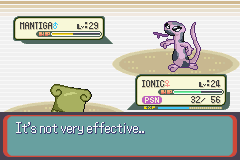
On Reflection: Regarding 10,000 hours, It's Not Very Effective

When evaluating educational gaming software, we need to avoid falling for the millions-of-hours hype that implies all games are created equal. One way to do this is to think about what our goals are for the classroom and how the experience of a game (or a lesson or a unit) will help us achieve those goals.

Many gamify--the-classroom fans like to quote Gladwell's idea from Outliers: The Story of Success about 10,000 hours. His claim is that if one practices a particular skill for 10,000 hours, one can become proficient. But for every World of Warcraft, there is a Tiny Castle. For every Carmen Sandiego there is a Temple Run. While many kids (and adults) have spent a good percentage of their 10,000 requisite hours becoming proficient at the game...at the end of the day they have mastered finger-swiping.

And that isn't even on the test.


Up Next:
Player demographics vs. Game genre; hidden agendas; creative vs. linear

References:
Most popular games of all time
Wikiepedia - Game Genres
Nielson 2009 Report on Casual Gaming