Showing posts with label jesuit. Show all posts

Thursday, November 21, 2013

For the Greater Glory...On Means, Ends, and Lessons Learned from Robots

There is a Jesuit catchphrase for just about everything. One of the most common in educational circles is AMDG - an abbreviation for a latin phrase which translates to "For the Greater Glory of God". Many Jesuit schools require students to write this in the header of their papers, other schools have signs and posters, our school made it the student e-mail domain.

It's a big deal...

Interlude: What's in a Name?
Two months ago, a group of students decided to form a robot club. Their goal was to have Brebeuf Jesuit participate for the first time in the Indianapolis VEX robotics championships. This event, sponsored by the Mayor's office, offers free registration and robotics kits to any school willing to field a team.

As I was filling out the online registration, i was faced with a huge question: Team Name. I felt the cold sweat breaking out. This was HUGE. We needed something that could capture the spirit of our school, the care-free but driven attitude that made up our team, with just enough nerd-cred to show that we were the real deal. After a few panicked seconds I typed: AMDGeeks.
End Interlude.

This Saturday was the two-day culmination of our Robot Team's hard work. And it was pretty awesome:

Much has been written and will be written about the use of robots and practical "real-world" problem solving (and to be fair, i want to live in a world where building small-scale competitive robots is the "real-world" -- its like pokemon, but with robots). This is what I observed:
  1. Problem Identification: What is the scope of the problem? What are resources available?
  2. Complex, Strategic Thinking: Given the limitations in time and resources, what will be the best solution
  3. Hypothesis Testing: Build it, test it, note the results, modify, try again.
  4. Research: Yes, it started with YouTube and Google. But it also included talking to physics teachers, calling in experts in fields from welding to general construction.
  5. Cooperation: Each team member had strengths that were drawn upon throughout the tournament. Each team was allied with one or more other robot teams for individual rounds.
  6. Empathy, Emotional Control: Students were reading feelings, supporting one another, etc. 
Quite a bit different from your typical testing environment
A collection of corporate sponsors, educators, politicians and student-coaches, some as young as ten years old, were creating an environment that was a celebration of the development of college-preparatory and 21st century skills!

What struck me as I looked in the audience of hundreds of parents, students, teachers, administrators was the lack of teacher-evaluation. Stick with me here, this might be important:


iAspire: one of numerous
Teacher Evaluation Apps
  • There was no principal in the stands of the Banker's Life Fieldhouse with an iPad App that allowed her to quickly check off the common core standards that were being met.
  • There was no Lexile, no Acuity, no Terra Nova pre-test of cognitive potential.
  • The only analytics collected were in service to teams figuring out from one round to the next what was working and not working...how to work with one team in an effort to defeat two more.
Yet, in this environment with all of its chaos and shouting and stress and fun, real learning was taking place. Students from a variety of backgrounds and schools were learning to work together, communicate effectively, and devise complex strategies to achieve a common goal.
  • It was a demonstration of student learning and real-world application.
  • It was the lived experience of preparation for 21st century skills.
  • It was one of the best observable environments for implementation of many of the  common core state standards.
and yet...no evaluations were made and no test score was given.

AMDG, Common Core, and the Fight for Education
Critics of the Common Core State Standards are often painted as lazy educators who do not want their work held up to the scrutiny of science and data. Accusations often imply that any who do not support the CCSS and its integrated regime of corporate testing, textbooks, computer management systems, and teacher evaluation tools must not really want kids to succeed.

The problem that educators face in discussing this issue with politicians and parents are that the CCSS has become the ultimate goal of education -- education's AMDG. Anything that works toward the #CCSS (read, anything that is "COMMON CORE ALIGNED") is automatically GOOD because it works toward the ultimate goal. Anything that criticizes that ultimate goal is automatically EVIL.

This is what leads to the shock and almost dismissive attitude in state legislatures when teacher's try to explain the flaws in the CCSS-Testing regime. Because the CCSS has the mantle of the ultimate goal, the advocates for teachers, whether they are administrators or unions, are hesitant to go directly at the issue and instead beg for more time or increased professional development.

Educators and Parents and Politicians need to step back from the CCSS-Testing megalith and realize that despite the political spin that has deemed it as the ultimate goal -- it is actually a means to an end. In Fact, built within its purpose and rhetoric are the true ultimate goals of education according the CCSS's designers, the true ends: College and Career Readiness, Development of Leadership Potential, Citizenship.

In order to have a discussion about the role of robotics and STEM or times for reflection or appropriate use of lexiles or the need to read non-fiction vs. 18th century literature, teachers and parents and educators must first have a discussion about Goals and Ends for education. We need to discuss education's version of AMDG.

The common core state standards are a politically popular and well-funded MEANS to reach the end. Yet they are discussed as if they are the END itself. Common Core and its implementation (and all of the testing and data and expense that accompanies it) is a path, an interpretation about how to reach the ultimate goals of education. 

One can believe that the Common Core and its associated baggage is not the right direction for a school or state or nation without being against education itself. One can reject a particular MEANS without rejecting an separate END.

CCSS is not AMDG.

Need proof? Watch the robots.

(More on this tomorrow...)

Wednesday, April 24, 2013

A #BYOTchat video featuring Brebeuf Jesuit Students

A submission for #BYOTchat. Thu, April 25th, 2013 at 9pm EST.
moderated by the ever-amazing @40ishoracle!

Come join in the fun!


Note: This was also my first opportunity to fill out a fair-use copyright claims dispute on youtube, so that was kind of fun.

Want more BYOT goodness? Our collection of Blogs, tools, FAQs, and more
Some of the images in here are a part of our pinterest collections
...and of course, you can always find JD and Jen on Twitter

Monday, March 11, 2013

#Flipclass in an Ignatian Context

Last week, the @40ishoracle and I along with two teachers got to visit one of our fellow Jesuit schools to talk about creating #edtech friendly environments. The keynote was a hybrid of our "Why we went BYOT" combined with a lot of the reflections from last week's blogpost "10 Rules for an #Edtech Department"

One of the breakout sessions that I was asked to give was on the flipped classroom. I will expand the presentation a little more this week (fill in some of the words that I used), but I have had some requests to post the slides, so here you go.

The presentation was a lightning round break-out (20 minutes total with at least 5 minutes reserved for questions), so the focus of the presentation is the reason to consider #flipclass in a Jesuit school -- namely, how does #flipclass support the Jesuit mission of education.

Elements of Jesuit/Ignatian Pedagogy that I focused on were:

  • Understanding Student Context as an element of education
  • Providing time and space for actual learning experiences (now with teacher availability)
  • Providing time for reflection on that experience as a part of authentic learning
More later...

Note: Information in Pink-Boxes is an attempt to capture the spoken content

Tuesday, September 18, 2012

Interesting Times - How NOT to Address Tragedy and #muslimrage in Schools

"May you live in Interesting times" 
- A saying from the counterweight continent, Discworld (among others)

War. What is it good for?
I was flipping through Facebook one morning this week and came across a few disturbing posts to the effect of: 

“Why isn’t the [US Government] administration doing anything?  Do they want another 9-11?”
Comments like this tend to activate the snarkiest part of my debate mind. I immediately start crafting cross-examination questions:
  • “You would like to go on record that it is your belief that our politicians (or any Americans) want another tragedy like 9-11?”
  • “What specific action would you like to see taken?”
  • “Can this action be accomplished while maintaining or respect for sovereignty, innocent life, etc?”
Ultimately, though, while these mental exercises are fun, they don’t really help to solve any problems. Understanding the full expanse of the tragedy in Libya last week would require an understanding of a number of complex issues: international politics, recent history, religious differences, the interplay of government and religion in extremism to name a few.

News organizations, politicians, and the vast political and media machines that they control (or are controlled by) do not have the profit or vote motive to explain these issues. Decades of sound-byte culture have stripped away most of the mechanisms that could even deliver complex explanations anyway. Thus, in the light of smirks and anti-smirks, vague pleading for action on social media, and the real feelings of anger, fear, and sadness that surround any loss of life, the questions becomes “how do we educate the next generation on these issues?”

Everybody get together, Try to love one another right now
School is rarely like what we see in the movies. Few schools actually pull all of the girls into the gymnasium in order to convince them to stop being cruel to each other through trust falls. More often than not, big showy gestures end up feeling more like that scene in HEATHERS where well-meaning teachers, apathetic students, and a dash of media or parent hype create awkward eye-rolling moments.

Interlude (Overheard):
“Can you believe what is going on in the Middle East? It’s tragic”
“And on 9-11!”
“Frightening”
“Have you seen the video on YouTube that started the whole thing?”
“We should do something. For the kids. An assembly or something.”
“For the whole school. Something to really address this whole thing”
End Interlude

There are a lot of logistical issues with putting something like this together. I don’t want to address any of those.  There is also a strong argument to be made about when to "pull the all-school trigger” or, put another way, what makes this particular event worthwhile over so many others? Not going to write about that either.

Instead, I would like to approach this idea of teaching about the middle east tragedy as a worthy subject for our students. I will further assume that the logistics can be easily overcome and that the loss of classroom time in any other subject is relatively minimal. And yet, despite these two (rather significant) assumptions, there should still not be an all-school convocation on this topic. 

Why?-- it’s just bad education.


It’s not that all-school convocations are universally bad. We hold all-school masses and prayer services to worship together as a community. We bring students together to raise the emotional bar before homecoming games or to pay honor to students and alumni who exemplify the school's mission. We remember significant moments in our history (Martin Luther King Jr., Holocaust Remembrance Day), particularly when we have the rare opportunity to hear first person accounts that are increasingly rare and always precious. 

The best of these gatherings have a simple straightforward message that can be easily comprehended. The appeal,  when they work, is not an intellectual one, but one of emotion. Conversely, the worst large gatherings strip away emotional appeal entirely (boring), present a message that is too complicated (confusing), or make assumptions about the audience that interfere with the one-way messaging (offensive).

A large gathering about a currently-unfolding tragic event for any purpose other than grieving or solidarity is difficult to justify. Once we decide that the event is worthy of being taught, it becomes important not to become caught up in the chance for a big-moment if that same moment sacrifices the opportunity for true understanding, for true learning by the students. Instead, we should begin with the end in mind: if our goal is to achieve some sort of understanding about the underlying cause and potential actions possible in the Middle East, we need to construct learning opportunities that will likely lead to this understanding -- fortunately, for these situations we have a the solution:

It's called SCHOOL.

Teach Your Children Well

Context: The best classroom environments take into account student context. This context has a variety of factors, including grade level, maturity level, and the amount of information on the topic to which students have already been exposed. Teachers are trained to understand the context of students individually and as a group and expose them to information and experiences in units that can be processed and understood.

A world civilization teacher at the Freshman level will help students trace the cultural, religious, and historical factions that influenced the diversity of perspectives in the Muslim world.  
A teacher of a senior World Religions course will setup time to research the religious differences within sects of Islam and discuss the impact of specific religious texts within the context of extremism. Students in mass media or film production classes will dissect the editing of the YouTube video to maximize negative reactions.

Experience: One of the advantages of the modern age is the sheer amount of information that is available to our students. One of the disadvantages of the modern age is the sheer amount of information that is available to our students. Teachers have the two-fold task in situations like this to expose students to the relevant information (appropriate to maturity level, subject matter, etc.) while also beginning to help students form their own filtering processes to adapt to and account for all of that information.

Students in the Digital Citizenship analyze  the growth of viral Youtube videos compared with claims about causality. Use of #muslimrage as a pressure release and context shifting use of social media.
 Sophomore Speech and Debate students can break down the claims on the same event as covered by a variety of media types and sources.

Reflection: This information is processed (and the information filters are created) through processes of reflection: merging prior knowledge with new experiences through discussion, journaling, debates, and other thoughts.

Use concentric circle discussions (personal, partners, small groups, large feedback on butcher paper) to identify opinion/fact, overstated claims, insufficient research for conclusion, and fact checking. Compare papers as a class (gallery walk) and do the fact-checking on articles and op-ed broadcasts

Additionally, breaking the learning into cross-curricular units has the advantage of providing repetition in a variety of contexts (this strengthens the subject itself and weakens the intellectual silos that students tend to build in schools). Students also have more opportunity to share feelings, listen to multiple points of view, and confront passionate and, at times, contradictory material. Finally, in smaller settings with a teacher who is a subject-matter expert, they have the safety of the group and a guide as material become complicated or frustrating.

This is learning. Real learning.


There is an oft-used expression that is popular in science-fiction: "May you live in interesting times" 


We do...And they are. 

It is easy to long for a simpler time and easier solutions. 
One big event. 
One simple message. 
One cathartic moment. 

But life is messy. Politics and religion are...interesting. We do ourselves and our students a disservice to pretend that it is otherwise. Embrace the complexity and allow the students to do the same. In that struggle to comprehend and the structured experience and reflection provided by our classes, we can challenge our children to do more than passively absorb -- we can ask them to understand and, based on that understanding, to take action. 

Now that would be interesting. 

Thursday, August 30, 2012

BYOT DayByDay: Wrap-up: Understanding Digital Natives and Making Inconvenient Choices


The BYOT Day by Day Series will capture the first few weeks of implementation of the full BYOT program at Brebeuf Jesuit. Brebeuf Jesuit is 1:1 BYOT w/ financial aid support for over 25% of its student population in the form of technology grants. It will try to capture some of the tips, tricks, and pitfalls. It will highlight the successes and a few of the frustrations.

[Continued from yesterday, so some of the intro is the same...the article was originally 2300 words. See, I do recognize when i go REALLY LONG]

This will probably be the last regular posting in the DaybyDay series. It has been a good day to end as I have heard from students and teachers about some wonderful things going on in the classroom. We also had a couple of the "bad decision maker" discussions that were referenced yesterday, but even those serve a purpose in the grand scheme of things.

I mentioned yesterday that @40ishoracle and I were reflecting on the reason behind BYOT. In the same way that a general Pro/Con article tends to give legitimacy to arguments by nature of the article's structure rather than its validity, I think it is difficult to measure the success of an endeavor without recalling why it was attempted in the first place.

So...
  • BYOT implementation solves the major issues identified by teachers and students: more access, availability of the tools the student's want to use, faster and more stable connection, off campus access. Hard to believe after talking about this for so long, that it started 3 and a half years ago with teacher and student round-tables about what was working and what wasn't.
  • Preparation for the digital world: Technology has been consumerized. IT is no longer the sole decision of the techno-trolls in the caves (and we trolls actually kind of like it that way -- project!). Students have to be able to ASSESS their needs and EVALUATE the options they have in order to effectively USE them and solve the problem of the day.
  • As we entered our pilot year and began working with teachers and students in a live environment, we realized that the BYOT world allowed teachers to focus more on their areas of subject expertise while students were empowered, and in some cases challenged, to meet expectations with their own technology.
  • Through tech petting zoos, introductions at open houses, and lots and lots of conversations with students we identified a ton of issues to work on as we moved out of the pilot year, including re-writes to the Acceptable Use Policy, upgrades to the network, and new ways of thinking about education in general.
  • The Board of Trustees allowed us to shift our budget to provide significant financial aid in order to make sure that all students got the benefit of choice, not just those blessed with the means. Focusing resources where they are most needed to improve the environment for everyone became our watchwords in the budgeting process.


Changing the Culture, Changing the Classrooms

"It really depends on the class, but there are some classes where two or three students are helping another two or three students. And it grows. Then the entire classroom becomes a group effort. It's wonderful. How do we make this happen all the time?" - Science Teacher

In Social Studies students are using Google Maps to create a my places map of significant points in history. Each student uses each device to make the maps. Some of them love the touch screen. Others are using the mouse and keyboard. Great activity, but not necessarily one that would have warranted bringing out a cart or checking out a lab. But when the devices are at their fingertips...

"I have never allowed students to use computer, dictionaries, etc. I have always wanted them to know the vocabulary by heart. This time, I told them they could use all the sources they had (notes, online, translators). I am curious to see how well-written and thoughtful the responses are...They are still required to "use their own words' so no copying from articles. So far, those who haven't studies are spending more time looking up the words than writing. This should be interesting." - World Language Teacher

The assignment was to create visual representations of a historical concept. One of the students created an animation. It was perfect with stamps and taxes flying around and then a fist crushing out the machine. I have to rethink my frame-of-reference. I thought of visual as static, but with these tools and these students, that is no longer a limitation. So creative. - Social Studies Teacher


Students were working in groups while contributing to a class set of notes that was displayed on the board. Small groups were looking up definitions while in the middle of a discussion that was graded by the teacher walking around the room. One group of students was brainstorming the process of putting media from cameras into a report. -- Administrator Walkthrough


Reading check quizzes through the LMS; Vocabulary words identified in news papers and news casts from around the world, Teach and Learn sessions as students make sure each person in the group can effectively complete the task at hand.

"There is more active learning going on today than one year ago. I don't think it is all BYOT, but it is something. Less lecture, more activity." - Administrator (ok, fine, that was @40ishoracle)


Choosing Culture over Convenience

BYOT Brown Bag lunches have helped identify issues
and share successes. We have snacks!
"Kids have too many things to remember. They complain a lot."

"Can we just make every teacher use EdLine? There are too many options."

We have been talking about this one a lot! Students have a password for EdLine, a password for the wireless, a password for gDocs, Biology textbooks, the iPad app for Biology textbooks, the Naviance account for the college application...You get the picture. If a student's teacher uses Edmodo, or a club uses Skydrive or Dropbox, then there are more accounts and more username/password combinations.

Is this a problem? It certainly can be. But it is also a lot like life.

The digital age encourages us to have usernames and password in order to conveniently function. We have accounts for email (home and work), facebook, twitter, dropbox, our bank accounts, taxes, the DMV, our student's lunch account, etc. The digital world is about identity management and that includes password control.  After lots of thought and lots of discussion with students and teachers and administrators, we decided that the advantages of the tools outweighed the potential confusion, with these caveats: 
  • Teachers should post all external site links used to classroom EdLine (our primary LMS which includes parent accounts)
  • Teachers should have clear instructions on what types of systems will be used in the syllabus
  • Teachers should communicate with parents regularly, but especially if classroom assignments will use social media systems (and, in those cases, alternative assignments should be available).
This will be one of the specific questions we ask at the student round-tables (or at least create listen-fors that will capture it). Much like the technical issues discussed yesterday, we are trying to figure out if this is a widespread annoyance that should be addressed, even if it is talking through the expectation in #digcit, or if it is a problem only to a few students that we should work with on a case-by-case basis (or...possibly...if it is an excuse being used to derail some teachers -- oh teenagers. we were your age once).


Civilizing the Natives

What a Digital Native Looks Like
"I had the instructions clearly on the board: Login. Go to this website. Use this account information. Take notes in Google Docs. All of the kids were working, but one kid in the  back was clearly frustrated. I went to ask him if I could help. He had a blank screen. I asked him if his battery had died.
"No, I just don't understand your instructions. How do I log-in when the computer is turned off?" - Guidance Counselor

"Despite the hype that these students are supposed to be brilliant on technology, they really aren't." - Math Teacher

"Technology Generation? Not buying it." - Facebook Friend Teaching Computers to 5th Graders

"When will my student actually use the device? It has been two weeks." - Parent

That last one really stumped us. How could a student not have used his or her device two weeks into school? But, we realized, there is a difference between the command to "pull out your device and complete the following assignment" (which there is actually plenty of) and the opportunity to make it a part of your educational life by taking notes, completing writing prompts, communicating with teachers, or checking assignments -- none of these necessarily requires a computer but kids are using devices to do this every day in and out of classrooms.

The term "Digital Natives" is used to invoke images of toddlers at touchscreens wielding sorcerous-like powers. However, in our experience, it just means that students are not afraid to press buttons -- That's really about it. They will experiment if they have a motivation to do so and are given that freedom. Forming "Digital Citizens", people with knowledge and skills to use information effectively, responsible consumers of data with social media savvy, users of technology to solve problems beyond tilt-jump-slide gestures -- that takes more than a birthdate in the 20-aughts. It takes guides who understand the digital context of our students, exposure to new experiences that utilize information and tools in complex ways, and the time to reflect with others on those experiences.

The problem is two-fold. These experiences, normally problems to be solved or answers to be sought, must take place in real situations. There has to be some level of actual content -- Students can see through a faux assignment in a heartbeat. We used to teach "website analysis" by showing fake websites that had been constructed Onion-style. Too many years went by before we realized that the rolling eyes and disinterested doodling was a message, loud and clear. Additionally, consequences for not accomplishing the tasks have to have some reality as well. If a student does not get the scientific method or cannot control the supporting facts within a tightly structured informative paragraph, we grade accordingly. Students who refuse to make assignments legible i.e., in a readable file format, may have to suffer the bad grade or the call home to discuss with parents. 

Second, and much more a problem of our own making, we have to overcome years of training that has told kids there is only one right answer, one right way of doing a problem, and one right sequence of buttons to push to get the result. Some students have developed a strong aversion to thinking or innovating. "Flowers are red. Green leaves are green." And there is no need to make a PowerPoint any other way than the way they always have been seen (Thanks, Chapin. We miss you).

We have many recent anecdotes of teachers telling kids to put media into a presentation or lab report where the reaction is a blank stare of "How?" We have to train them out of being automatons and into critical consumers and even creators. It is possible, but it takes time, patience, and a little tough love.


But its worth it:

Students, Teachers, Devices, and Education. Oh my, indeed
"They reached into their bags and pulled out all kinds of devices and just started using them. Like they had been doing this for years." - Administrator during Teacher Walk-Through

"I love that they get to do this. This is what the world is like." - Parent

"I love that they can get their books onine when they forget them. I love that they can write papers together. I love that the class is not delayed by 'Oh, I wish I had the lab, today." - World Language teacher

"It's going good. It's just normal now." - Student


{for more start of the year review: We have more or less covered the opening chronologically over the last three weeks (starting way back with "Before the Storm", then continuing in Day 1Day 2Day 3Day 4&5); we put the blog in the hands of one of our math teacher for the ironically named "nouns and verbs" post and last week's space was devoted to the largest problem of implementation thus far (the eText Conundrum part I and II).}

Wednesday, August 29, 2012

BYOT DayByDay 15: Anecdotes & an Analysis of Tech Issues

The BYOT Day by Day Series will capture the first few weeks of implementation of the full BYOT program at Brebeuf Jesuit. Brebeuf Jesuit is 1:1 BYOT w/ financial aid support for over 25% of its student population in the form of technology grants. It will try to capture some of the tips, tricks, and pitfalls. It will highlight the successes and a few of the frustrations.

This is the penultimate post in the DaybyDay series. We will of course keep talking about BYOT, but this seems like a good place to close a "start of the year" series as we end the month of August. Also, I am really kind of excited to share some of the things going on in the Digital Citizenship class as well as some cool #flipclass examples going on throughout the school. Finally, with the election heating up, I am sure that some politician will do something that gets me a-ranting, so i need a clean plate.

I thought about doing a Pro-Con article this time, outlining the good and bad of the BYOT experience after three full weeks. But the problem with a pro-con is that it has a strange distortion effect. Each point appears to have equal weight on either side of the ledger -- a minor implementation detail has the same visual impact as a huge philosophical benefit. Thus, the attempt at balance ends up skewing the perception of the reader (I feel like I blogged about this before, but maybe i was just dreamtweeting. The NEA has a good example of what I mean -- Pro = real life examples; Con = hypotheticals that stir up the fear of the masses).

We have more or less covered chronology over the last three weeks (starting way back with "Before the Storm", then continuing in Day 1, Day 2, Day 3, Day 4&5); we put the blog in the hands of one of our math teachers for the ironically named "nouns and verbs" post; and last week's space was devoted to the largest problem of implementation thus far (the eText Conundrum part I and II).

So...

I started a list of things that I was pretty sure I had not mentioned in other places or that had been reinforced in the last few days. As the ever-amazing @40ishoracle and I began discussing it, we reflected back to our original goals and the origins of the program. We'll recap that tomorrow in our last post.

Changing Culture, Changing Classrooms

"Our students will be so much better prepared when they go to college. They see on a daily basis that problem solving is not the same thing as button pushing." - English Teacher

"I used to give a sample interest problem. Then we would solve it together. Then I would put another one on the board. Now we still solve one in class. Then I send them out to find a car website...And a bank site's interest calculator. They get to find the car of their dreams and figure out why mom and dad don't buy it for them." - Math Teacher

My Kingdom for a Printer

The dean of students came to the Teacher Resource Room for a visit. "I had an English teacher ask me if we could set up the printer in our office to be a printing station for students." This has been a growing concern, particularly upstairs. The labs upstairs are generally locked when not in use by teachers. Students who used to do work on paper, now have it digitally, so if a teacher wants to collect it the old-fashioned way, it must be printed. All student printers are centralized in the library and connected "Class Lab".

If we find a space (limited) where we could put a printer, then we open up a different set of issues. Technology that is not "owned" by someone quickly deteriorates. When a department is responsible for a lab, it is usually in pretty good condition. When copiers are put in "general use" areas (even for teachers only), they tend to have higher breakdown rates, run out of supplies more often, and need to be replaced more quickly. Haven't got the solution to this one yet, but it is going to have to be discussed.

Personalizing Education and Technical Issues

"Next year can we just require them to have Microsoft Word?"
"That would mean no tablets, no iPads. It's really restrictive"
"I am ok with that."

Macs have trouble with equation editor.
Macs have trouble with PowerPoint.
Macs have trouble with documents

"My son says he is getting a C in his class because he has an iPad"

Network admin is working on three problems at once (we counted)
While on the phone with his might-be-in-labor wife
In a large homogenous system, when something breaks, it tends to break across the board. I still cringe over days when the entire internet is inaccessible or all phones go down. In the 1:1 BYOT world, problems are more often individual ones. True, some of the individual problems repeat a lot: resetting passwords, typing in the right address to get to wireless authentication, saving a Keynote document as a PPT so that it can be opened and graded by the teacher. Occasionally the problem is unique: a bad model of wireless card that has to be replaced or a specialized program file that cannot be uploaded to a homework hand-in.

Our systems and guidelines work 95% of the time and most problems are single-fix and satisfied customers walking out the door. Occasionally, we have students who become "frequent flyers". These students have the same problems again and again (our record is a single student who created 4 accounts to access his biology textbook, had 2 different Turn-it-In accounts, and needed his gDocs account reset 4 times and counting) or find a problem with each new thing they try (these are the ones who walk in either apologetically sorry-to-bother-you-again or arrogantly your-network-is-responsible-for-my-forgotten-password-and-the-national-debt).

Teachers become frustrated when these issues interrupt their classes or derail their plans but have learned to adapt for the most part (it helps that we have chromebooks ready for grab-and-go productivity). Parents have been listening to us and are very responsive to the school's efforts to make students responsible. Most students are also very good at working around issues. Frequent flyers are rare, but in some ways, they are what we have left.

Interlude: Resetting Perspective
I was helping a student with a document upload issue (outdated java controller). When she authenticated to the server, I commented, "I am so happy when it says 'Authentication Succeeded'". She looked at me and said "hundreds of students do that every period. You only hear about the few who have issues." -- Good point. love insightful students.
End Interlude

Thus, three weeks in, we have entered an interesting phase. Most students have made accommodations necessary for their devices (I use an iPad, therefore there are extra steps when uploading documents to webpages; I use a PC, so I need to borrow or bring a different device to take decent photos; etc.). Then there are a few students:
  • The student who leaves the same class four times in a week to "get computer help" but never shows up in the IT department
  • The student who doesn't turn in four assignments because he has an iPad and feels it is mean of the teacher to not allow him to just email the document to her
  • The student who receives a low B on his first exam after being observed gaming in class, during study periods, in the lunchroom, etc.
Each of these issues could easily be mislabeled as "tech" issues but they are actually behavioral issues. Examples of students making less-than-optimal choices. In a traditional school with a traditional technology program, many of these students would be able to slide by finding teachers willing to give them a break because computers are scary...or hard...or unreliable. Some of these students would have bad habits that would manifest in other ways (obsessive doodling/daydreaming) or not manifest at all until they get to college (insert anecdote about tweeting with students for an hour during their econ lectures).

Students, Teachers, Devices, and Education. Oh my, indeed
Because we operate in an environment where technology is not allowed to be the default bad guy, we are able to make these incidents opportunities for discussion: making better classroom choices, accepting the consequences for decisions (including the choice of tool), working with parents to find ways to encourage responsible time-use behaviors. Teachers feel supported by tech, by administration, and by parents to take a "you are responsible for getting the file to me...on time...in a readable format" stance. Parents take comfort in knowing that others are willing to fight the big scary tech battle along side them and that we are individualized enough that truly extreme circumstances can be accommodated. Tech has the trust and support of faculty and students as we make things work. Next week, we add more layers to this communication process as we begin to schedule BYOT Round Tables with students to find out what they need and how we can continue to provide it.

Thus, education is becoming more personalized and the technical problems are beginning to match. But with each problem we face, we are able to identify it as behavioral or technical or (as is often the case) messy. We work with teachers and students to take responsibility where necessary, be flexible when it promotes a greater good, and occasionally hold someone accountable for a bad decision.

Responsibility, Flexibility, Accountability -- Good for Tech and Great for College Prep.

Sunday, August 12, 2012

BYOT DayByDay 2: High-Tech, High Teach

The BYOT Day by Day Series will capture the first few weeks of implementation of the full BYOT program at Brebeuf Jesuit. Brebeuf Jesuit is 1:1 BYOT w/ financial aid support for over 25% of its student population in the form of technology grants. It will try to capture some of the tips, tricks, and pitfalls. It will highlight the successes and a few of the frustrations.

Note: I notice that i keep writing this later and later into the morning. This is less to do with my thought process today than with my discovery of stumbleupon (currently my third biggest referrer) - that's all i needed to add to my life!

We went into Day 2 expecting as much frustration as the let down in a superhero franchise. The number two is associated with that over-the-top penguin, doctor octopus, and lycra disco costumes from the phantom zone -- but it also gave us the Joker and Luke's hand getting cut off, so it can't all be bad (did i mention stumbleupon?).

Seriously, we were going to be a man down today (network administrator getting ready to have a baby), we knew there would be a huge spike in user activity (the real network test), and yesterday had just gone a little too smoothly...


Passwords, passwords, and more passwords.


Wow. 
That is really the only description (appropriate to put on this family-suitable blog). At one point, a student came in with an actual connection issue and said that he would come back later because of the line of students needing passwords reset. Just insane.

So here is the thing. I can understand not using a password for months and forgetting what it was. That is going to happen. But we were resetting passwords that were created yesterday and that DID NOT have overly burdensome complexity requirements. (Although, we are reconsidering the complexity requirements of our primary logins).

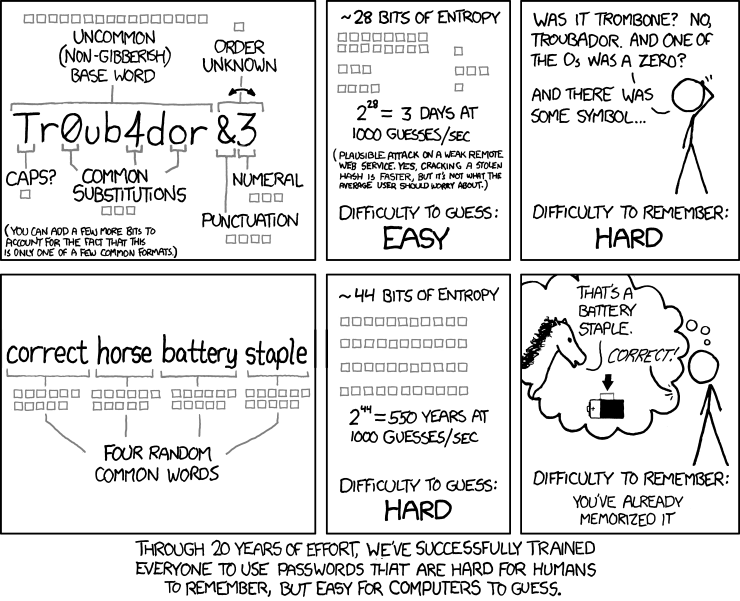
This is a growing conundrum as we use more and more personalized websites with login requirements. It's also a balancing act between convenience and actual security and faux-security (if you have to write every overly-complex password down, then it is less secure). 

With the constant background of "I need my password reset" firmly established, the day divided itself into two distinct categories. While I love it when technology and learning integrate, today there was clearly a world of tech and a world of teaching. Feel free to skip around.


Tech-Geek: Websites and Resources


Early morning email came in explaining that a significant number of resources for the class were on blip.tv and that students with iPads could not view them. A quick look at the website showed that the videos were clearly in flash players, so i could understand the issue. Interestingly, though, there was a press release about blip.tv moving to an HTML5 mobile version (read iPad) back in April of 2010.

Empowering support of a wide array of technologies is going to become more and more of an issue with teachers and students. Opponents of BYOT call this the "lowest common denominator" problem and if it is handled wrong, it could become this. 

If the primary use of technology is to have the same lesson or task replicated over and over with each person holding each device, then the task becomes finding the content that is able to be read on the lowest powered/most restrictive device. -- If that is all we do with BYOT, then buy everyone netbooks and save some money. 

If content delivery becomes a minor part of the educational process, though, then we can find the standards that work cross-platform (i am not  a fan of having teachers double-post in multiple formats -- they have a job to do) -- YouTube for video, PDF for reading material, MP3 or Soundcloud for audio, etc. This is the VERBS not NOUNS discussion. Tell students what you want them to DO not HOW you want them to do it.

Corollary: The @40ishoracle is spending a lot of time this weekend playing around with .docx files and the iPad and Edmodo -- sometime pages opens it, sometimes not. Seems to work in oncloud, but not always. Could have something to do with iOS being updated. Part of me wants this problem solved so that we know limitations and parameters. Part of me wants to click file-saveas-PDF and be done with it (like we do with kids who try to turn in Pages files to Windows teachers).


Teach-Geek:

Tech-Geek: Routing Electrons

Let's look at some numbers. 3rd period (almost every student has a 3rd period class) we have about 1/3 of the students actively using devices across the network on day to. capacity on the wireless controller looks to a potential bottleneck as we are 50% capacity. -- We start mapping out a solution to reroute traffic across a VLAN that will not go through the controller after authentication. It's more complicated than our current setup but will be much more efficient. Estimated time - 8 hours. Next week's project.

Teach-Geek: Making Choices

Sat down with a student and his iPad. we went through a list of digital tools that he might want for his iPad. His father had placed heavy lockdown software on the system so that he could not add any new apps without a password. -- tablets without apps are smoothly transitioning oversized cameras.

Tech-Geek: Need More Paper!

Printing. There is a lot of time and effort putting into getting paper with appropriate ink splattered or heat sealed in various patterns. Chrome's CloudPrint is a 90% solution and works great in a number of ways but really does require the chrome browser to be the most effective on Macs (and that chrome print app is awesome). We had a lot of hopes pinned on HP's ePrint solution, but in enterprise level practice, we kept noticing some serious delays. Our engineer went to the interwebs and found a study (yeah, I should link to it, but don't have the source) -- that indicated an 80% or so print within the first 2 minutes, 18% within a half hour, and 2% un-notified fail rate --unacceptable. Placed the printers in the same vLan as student wireless and that gives the HP ePrint app, iOS, and MACs the ability to print directly.

Teach-Geek: Simplifying the Process

Overall, the counseling department is doing some interesting things with AMDG and the cloud. They are using shared docs to keep track of changing numbers in classes during schedule change (replacing the scratch whiteboard that is typical in most schools) and sharing specialized learning profiles with teachers through secure shared docs making it hard to leave the paper laying around and easy to update and notify teachers of changes -- no more reinventing the paper wheel.

Tech-Geek: How much YouTube can a Network take if a Network could take YouTube

I could've used the stormtrooper pic.
At one point, we are seeing 80% of the bandwidth allotted to students being used for YouTube. While not surprising, we start to tweak the caps on that specific app in order to not block out students trying to get to other sites. We are also starting to see our upper limits being touched. Next week's data will give us some more information about whether we need to increase our total bandwidth anymore. But before that...Tech is taking its first day off in 25 days -- hellooo state fair!

Reflection:

In "What is Strategy?", Michael Porter notes that a competitive advantage is sustainable when one is "performing different activities from rivals' or performing similar activities in different ways." BYOT is starting to have that feel. We are not buying the bigger, better #shinypretty. We are not placing all of our hopes in one specific solution. We are not trying to increase productivity solely through efficiency. We are tweaking things in the background so that faculty and students can use their own technology to the best of their ability. We are working with teachers to identify the best skills to operate in a world of technology integration and choice. We are finding places in and out of the curriculum to give students experiences that develop these skills.

Friday, August 10, 2012

BYOT DayByDay 1: Let the games begin! (and knock on some wood)

So, I want to gratuitously steal this analogy from @40ishoracle, because it is too perfect for the description. Its a lot like a wedding. Years of planning, talking ad nauseum, trying to account for every last detail and every contingency...and then the day is here.

Looking back...

Building off of some simple answers to a few survey questions three years ago:
Teachers: "What would you need to transform your classroom in the next 3-5 years?"
Students: "What is the biggest change in technology you would like to see?"

Then there were focus groups...
and meetings...

Some intense technical sessions:
"Ok, so now lets see if we can support every single device, keep the filters engaged, use the same login they use for the library, and give them the ability to print"

Lots of impromptu visioning sessions with teachers in the Resource Room (with coffee!)...
A late night mapping of an entirely new network backbone...
Scribbled mathematical notations to figure out how much data was going across the firewall each second...

"Gingerbread supports authentication now. Android is go!" (geek high-fives all around)

Making the pitch: there is no BYOT without financial aid. Every student deserves choice...
Conferences, pilots, presentations, and more...

Discovering Hattie's Law: "worried that they're not really taking notes? simple. tell them to email them to you. They can email these things, right?" -- veteran teachers handle tech like a boss.

lots of discussion...with parents, with students, with teachers...
IT crew pulling the 18 hour shifts to make sure its all ready for...

The Big Day - Rocky Start, or is it?

The first thiing I hear as I walk in the door, we have this awesome freshman. Knows his stuff. Has his codes. Had trouble connecting to the wireless. -- ugh. Techs go into the scramble. Visions of the wireless being down on day one fill our heads. One tech pulls out an iPad, another uses an android phone, the third grabs a netbook. -- two connect just fine. The third gets a blank screen.

Earlier in the summer, we had devised a shortcut that would take students directly to the login screen. Typing that in did not help our single blank screen. Network admin says, "Try this one instead." The new address works - Whew.

New problem: There are 50 signs around the building with the old shortcut... "To the label maker!" -- The intern begins making labels with the new address to place over all the incorrect signs.

1st Period -- The rush?

Two kids walk into the tech area. One is an upperclassman who has forgotten his AMDG (Our Google Apps for Education domain - Ad Majorem Dei Gloriam, "For the Greater Glory of God" -- Don't judge. "Skynet" was a close second) password - easy. Second is a Macbook running Safari - refreshed the browser and done.

A teacher who is a self-described luddite comes in: "It worked like a charm. Students had the computers out and were using them in 0-hour. Three kids didn't bring them, but they know the expectation now. Smooth sailing!" -- I think my jaw dropped a little.

15 minutes go by. Nothing.

No panicked phone calls. Help desk requests are routine. -- We begin prepping one of the remaining mobile carts for delivery. I goto print out "EdLine" access codes for my remaining students (4 parent codes. No students. -- They were all activated and in the system).

Period 3 - #Digcit Class


We've started to pick up on the pattern. Students who transferred after the main data/user upload are not always in the  correct wireless group. Sporadic checkboxes. I go to my class - it is a small one and they are quiet and nervous. We walk through logging into the system and changing passwords. We talk about security and the basic rules of the network. All student activate their AMDG accounts -- only one has an issue. It is solved by the end of the period. I spend the period teaching, not tech-ing. Bliss.

Student conversation in the hallway:
"Have you connected to the wireless, yet?"
"We did 1st period. I don't know how, but my teacher walked us through it."
"Can you show me?"
"I don't know if I remember"
-- not perfect, but I'll take it. (Seriously? It's three steps!)

The first tweet about BYOT:

Period 6 - What do you mean we don't have photos? I have to BLOG!

Little known fact? The fifth fundamental force:
Attraction of Glowing Apples
Yeah. Sorry about that.

It was a nerve-racking day.

About this time, we began to see a pickup in traffic as the newness of school had settled in and student began using breaks to get IT support. But the line was never more than a single student (good) and it was still primarily transfer-students with a missing account (usually one of three) or forgotten passwords.

We saw lots of laptops, including one sweet gaming rig from Alienware. We heard rumors that one student had a backpack with a charging battery built into it.

Teachers were coming to the Teacher Resource Room to talk about their next steps. A few parent emails. A few student emails.

Introduced a lot of teachers to the power of Google Docs and, as teachers do, many of them began to stretch the boundaries of the system as they thought about other things they could do with environment.

We are, of course, knocking on virtual wood as we move into day two. One of my student-followers on twitter chimed in during #BYOTchat last night: "Hold off on that all clear till tomorrow when most teachers want first day of BYOT" -- he is absolutely right.

But I will take a day like today over a day of crashing systems and unmet expectations any day of the week.

Reflection

BYOT is really the first step in an educational transformation. A device in every student's hands...empowering each family to make a CHOICE that is individualized and tailored to a learning style and comfort level -- that is the ground floor.

Students and teachers take the next steps together as they learn new ways to research, create, reflect and experience -- even to lecture :). When we finished the day, the @40ishoracle and I stared at eachother both a little shocked that three years of planning and preparation and discussion and writing had led to this moment -- like a wedding:

"well, we did it..."
"yeah. now it's time to do the next thing..."

But, for now, the "Next thing is learning and teaching. Pretty cool, being a school and all.

Thursday, August 9, 2012

BYOT DaybyDay: 0 - The chaos before the storm

The BYOT Day by Day Series will capture the first few weeks of implementation of the full BYOT program at Brebeuf Jesuit. Brebeuf Jesuit is 1:1 BYOT w/ financial aid support for over 25% of its student population in the form of technology grants. It will try to capture some of the tips, tricks, and pitfalls. It will highlight the successes and a few of the frustrations.

Its 3am on the first day of school. A thunderstorm outside has been painting the sky with brilliant patterns of lightening for the better part of the night. As I sit here in the soft computer glow of a new Chromebook (Samsung 550 - oh the pretty), I am trying to compare this school opening to previous ones and figure out if this week has been more intense than previous openings as we prepare for the first day of school. Non-educators have almost as many misconceptions about the week before school ("oh, you must be enjoying the calm before the storm - heh heh") as they do about the ever-shorter weeks between graduation and the new year ("it must be so nice to have #summersoff).

If You Build It...

One of the smaller IDFs - so many wires to be wireless

So many projects were put in place in preparation for BYOT. The most significant and time-consuming was a backbone and wireless network overhaul. Last year we upgraded the network to wireless-N to increase speed and prepare for new devices. This year we moved each wireless access point to a full Gigabit switch (faster data from one part of the building to the central switches -- fewer bottle necks of data), increased the number of Access Points by 30%, and cleaned out, organized and labeled every wire closet so that we could quickly diagnose and troubleshoot in those precious first days of school.

Out tech philosophy has always been a corollary of "if you build it, they will come" -- something along the lines of "If it is consistently reliable, they will use it." For this reason, we always start with the infrastructure and work our way outward. This year has been no exception, although it is a little nerve-racking fine-tuning and adjusting levels 24 hours before students hit the network.

Exercises in Extroversion

Our assistant principal is constantly trying to understand how the @40ishoracle and I can be introverts when we clearly enjoy speaking to people and even in front of people. We do it, but WOW is it draining. We have been talking BYOT from coast-to-coast (literally) all summer. But there is a different flavor when talking about it in your own backyard. At the opening back-to-school meeting, we reiterated some of the high points of the BYOT infrastructure and support. Questions and comments ranged from the hyper-practical "How do we tell kids to connect to the wireless?" (Answer: Lots of signs posted throughout the building) to the philosophical "But I won't know how to do [insert any technical function] on all of these different devices!" (Response: True. You focus on teaching -- kids will figure out the how and tech will back them up. Paradigms are shifting). -- All-in-all, our teachers are amazing. They took the foundations laid in the BYOT bootcamps and ran with it. 

Note: two of my favorite classroom policies were shared at that meeting -- "Come to class with your device charged up and ready for 40 minutes of learning!" & "Give yourself time to play. If you are not sure how to do something your device, it will take extra time to learn. Don't be late. No Excuses" -- Just brilliant.

The day before school begins is new student orientation and new parent orientation. More extroversion. 10 minute Q&A in front of a packed chapel of parents. I went for the joke at every opportunity. It is exciting listening to our new President tell these parents how BYOT aligns so strongly with our school's mission (long-time readers already know this from the WHY BYOT? series). I heard afterwards that there was one parent who did not know about the 1:1 program. Obviously, not a regular reader of the blog :). I imagine that was a disconcerting moment.

A Last Minute Catch

Heading into the home stretch of the day before, we are walking through every possibility and realize that a procedural change (not having a day where we pass out access codes during the summer) was going to derail us a little with Freshmen. Our logins are not "ACTIVE" until a student logs into a school computer and is forced to change his or her password. At that point, the credentials are passed to the wireless login server. So every student with their own device is not on our network UNTIL they have logged in once. That was a painful e-mail to write to teachers who planned BYOT activities on day one.

Enabling Printing in a Paperless World

Trying to find as many ways to for students to print from as many devices as possible has been a challenge. We finally settled on Google Cloud Print (tied into our AMDG - Google Apps for Education) with HP E-print as a quick backup (we have 5 printers throughout the building that have their own e-mail address labeled right on the printer). Shaping the firewall and network to prioritize printer jobs seems odd, but when your printer server sits outside the building, you want to do everything you can to speed up the process. Cloudprint is still SO much faster. Might configure a printer just of iPrint on the student wireless as well. It is a lot of time and effort to enable something that is in a natural decline (that being paper), but it is a traditional comfort zone for teachers and students, so it cannot be ignored.

Charging Stations are Awesome

American Locker has these wonderful self-locking charging stations. 15 individual slots with a plug. Students place the device. Plug it in. Set a combination and lock the drawer. The units have quick-access keys for the student who forgets the combination. We were even able to get them in a color that matches the decor. 

We have placed two of them in the student commons area and one in the library. Now its just a matter of seeing how many students are able to read the three step instructions with pictures taped to every unit. -- Thinking of picking up a few more of these.

Oh Yeah -- The Classroom

In the midst of all this preparation, we also have a new semester of the Digital Citizenship course, complete with a new focus on information-filtering skills and PLN development. You know that the stress is high when you feel guilty taking an hour to do some big-picture lesson planning.
#Digcit broken down by lesson

Phone Calls, E-mails, and Drop-ins, Oh My

My heaviest parent-contact day in the last 10 was last friday with 8 phone calls and 7 emails. Phone calls can last from 5-20 minutes and emails usually go back and forth about 3 times. They range from "we are between these two models - please choose" to "Soooo, tell me about this BYOT thing". Parents are generally more anxious than the students. They want the student to be prepared. They don't want to waste money. They are anxious about so much choice and freedom.

I am amazed at the number of parents who do not talk to their children about something like this. We live in a culture that has trained-by-advertising that there must be a single "right" choice and that there is a magic formula to success if only you have the right #shinypretty in your backpack. Many of these conversations end up being part of the counter-cultural message of a Jesuit school.

So that is what is going through my mind in this early morning. All things considered, it has been a long, exciting journey. Students are ready (one student told her nervous did-we-get-you-the-right-device mother "mom, we got this. it's all good"); Teachers are excited and a little nervous; IT is exhausted (we have completed over 100 work orders in 3 days in addition to all the BYOT prep and regular getting-ready-for opening routines), but ready for the opening day onslaught. Not bad for the start of a school year.

Questions? drop me a comment below.

Thursday, May 24, 2012

Practically Applied: A Month of Creation in #digcit

As educators, we need to bring back the curiosity that is
natural early in childhood. Unlearning the routines may help
One of the struggles that I have had teaching computer classes and even adult professional development over the years is the artificial nature of the exercise. While there are a few notable exceptions and tried & true lessons, the teaching of computers is typically taught as a series of artificial "problems" and walk-through solutions. Students for the most part recognize this and go through the motions to a greater or lesser extent depending on how much they value their grades.

Thus, when we decided to recast the curriculum for Computer Applications as a course in Digital Citizenship (#digccit) based heavily on the ISTE National Education Technology Standards for Students, one of our implicit goals was to make the student experience more real and more relevant. We had some ideas on how to do this: let students drive the agenda within the NETS forward through co-planning the areas to be covered, create a hands-on environment with real experiences whenever possible, integrate the students' own technology into the course, and make connections between the skills and content in the class and its application outside of the course.

The Rough Map for #digcit. The teacher resource room
has two large white boards for planning -- #win
But despite this ambition, when you frame a course based on themes like social media identity awareness and effective communication using technology...you end up with a lot more time in the semester than when you are teaching a series of push-button steps at the pace of your slowest learners. (Note: I credit the individualization that #flipclass affords me for a lot of this added time as well)

So we made the decision to step back even further...and give the last month of class to the students.

Context: 

Brebeuf Jesuit runs a modified-modular schedule. In practice, this means that in a typical five-day week, my class will be 4 times: 2 40-minute periods and 2-one hour periods with a one day break (plus weekends).

The course has built-in discussion time where students bring in articles on technology trends, news, or events that they have discovered and share with the class. The ultimate goal of this portion of the project is to give student an opportunity to analyze claims and evidence made in articles as part of the information literacy practice. In practical terms, it means that one day a week becomes "discussion" day.

Thus we are looking at a 12 days for complete student control:

Students have been operating in a flipped-classroom environment, thus they are used to operating with some level of independence during the class as the assignments and context are given the night before and projects and work time are used in class with the teacher giving most guidance 1-on-1.

Experience:

Students were given a review on the elements of #digcit and the NETS-S. They were walked through a reflection of the types of activities and experiences they had encountered for the last semester. They were encouraged to identify the "lights and shadows" of the semester.  They were then told that this reflection should serve as the lead in to their next assignment: The Pitch

The Pitch: Students were asked to write a memo explaining a final project. The project should deepen their understanding of some portion of the themes covered before. If it used similar tools, they should be enriching the use, exploring new ways or techniques.

Students were also encouraged to create workflow timelines for how they would use the class. These timelines were to incorporate conversations with teachers from other disciplines, so that if there were integration activities in other classes, the Computer Science classroom became the instructional lab complete with brainstorming partners and guidance in all-things-geeky.

When it became clear he needed two hands...
...a truer collaboration was created.

The operations of the day mirrored the conduct of the #flipclass. Students worked independently, but often shared work that they were doing with others:
Struggling to make magic with MotionPaths

  • One student helped another film his step-by-steps for solving a Rubik's cube. These clips were edited and tied into an instructional website complete with diagrams created using AVIARY and GoogleDraw.
  • The entire class would occasionally stop and stare at the student who decided to test the limits of PowerPoint MotionPaths.
  • Another student, struggling to build an interactive game, got help from another who used Photoshop to tweak the shading, lighting, and perspective of game elements.
Check-ins were made daily with the teacher. As necessary, the focus was drawn back to the student-created objectives and the identified connection to a standard or element of #digcit. Very little time was spent off task for almost all students. Students who were consistently off task began to panic as the final project deadline drew closer.

Reflection:

At the end of the day, students were comfortably drawing applications from work they completed in class to the standards and norms of digital citizens in an authentic way. That alone justifies the time spent.

Things to improve: 

Putting Teachers in the Loop: Teachers in other areas were not prepared to have students come to them with a month to go saying "will we have any opportunity to integrate technology into our assessments? I need it for my computer class". Some of them were actually pretty upset, as if we were sitting in judgement. So, what was originally another assessment opportunity, became a "take the time if you need it..we'll be here to help."

Incorporating Language: The focus on #digcit and NETS-S, while there from the inception, was not an explicit part of the language of the classroom until late in the semester. It felt tacked on to the project by some students and took more discussion than necessary to draw the themes through all the previous work after the fact.

Reflections: Increasing the number of formal check-ins (written) as part of the ongoing reflection might help improve the overall quality of work. What was fascinating was that, as expected, some students were aiming for the minimum quality to get X-grade. But since there was no real clear rubric (beyond -- enrich what you have done previously, connect it to a standard you care about, be excellent) then the students kept tweaking and improving based on the quality of work they were seeing from other in the room. Some projects were completed very early but went through three or four informal drafts!

Adaptation and Struggle: There is some struggle with time and...well...struggle. It is not uncommon in this environment for students to hit roadblocks and the need to walk away, do more research, talk through the issue. For someone used to working in technology or any environment that is not mechanical repetition, this is the essence of value. But our students don't know that. As one student put it in her final reflection:
"I would have taken more time to outline how I was going to make the game. I had a lot of "malfunctions" throughout that it took me a little while to figure out what the problem was and then how to fix it. If I had planned better and worked more in an order some of the problems could have been avoided."
It is difficult to explain to a student who is not used to this environment that the struggle cannot likley be planned away and that the results from it are of a better quality, from a learning perspective, than having an experience with no "malfunctions" at all.

Achievement Unlocked: We needed to build in time to showcase the work of the students who worked right up to the deadline.


In the end, this may have been one of the most useful twelve days of the year. The projects had ownership. The standards were a natural part of the learning process and not an afterthought on an evaluation form. The creativity was inspiring. And all it took was handing control of the class over to a bunch of Freshman.

Creativity = Freedom within Structure*

This final project, created by a student who self-describes as "struggling" with the final project,
uses over 30 photos, some drawing, lots of filters...and a touch of creativity. 

*You should have seen the Final Essay :-)