Showing posts with label school. Show all posts

Wednesday, April 24, 2013

A #BYOTchat video featuring Brebeuf Jesuit Students

A submission for #BYOTchat. Thu, April 25th, 2013 at 9pm EST.
moderated by the ever-amazing @40ishoracle!

Come join in the fun!


Note: This was also my first opportunity to fill out a fair-use copyright claims dispute on youtube, so that was kind of fun.

Want more BYOT goodness? Our collection of Blogs, tools, FAQs, and more
Some of the images in here are a part of our pinterest collections
...and of course, you can always find JD and Jen on Twitter

Tuesday, April 16, 2013

Shall we play a game (part III) - Demographics and Hidden Curriculum

In the first part of the series we explored Game Goals and how they influence the educational impact.
http://geekreflection.blogspot.com/2013/04/shall-we-play-game-part-ii-why-game.html
After today, there is probably about one more post in this series, namely because I am hoping to share feedback that I have received from teachers and gamers about the series so far, but it may take a back seat to my need to rant about PARCC tech requirements soon. Fair warning.

People are not Lemmings:
Considering the Demographics of Gamification

Popular Puzzle Platform Game Lemmings challenged players to solve
the puzzle before the lemming followed each other to their doom.
In the last post, we dissected the millions of hour played by gamers in the United States and distinguished the games by type, noting that the educational value, particularly what is noted in the research, refers to specific types of games that make up a portion of the games that are a) played or (as some have pointed out on social media) b) may be appropriate to be advocated in a school.

Additionally, there is a lot of data being collected about how different types of games appeal to different people. Genre preferences have been noted with regard to age, access to computers, and family income.  Some of the best data has been scraped from Facebook by the folks at Data Genetics regarding gameplay by age and gender (from 2010):

Call of Duty 4, a First-Person Shooter style game with a strong collaborative component (local or over the internet) is one of the strongest gender-biased games tracked, with over 92% of players being male. Conversely, the infinite matching game Bejeweled Blitz is a casual game that flips the demographic to almost 80% female. Similar analysis shows that changing the subject or theme of the game (but keeping similar mechanics) only slightly shifts the demographics. Casual games tend to trend female (although there is cross-gender appeal) while non-casual games heavily favor male interests.

Thus, as we begin to consider educational technology that leverages the "gaming" label, we have to understand that not only are games not created equal in terms of mechanics and desired skills, but that the appeal of certain games will not be universal in the classroom. Simply put, just because it is a "Game" does not mean that every student will be drawn to it like killer robots to surviving humans (ROBOTRON 2084, how i loath thee)


It's A Secret: Identifying the Hidden Curriculum when It is All Hidden

In the last post, we identified game genre by mechanics. Mechanics are important because that is what you DO in the game (hence, that is the skill that is developed through practice). We have also noted that mechanics is a huge driver in terms of appeal to various demographics. But it is important to note that mechanics is only a part of the overall game. Games are comprised of characters, setting, and in many cases plot and theme. These story elements are the subject of our next consideration.

Most people going through a traditional education program get exposed to the deconstructionists and their ideas of the hidden agenda. I remember in 3rd grade getting new textbooks that suddenly had names of Hispanic origin and girls playing dress-up as doctors and lawyers. A hidden curriculum that had revolved around Caucasian dominance and stereotypical gender roles in the workforce was being, at least, partially addressed in my Grammar textbook.

"Gaming-as-Learning" is full of hidden agendas. In fact, it is even marketed as such. How many ads have been in recent flyers/vendor halls/edtech magazines with catch phrases like "She won't even know she's learning" -- At the point that we have to keep the idea of learning under a bushel, our ears should begin to perk up.

Interlude: A Fashionista Nightmare
My 10 year old was playing a game on her phone (Top Model - Correction: I was informed by my now 11 year old that the game was actually TOP GIRL - The fact that both of these games are in my app store is sad) with a consistency that I found disturbing.  It was a casual game where the player took on the role of a fashion model. While the initial concern was one of screen time, when we sat down with our daughter, she began to describe the game-play:
A Casual Game with a Message -
Just the wrong one
  • When models were doing a photoshoot, they were judged based on the STYLE of clothing, skimpier the better - points awarded accordingly
  • After the photoshoot, they have to run down and get food. If they spend money on SANDWICHES instead of COFFEE and CELERY, they will gain weight and not fit in the clothes worth the most points.
  • In order to avoid paying real money for "upgrades", you may need to rely on your BOYFRIEND who was also able to sit in judgment based on weight, attitude, style, etc.
In discussion, my daughter was able to identify the game mechanics that she liked (choices, casual play, achieving goals, virtual interaction with characters), but did not pick up on the messaging until it was drawn out. The discussion continued as we identified traits in herself and her friends that the game was reinforcing or discouraging. After a long discussion, sometimes awkward discussion, she removed the game from her phone (and discovered the SIMS)
End Interlude

Teachers who use educational games are conveying messages beyond the skills taught in the classroom. Hidden agendas can be as simple as the choice of badge (candy vs. smiley faces) for correctly solving a math problem, the amount of violence and gore that is acceptable in the name of strategic gameplay, or stereotypes that may be present in any number of plot lines.The content of the game can convey messages more effectively than passive worksheets or textbooks ever could for the same reasons that gaming itself is so persuasive -- behavior is modified to accomplish the goals -- in other words, students are taught to ACT differently based on game cues!

But there is an opportunity here: Schools, classes, teachers, and students should be encouraged to approach
the game as a subject for study as well as a tool for skill development or an amusing distraction. At some level, we have to be cautious that we are not letting bad messages get the official school seal-of-approval. But we should also use the games as artifacts for deconstruction. By teaching students to ask critical questions about story and mechanics and feedback, we teach them much more about critical thinking than they might be exposed to when deciding if the best way to kill the pig is with the red bird or the blue one (although to be fair, the red one can carry a light saber).


Up Next (final part???):

  • Creativity vs. Linear Gaming - The MineCraft Effect
  • Gamers' Views on Classroom Gaming


Friday, April 12, 2013

Shall We Play A Game? part II - Why Game Mechanics Matters


wow. Response to the last post has been impressive. thanks for the comments and feedback on part I (Gaming goals and Profit Motive). Let's keep it going...

Where in the World... are All These Gamers
Carmen Sandiago constantly reinvents itself for new ages
Jane McGonigal tells us there are 3 Billion hours of games played per week worldwide (183 million hours in the US). In her TED talk, she rightly calls this number of hours a parallel curriculum of learning. #Edtech vendors use this number to convince schools that "...students will WANT to do it!".

But before we spend more money on educational technology, lets press pause on on the purchase order and deconstruct that impressive number a little bit. Not all games are created equal.

Avoiding Dysentery: Thoughts on Game Mechanics
Recent Shirt sold on Woot.com pays homage to THE OREGON TRAIL
Game mechanics are the sets of rules, human actions, and game responses that make up the game (I am simplifying, you can get really in-depth here). The more complicated the mechanics, the more complicated the game. Conversely, CASUAL GAMEs are those with simple mechanics, lots of repetitive action, and low  time-investment.

Information from the Casual Games Association indicates that in 2010, 26 million people spent $6 billion dollars on games played on phones, tablets, Facebook and computers. According to NewZoo, this accounts for 39% of all that game time in the US (2011 Report).

Understanding Mechanics

Brick/Breakout Games
One of the earliest Atari video games, Breakout, provides a good example identifying game
mechanics. The basic design of the game is a series of "bricks" at the top of the screen that can be removed by a ball that crashes into it. The player moves a bar at the bottom of the screen to left or the right to bounce the ball into the walls or top of the screen. If they player misses the ball, it travels off the bottoms of the screen. Simple, right?

Game Mechanics:
  • Hand-eye coordination. User must able to sync hand/finger movements with visual cues
  • Elementary Physics (reflection). User should predict where a ball will travel after hitting an object
  • Mechanical operation: Move Joystick Left. Move Joystick Right.
Peggle from PopCap is a new version
of a Brick Style ARCADE Game
While game elements get more complicated (different shapes, obstacles, speed of the ball, etc.), the basic mechanics do not change. This style of game and mechanics is part of the ARCADE GAME GENRE. A person could (and from personal experience, actually has) spend hundreds of hours attempting to master Brick-style arcade games in all of their forms. 

But the questions for educators, and this is important, is what skills or knowledge can be gained from this combination of Game skills (shift left, shift right); Required thought (if the ball bounces here, where will it end up?), and goals (clear the screen). Because, while thousands of hours were spent playing PEGGLE in the last two years, it has limited educational value (yes, Devil's Advocate, there are some limited applications in physics/science as well as as basic computer familiarity).


Trivial Compute: A very popular education game when the genre was first being developed was WHERE IN THE WORLD/USA/TIME IS CARMEN SANDIEGO?. This game was popular enough to spawn a game show, a theme song, a cartoon, and a love-interest meme with WHERE'S WALDO?

In the original version of this game, players were investigators in pursuit of a band of criminals. Investigators would find clues that would allow them to find move from location to location until a criminal (including the ever-elusive Carmen) could be captured.

Original Game Mechanics:
  • Mechanical Operation: multiple choice selection
  • Knowledge/Memory/Note Taking: Clues and locations would repeat over the course of game play.
  • Research: Indexing, Keywords, Topic selection, etc. (one of the cooler elements of the original game was the inclusion of an old school Almanac used to find the answers to the clues left in the game).
Obviously, this game was conceived, marketed, sold, and played with an educational intent. It was one of the earliest examples of educational gaming. There was an inherent advantage in a player learning the answers to the geographical trivia questions that were asked through the form of (relatively simple) clues.

Another appeal was the lack of dexterity controls. While some people enjoy the need for fast or repetitive or complex button/joystick combinations (say it with me, geeks: UP UP DOWN DOWN LEFT RIGHT LEFT RIGHT B A Start), it is not for everyone.

It just keeps going...
Temple Run - It Just Keep Going: TEMPLE RUN is an example of a Never-Ending CHASE game (aracade genre) It was one of the most popular casual games of the last few years. It is a game that is high in timing, coordination, and reflexes. There are about three patterns to learn (the most complicated being: When the game gets too fast, "trip" over a branch to slow it down).

Game Mechanics:

  • Rapid Hand-Eye Coordination
  • Endurance
  • Mechnical Operation: Tilt left, Tilt right, Swipe Up, Swipe Down, Tap*

*the Tap feature is used to activate bonuses which can be "bought" with either game-earned points or real money

A Battle Screenshot from WoW: Cool graphics and lots of
Data to process and use
WOW - Another World of Gaming Complexity: The game referenced most often in the academic literature on Gamification is WORLD OF WARCRAFT. This game took elements of a number of genres including ADVENTURE (solving puzzles and increasing levels of complexity/challenge with experience), ACTION/ARCADE (control button patterns), FIRST PERSON SHOOTER (Targeting, selection, tactics), MUDs/Multi-User Domains (collaboration, teamwork, communication) and created a new type of immersive experience, The Massively Multi-player Online Role Playing Game (MMORPG).

Within this highly graphical system, players start with simple tasks and constantly "level up" by completing more and more complex quests that involve a variety of cognitive, collaborative, and strategic skills. Critical thinking is employed at every stage from quest selection to completing minor tasks to complete larger goals to planning multi-player attacks against enemies (both computer generated and other player).

This game genre is cited for both its complex multi-skill development and its tendency to lead to hours of (admittedly obsessive) game play.  Feedback is given to players in the form of computer-generated "Experience Points", new places and people to explore, and comments (of varying levels of appropriateness and geniality) from other players. The MMORPG genre is the ultimate prize in terms of development of complex and higher order thinking skills, investment of will and effort, and its ability to utilize real applications of communication and collaboration.


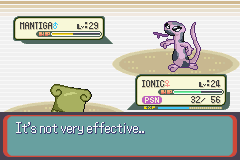
On Reflection: Regarding 10,000 hours, It's Not Very Effective

When evaluating educational gaming software, we need to avoid falling for the millions-of-hours hype that implies all games are created equal. One way to do this is to think about what our goals are for the classroom and how the experience of a game (or a lesson or a unit) will help us achieve those goals.

Many gamify--the-classroom fans like to quote Gladwell's idea from Outliers: The Story of Success about 10,000 hours. His claim is that if one practices a particular skill for 10,000 hours, one can become proficient. But for every World of Warcraft, there is a Tiny Castle. For every Carmen Sandiego there is a Temple Run. While many kids (and adults) have spent a good percentage of their 10,000 requisite hours becoming proficient at the game...at the end of the day they have mastered finger-swiping.

And that isn't even on the test.


Up Next:
Player demographics vs. Game genre; hidden agendas; creative vs. linear

References:
Most popular games of all time
Wikiepedia - Game Genres
Nielson 2009 Report on Casual Gaming

Tuesday, April 9, 2013

Shall we play a game? (part I) -- A Gamer's Initial Thoughts on #edtech Gamification


Ready Player One: Preparing for a Buzzword
A must read for Gamers
I can still recall sitting in my bedroom with the glow of a screen from the second level of Zelda. It was late, but I had pizza and Tab and a whole night ahead of me. I decided right then: Straight Through. No Break. No Dying. -- Time to save the princess.

So when I hear about the Gamification of learning, particularly from those who are passionate about the ability that it could have to transform the educational landscape, I become excited. If the same drive and will and energy that led me through those agonizing levels to defeat Gannon could be harnessed for the power of educational good -- EPIC WIN.

But as I begin to see "Gamification" making the same transition from innovative classroom technique to Edu.Vendor buzzword -- the same transition that "personalized" and "flipped classroom" made -- my excitement begins to slowly drain. My hyperkinetic eye movements (Pacman) and giddy shout of triumph (the first time I got Mario to bounce the turtles for 100 extra lives) are replaced by a sick feeling in the pit of my stomach: The sound of approaching doom ("I am SINISTAR")

It is thus with a nostalgic and hopeful mindset that I cautiously offer this multi-part prelection before I throw myself into Gaming as a tool to teach digital citizenship*:

*Note: Gamification encompasses a lot more than educational software and really a lot more than education in general. I am consciously limiting my focus for the purpose of this post.

Rescuing the Princess: Thinking about Goals
Gamers will go a long way for a goal
At the heart of gaming is a goal. It is this goal, and its similarity to a student's learning objective, that makes gamification appealing in the first place. After all, if a student will work voluntarily for hours to accomplish a virtual princess rescue, just imagine what we could pull off if we redirected it?

But goals are tricky things. First, they are only one part of a larger gaming landscape (we will cover other parts in the next post). A game can be burdened with a terrible ending, but can be overcome by excellent game mechanics (classroom activities) or even social features and scoreboards (group work, classroom leader boards).

Good game designers consider intermediate and long range goals carefully as they construct the overall product. The Gamification movement is about using built in structures such as rules and feedback loops to generate continued interest in the face of difficulty and challenge.

Simply saying "win the race by solving these math problems quickly" is not enough to qualify as an educational panacea, no matter how much you advertise the educational value of this particular prize. No virtual smiley faced "Badge" is particularly transformative in the long run. We have always known that kids love stickers and show them off with glee and pride.

Simply, there has to be a careful consideration about the GOAL OF THE GAME beyond THE GOAL AT THE END OF THE GAME. 


WOULD YOU HELP ME PLANT A PUMPKIN?:
The Other Goals of Gaming

There are also a number of "goals" at play in the big-picture of game-design that have little to do with saving the princess, but a lot to do with how the game is designed, marketed, played and replayed.

Interlude: Building a Tiny Castle
A casual game that leverages impatience to encourage spending
A new breed of game came along with social media websites that took "casual" to a whole new level. The goal of these environmental games might be to plant an attractive garden or build a farm. The ultimate goal though, is to get you to spend money.

In one version of this game-type, Tiny Castle, players are given extremely linear "quests". These quests might be to clear a forest, plant a specific type of tree, create a new species, or upgrade the castle. Each quest takes one or more of the essential game elements: food (to feed creatures), magic (to get rid of fog...just go with it), wishes (to become more powerful) and TIME. Lots and lots of real, one-second-at-a-time, TIME.

As we perform an analysis on the game mechanics, it would be easy to argue that the game could be an excellent way to develop time management skills and patience (i.e., if I set half of my denizens to work on a 3 hour goal and the other half to work on another 3 hour goal, I can finish two goals at the same time that will both be ready the next time I "check-in"). However, a careful look reveals a darker unstated goal. The most efficient way to grow fruit, gather dust, etc. is to be constantly plugged in, refreshing the mechanical action - strategy is replaced by repetitive clicking. Delayed gratification (setting things up and walking away) is discouraged by the game mechanic.

Know what constant clicking is? BORING!

So at any point a player can choose to supplement any of the slowly accumulating supplies by making an "in-game" purchase with real money. A player can even speed up an hours long building of a renovated castle with a wish/hour (and there are even "special sales" on wishes). To make matters worse, some of the QUESTS are completed by "making a purchase of new wishes" (but you know, the first taste is free).

Far from developing any sort of real-life transferable skill, the game discourages serious players from thinking of the game in that fashion. Even the in-game objectives lay the real objective bare: spend more real-life money on make-believe stuff.
End Interlude

While there are a number of people working on gamification (computer based and otherwise) who are passionate about learning and transformative classrooms, this prelection is a cautionary about what happens when the learning technique becomes "buzzworthy". I remember when I hit the vendor floor at ISTE last year and saw Interactive Whiteboard and Furniture vendors explaining how their equipment would help you "flip" the classroom.

The vendors are attacking "gamification" with a vengeance. We as educators need to be familiar with the strengths of Gaming before we are sold another in a long list of goods that have as much educational value as Treasure Chest of Apples or a new horse for a make-believe farm.

Up Next: 
Feel free to add, critique, comment, revise. This is relatively uncharted territory for this old school gamer and my thoughts are in flux.

Special thx to @40ishoracle (her latest post on collaboration rocks). She is the one who turned me onto Jane McGonigal, who is advocating games to save the world

Thursday, April 4, 2013

Competing for their Hearts and Minds -- #Digcit Thoughts from a RoadTrip Vacation

My wife and I are taking the family on one of those road trips that seem to be a necessary  rite of passage of raising-a-young-family that no one can explain. This post is a collection of reflections made on the journey -- Because you can take the #edtech geek out of the school, but you can't take the school out of the #edtech geek.

Different Tools, Different Data, Different Results
On day three of our journey, we are planning on driving from Atlanta, GA to Raleigh, NC. My wife has been referring to the 4.5 hr journey for a few days, but when talking to our relative in NC, she says it is closer to six hours. She says "But mapquest said it was 4 and a half."

I pull out my Nexus 7 and ask Google Now for a map to Raleigh: Six hours and 15 minutes.

My wife (annoyed): "But why would it change? I Googled it just a few days ago!"
Me (in interesting-conversation-about-tech-mode when I should have been in husband-consoling-wife-who-has-had-her-plans-derailed-mode): I thought you said you had used Mapquest?
Wife (now annoyed at me): I used something. Why would they be different?

...and while i could think of all sorts of reasons for differences including accuracy of routes, real-time information (those cool Google cars), differing calculation methods, real-time traffic or construction updates (not to mention any number of human error issues), I had picked up on the fact that this was NOT the conversation my vacation planner and mother of my children wanted to have...but it got me thinking.

The Information Conundrum
Waze Crowd-sourced mapping
What my wife experienced  is an increasingly common occurrence  People in stop-and-go traffic who pull up
a traditional GPS will often be frustrated by a red (slow) traffic line, but little information. But if that same person is using an app called WAZE, they can get minute-by-minute updates from real users, including the guy 2 miles ahead saying "they have the semi off the road now. traffic should start moving any minute." And while mapping and travel seem to be one of the easy highlights (Apple's early foray's into maps was well-documented as one of the companies few but often entertaining stumbles), there are a number of areas where we are beginning to see this issue arise for our students.

The internet houses websites and blogs galore which at first glance can appear to have valid information. However, as the ease of creating and distributing information has increased, we have not had a corresponding rise in our capacity as humans to filter through this information and distinguish bad information from good. And this is not just a situation created by the rise of the blogosphere.

Billboards and Displays of Competing World Views
As we are travelling down the highway on the way to Raleigh, I see a billboard that shows a caveman fighting/running from an old-style Tyrannosaurus Rex (you can tell older depictions from the positioning of the tail. If it drags on the ground Godzilla-style, its based on older anthropological models). It is an advertisement for a Creationist Museum - a concept I am familiar with due to our proximity to one in Kentucky -- I just didn't realize that they had franchised.

The newest creation museum advertising eliminates the "controversy"
in favor of the draw of Dinosaurs. Thunder lizards are cool.
There are currently 16 Creationist Museums. These museums are typically privately funded with a

combination of models, animatronic displays, professionally produced videos and interactive activities typical of the modern museum experience. In fact, the many of the museums get high reviews from visitors and have been featured as tourist destination highlights. What is noteworthy about these museums is that the exhibits are based on young-earth/creationism interpretations of the origin of life and the planet.
The "Come Meet Your Relatives" sign outside the
Mammal wing of the Museum of Natural History

Either the Earth is 4.54 Billion years old or it's 6,000 years old. Relativism, while popular as a moral stance (that will be a rant for another day), is not as easily applied to geology.

But thousands of people a year visit these museums that cost millions of dollars in order to learn from what National Center for Science Education director Eugene Scott called " the Creationist Disneyland". The discussion that ensued in the car-ride ranged from young-earth positions, to carbon dating, to evolution and catholic teaching. It led to one of our daughters pointing out the number of evolution references made at the Smithsonian Museum for Natural History (although the Gem displays were the biggest hit).

The point here is not good science vs. bad science. (see the original #savethedinosaurs post for some of that). There are two highly funded competing world views fueled by scientific method, research, religion, morality and money that are vying for the eyes, hearts, and minds of our students.

  • What are the specific skills that students need to develop in order to function in this world of competing information and data?
  • Regardless of the status of the Common Core and its corporate sponsored testing offspring, what should schools be doing to put in place the development of these skills and habits-of-mind? 
  • At what age do our students have to develop the capacity to use their skills and capacity for rational thought to determine which of these world views they will subscribe to and follow?

#Edtech, #Digcit, and #BYOT -- Identifying the Essential Skills
1. Claim and Analysis: Students must be able to find factual claims within a piece of writing, be it a tweet, Facebook vanity card, news article, or research paper. They should be able to identify and evaluate the supporting evidence (or in most cases lack thereof) which supports the claim.

Practically Applied: We use the student newspaper. Preliminary questions we ask are:

  • Do you trust this source? 
  • What reasons do you have in-source for this trust? 
  • What reasons do you have beyond the source for this trust?


2. Identifying Assumptions: World views are loaded with assumptions of truth. Identifying these assumptions and treating them as claims that can also be analyzed for support is a key activity in the high-data, conflicting conclusion modern age. The process of uncovering assumptions can be difficult to teach/learn, in part because human brains use assumptions to process data efficiently in the best of situations (and with all of the data produced in the world today, it is NOT the best of situations.

Practically Applied: Use a series of regressive questions as part of the research process when students are beginning to identify primary research questions and problems:

  • What is the problem that you have identified?
  • Why is that a problem?
  • What information do you need to formulate a solution?
  • What sources can provide that information?
  • Are there experts in the area who believe that it is not a problem?
  • What are their reasons for believing it is not a problem?


3. Closed Systems of Information, Silo Thinking, and Confirmation Bias: The goals of hardware, software, and information providers in the modern business-oriented world is lock-in. This is the tendency to go to the same well for information and solutions. Again, this is an aspect of human nature - habits help solve recurring problems efficiently. Thus, Google wants you to constantly go to its website for the answer. Apple and Amazon are both creating stores of information and data access so that you never have to go to the Big-G for an answer. Fox, MSNBC, CNN are all competing for your eyeballs, your homepage, your attention and your trust. As you spend more time within one system, you find that the answers reinforce eachother on two levels: All of the answers seem to tie together, painting a coherent view of reality and all indications then seem that this source of information is a good source to rely upon in the future.

Practically Applied: Teach social media as a tool and not a distraction. Students should be working from a young age to a) question the reliability of information sources and b) build a system of information sources that intentionally have multiple viewpoints, biases, and information.

An early social network activity we use is to identify social media sources within a student's personal network. Count the number of friends, relatives, celebrities, news sources. Then rank those sources along different perspectives such as politics (conservative/liberal, Big/Small government), religious perspective, value of formal education, etc. Many of our students find that they are likely to have a network that feeds their own pre-existing world view and that the ideas presented are strikingly similar across social media.


4. Variety of Tools and Sources. An unanticipated side-effect of the 1:1 BYOT implementation at the school is the in-depth discussions about methodology, whether it is for creating a presentation or finding information. In a world where each student brings a device and the device is the choice of the family/student, there are a lot of tools in each classroom. Students begin to discuss and share problem-solving strategies naturally and teachers can foster this sharing with directed activities.

Practically Applied: Focus on process over product. Have students keep a process journal as part of each major assignment. Use the journal as a part of reflective and sharing activities. As different conclusions are reached, the student's become better equipped to un-pack how they reached a specific answer and why that answer was different from the conclusion of another member of the class.

On Reflection
None of these applications are easy and very few of them can be answered with a click or a filled-in bubble.We have found that the amount of time we spend on individual projects grows as we add in time to use regressive questioning in the beginning and time to pair-and-share process reflections in the drafting stage of papers and presentations.

But this is a part of the answer to the issue of information overload and over-reliance on data-without-depth.

Our call as educators is to helps student identify not just the correct answers to the questions on a test but the underlying systems that produced those questions-and-answers in the first place. Corporations  governments, and organizations are all to willing to have reliable consumers and followers.

We should accept nothing less than independent thinkers.
Our children deserve it.


More than just a consumer and political pawn

Friday, March 22, 2013

Answering "What's Next?" - Classroom Technology Beyond BYOT (with pictures and bullet-points)

One of the problems with pulling off an important (if small) Educational Technology revolution is the inevitable questions from excited faculty, students, and trustees: "What's Next?" While the temptation is strong to answer, "reading some comic books and 3-starring every level of Angry Birds", that is not acceptable and probably not good for student learning.

Thus, we began to embark on our next level of technology integration: What should a classroom look like in a BYOT environment.

We began in similar fashion to what eventually became our 1:1 BYOT solution -- we asked the teachers and students:

1. What is the most frustrating thing about teaching and learning in your classroom right now?
2. What would make you a more effective educator if we gave it to you next year?
3. What would the ideal learning environment look like?

And boy did we get answers!

Flexibility:
Whether it was from teacher-teacher or from activity-to-activity, teachers wanted the ability to change the layout of a classroom quickly, without a lot of effort. This came from Social Studies (Harkness table configuration with Primary Source discussion), World Language (quick changes from pairing to small groups to teacher-centered instruction and back again within the same period), to Math (we like our rows, but it would be nice if we could get in between them faster without tripping over bags -- you have to stay mobile when ever kid has a device).

Collaboration:
While the standardized testing advocates get a giddy little thrill every time they release a document that pretends learning is an isolated experience between the student and the electronic equivalent of a bubble sheet, learning is about engagement -- engagement with material, engagement with the teacher, engagement with each other. Teachers and students alike wanted a classroom where collaboration did not feel like a tacked-on after thought.

Space to Write, Tools to Share
Who needs an Interactive Whiteboard? Just give us colors!
After flexibility, the number one request was MORE WHITEBOARD SPACE. Three walls, paint the walls with whiteboard paint, get individual boards around the room. -- It was really a dream come true for a whiteboard aficionado like myself (totally had to look up that spelling).

As teachers begin to move from experience to reflection, sometimes the process of sharing that reflection is best written down where others can see (Think-Pair-Share and Gallery Walks are good examples of this). As the front of the classroom diminishes and students take more ownership in the classroom, a natural outgrowth of this is the need for more surface area capable of capturing ideas.

...and then there is technology
Ever try to have a beyond 1:1 discussion about technology with the interwebs? It is NOT pretty. It quickly degenerates into camps based on Android or iOS, or it becomes "Walls? Where we're going, we don't need walls!" from the blended-distance learning camps.

So here is our context:
  • We already start with learning objectives and student engagement in mind. Technology is a tool that gets us to stronger relationships, better (read more authentic) experiences, and opportunities to engage in personal and collaborative reflection (what Jesuits call LEARNING).
  • We already have a device in each student's hands and the device is one that they chose based on personal experience, reflection, and context.
  • We are working to create a learning environment that is flexible and student centered, focusing on the learning activities that maximize our mission and pedagogy.
Our thoughts so far:

  • Maximize flexibility and sharing with Multiple Displays and Student Device Connections
  • Create simple control systems that allow teachers and student to quickly do what they want
  • When possible, hide wires and connections and make the systems tamper-proof
  • Use Document Cameras and Classroom Recording technology to make access to notes and activities flexible in time and space.
  • Even when items must be fixed for electricity or network, give a teacher the option to clear the space for other activities

Our Teacher Resrouce Room -
Brainstorming Central
Over the next few weeks, teachers will begin to give feedback on the tools that they would like to see in their classroom and we will begin the process of designing our next generation BYOT classrooms. Feel free to peruse the document below. We will be hanging it in our Teacher Resource Center for discussion and feedback and finalizing the look and feel of our next iteration of the classroom.


  • What did we miss?
  • What do you like?
  • What will transform teaching and learning in your classroom AFTER you are 1:1?
  • What are the goals that you have in mind when considering classroom technology?

Feel free to leave comments down below or on social media. We appreciate the feedback and will use it in our decision making process (which the Jesuits call Discernment - they have a word for EVERYTHING)


Friday, March 15, 2013

In Memoriam: Google Reader -- Why This Matters to Digital Citizenship

Note: The top half of this will be about Google Reader -- the best product that few people new about. Feel free to ignore it. The bottom half will tie this product and the philosophy behind it to Digital Citizenship and Information Literacy. If you are a non-tech Educator, skip to the picture of the three girls.

So Long and Thx for all the Well-Organized, Pre-Selected Push News

If you were reading any blogs about...well almost anything or on social media...just about any of them. You probably heard that, as part of its Spring Cleaning Project, Google was putting the nail in the coffin of a service called Google Reader.

The reason that the cry was so loud, in part, is because so many of the non-traditional news sources (blogs, website reporters, active tweeters, etc.) used Google Reader on a daily (and in some cases hourly) basis. The sunsetting of this product will change the way that many of us (myself included) operate as we maneuver through the techno-informatic complex called the modern world.

What is Google Reader?
Google Reader was/is a news aggregator that uses a back end technology called RSS. Many websites, blogs, news agencies have the RSS symbol (seen in the picture) on their site. If you click that button, you will be given the opportunity to "subscribe" to the information on that site. This subscription is collected and available to you in an RSS Reader which can be found on the web or on phones, etc.

The reason the reader was so popular was because it did what it was designed to do very well. It delivered subscriptions in a clean format that could be sorted by subscription or by recency. It synced between online and mobile. It did not inundate the reader with too many advertisements, nor did it get overly complicated with graphics or flashy (or HTML5-y) formatting tricks.

Why Shut It Down?
Google reader (and RSS in general) is a quirky entity on the internet. For those people who use it, it becomes essential. It is a way to quickly filter information because you, as a user, have pre-determined that the content has some value.
This NSFW (language) post went up hours
after the announcement. May be worth a Google.
From a Social Studies teacher: What am I supposed to do? That is how I read all of my blogs. It is how I get new ideas for the class, news to share, commentary. This is miserable. What is next?
From Hitler: What? I am supposed to rely on getting my news from what Stalin retweets? (see photo)
 Conversation with my wife:
+Elizabeth Ferries-Rowe (@wishbabydoc): I don't know what that is
Me: When you wake up in the morning what is the first thing you look at?
+Elizabeth Ferries-Rowe: Facebook.
Me: For me, it is reader. It tells me what happened that was worth knowing overnight.

...and that is ultimately the issue. Google's spring cleaning focuses on eliminating products that don't fit its core mission components -- Search, Social, and ...something else that I am drawing a blank on. Now, it could be argued (and has been on a lot of blogs) that when Google refocused the "Sharing" from a broad choice down to Google+ that their insular vision caused a lot of people to drop the service. It could be argued (and also has been) that this is yet another example of Google backing away from its promise to "not be evil". Some see it as a problem with the Google-as-Free model, offering to pay money toward the service so many rely upon.

I signed the petition, but I don't think it will do much good. Google made its choice. Here is why I think it is the wrong one:

InfoWhelm, #DigCit, and the Need for New Methods of Information Acquisition

The next gen of Digital Learners will need to Find & Filter info
When Brebeuf Jesuit revamped its curriculum from Computer Applications to Digital Citizenship (a move now being adopted, at least in name, by the rest of the State of Indiana #nocredit), one of the areas that was important to consider was research. As we delved deeper into this topic, talking to teachers, interview students, looking at research in our curriculum and expectations of colleges, we realized that this was going to be a significant focus of the new curriculum. As with most of our units, there are a lot of goals that branch to a number of areas, but today I want to focus on three issues we uncovered:

1. Data, Data, Everywhere - In 2010, Eric Schmidt, then CEO of Google told an audience at Techonomy that there is more data generated in two days than was produced from the dawn of human history to 2003. IBM notes that 90% of all data available has been created in the last two years alone.

2. Inability for Traditional Filter Mechanisms to Address - Traditionally, people relied on large organizations to filter through the data for reliability, veracity, accuracy, etc. These institutions included the government, academic settings with their peer-review system, and even publishers and editors. But most data is now user generated. Whether it is pictures shared on instagram, tweets of the snark or share variety, or blogs like this one, we publish with no filter.

3. Need for Intelligent Filtering - But at the point that so much data is produced, human beings still have to find a mechanism for sorting through that deluge of information. We need to setup systems and processes that will help us filter that information based on a number of factors, including:

  • Usefulness - does the data help me in my daily life or in achieving long term goals?
  • Accuracy - does the data match my real world experience? Can it be independently verified?
  • Timeliness - is the data relevant now or has the digital ship already sailed?
  • Variety - are there enough different sources of data to avoid falling into traps of confirmation bias or silo thinking?

From a post about setting up RSS filters
These filters are not a part of the natural make-up of a human being. In fact, we are biologically/psychologically programmed to have the opposite reaction to some of this information (we tend to ignore information that does not already fit within our pre-existing belief system; we discount information that goes against immediate bio-feedback).

At the point where we do not have a natural ability to sift through information and the social structures in place are inadequate to the job, we must design new systems. RSS Feeds are one of the most powerful tools for this information-filtering, if the people subscribing do so with deliberation and thought -- and Google Reader was one of the best.

Practically applied -- Teaching Infowhelm and Data Management
It is insanity to expect a student to run through a full cross-referenced search process every time they want to read about a controversial issue or topic of interest to them as an individual or to society at large. But in the age of bias-journalism, government/corporations limiting curriculum to easily testable/gradable items, and infowhelm, students need something to combat the deluge of bad data. Click SUBSCRIBE

As we teach our students the skills of finding accurate, relevant, and useful information, we should also be teaching them a method to collect that data on a regular basis. Once a source has been confirmed useful, it is a source that has a good chance of being useful in the future. Click SUBSCRIBE.

As we teach students to find items that present different viewpoints on the world (by finding sources that go against our natural inclinations, discovering writers and reporters from outside our geographic/cultural bubbles, or by finding snarky bloggers who make our blood boil), we should make those viewpoints part of our daily intake of information, if for no other reason than to know the perspective of those who disagree with us. Click SUBSCRIBE.

Why not Social Media?

Social Media Aggregators serve a different function
In class, we work with our students to have them identify their primary sources of information. A growing number of teenagers cite social media as their number one source of news. But relying on your social media circle has two negative #digcit impacts.

  • First, it adds a layer of choice between the user and the information that is outside the user's control. You are not receiving information because has been pre-screened as reliable or relevant or useful (at least not be you). You are receiving information because it meant some criteria that was relevant to whoever decided to share it. Not good.
  • Second, it is almost guaranteed to lack any form of counter viewpoint since we are not likely to follow/friend those with whom we fundamentally disagree. While we can intellectually view material with which we disagree and evaluate it for truth and accuracy, we don't necessarily want that in our social feed, so we avoid it.
  • Finally, our social feeds are SOCIAL. Although I am a huge advocate for social media for its connective and professional development potential, the use of it as a news aggregator gets diluted by the barrage of snark, hashtags, LOLcats, and Hitler-throwing-a-fit videos.
I am sad to see Google Reader go. I have begun to search for alternatives and have been disappointed in the bells and whistles that have been added, usually in the name of "making it more social" or "adding visual appeal". 


But I am also sad because I think of Google as a partner in the #digcit world. Through gmail, google docs, and drive, they have done a lot to empower the individual and close the gap that the Digital Divide throws at our students (granted at the cost of a little/lot of privacy). When they made this decision, they decided to remove an effective tool against information glut and overload. They decided to separate the core functionality of SEARCH from the parallel human need to SORT. Rather than close down the service, I would have hoped they would have made its use a key part of their educational drive.

So, Thank you, Google Reader. My mornings, mid mornings, early afternoons, just-before-leaving-for-work, standing in line, and late nights won't be the same without you.

(You have a few months left. Go ahead. Click SUBSCRIBE).

Monday, March 11, 2013

#Flipclass in an Ignatian Context

Last week, the @40ishoracle and I along with two teachers got to visit one of our fellow Jesuit schools to talk about creating #edtech friendly environments. The keynote was a hybrid of our "Why we went BYOT" combined with a lot of the reflections from last week's blogpost "10 Rules for an #Edtech Department"

One of the breakout sessions that I was asked to give was on the flipped classroom. I will expand the presentation a little more this week (fill in some of the words that I used), but I have had some requests to post the slides, so here you go.

The presentation was a lightning round break-out (20 minutes total with at least 5 minutes reserved for questions), so the focus of the presentation is the reason to consider #flipclass in a Jesuit school -- namely, how does #flipclass support the Jesuit mission of education.

Elements of Jesuit/Ignatian Pedagogy that I focused on were:

  • Understanding Student Context as an element of education
  • Providing time and space for actual learning experiences (now with teacher availability)
  • Providing time for reflection on that experience as a part of authentic learning
More later...

Note: Information in Pink-Boxes is an attempt to capture the spoken content

Monday, February 11, 2013

Won't somebody think of the children? An analysis of the segregation of Boys and Girls from the perspective of a Parent and Educator

Disclaimer: some facts or details from this post may be insufficient or even inaccurate due to the lack of communication parents are receiving from the school in question. That is part of the point. But I will own the inaccuracies in service to the reflection.

Even at Sea World, educators cannot
escape the call for innovation
The @40ishoracle and I were spending a lovely day at Sea World before the official start of #FETC (a decent conference and the best vendor floor that I have been subjected to in years), when i get one of the stomach churning texts from my wife "call me when you get a few minutes" -- In the modern world of texting, voice communication is at a premium. I immediately delayed my progress to the sea-lion show and made a phone call.

Parents of students in my daughter's highly successful 6th grade class had received a letter from the administration explaining that student safety was of the highest priority and that, due to some recent incidents, the 6th grade classroom would be "clustered" for an indeterminate amount of time. As one parent later put it, "if you didn't know what was going on, you would think maybe someone brought a weapon to school" (or possibly was using a make-believe hand-grenade to fight off evil on the playground).

So, some questions that arose:
  1. What was the incident?
  2. What does "clustering" actually mean? (aren't any student groups in more than one classroom clustered? Tracking is a kind of clustering, right?)
  3. Is this clustering a long-term or short-term solution?
  4. Is everyone ok?
  5. Why is everyone being impacted by this "incident" if not everyone was involved in the "incident"?
  6. Is this the only response?
  7. Was my child involved?
  8. What should I be discussing with my child as a concerned and supportive parent?
  9. Not to be repetitive, but what happened?
Most of the explanation that follows comes second or third hand from the most reliable source that was willing to talk to my wife...namely, our 6th grade daughter:

6th grade boys and girls were involved in a "game" that involved inappropriate touching in one of the two 6th grade classes at the school. The incidents were repetitive, had been going on for awhile, and were, in some cases, not consensual. A student had told another student who had told an adult. (This happened at the end of the week before the letter went out). Related to this timeline, a concerned parent may or may not have called either the Indianapolis Public School security (we have an official e-mail that references the IPS police) or the Indianapolis Police Department.

As is often the case with children, concerned parents, and the possibility of legal action, investigations ensued. The culmination, at least from non-directly-involved parents' points-of-view was the aforementioned clustering solution.

_______

CLUSTERING (from Wikipedia): 
an educational process in which four to six gifted and talented (GT) and/or high achieving students are assigned to an otherwise heterogeneous classroom within their grade to be instructed by a teacher that has had specialized training in differentiating for gifted learners.[1] ...Within a cluster, several instructional options are typically used, including: enrichment and extensions, higher-order thinking skills, pretesting and differentiation  compacting, an accelerated pace, and more complexity in content.[5]
_______

Well, that doesn't sound too bad. Except that in this case, the CLUSTER was a euphemism for dividing the 
Went looking for a picture and found a good post
6th grade boys from the 6th grade girls for an indefinite period of time.
  • All academic classes are segregated boys from girls.
  • "Extras" such as art and music are also divided (there is a whole blog post on these things now being just "extras")
  • Students attempting to communicate with other students of the opposite sex in the hallway are called out by the teachers monitoring the hallways with admonitions like "don't talk to them!"
  • This has led to some of the girls passing by the boys quickly saying things like "UNCLEAN!" (I love pretentious Pre-teens). Other reaction have included suggestions of adding "Boys" and "Girls" signs to the drinking fountains.
My wife, an OB/GYN (and much more rational person than I am) wrote a well thought-out letter to the teachers and principal of the school outlining the limited information she knew and her reaction:
  • This approach seems punitive on-face, particularly if a number of boys and girls were not involved
  • While the students involved have been identified as "gifted", they are still pre-teen students with the hormones that accompany that age.
  • Healthy and unhealthy sexual habits form at an early age (unhealthy examples include using sexuality as a bargaining chip, objectifying the opposite sex, and victimization) and this behavior presents one of those all-too-buzzwordy "teachable moments" -- she even went so far as to volunteer the services of medical students and/or residents who would be willing to talk to middle school kids.
The response from one teacher was essentially "I agree, but I am not allowed to talk about it"
The principal gave no response.

That was two weeks ago.

Since then, we get vague ideas from concerned parents who are trying to glean information and from students who are a-buzz with reactions and rumors. The most recent news is that the classes will be reintegrated, but that logistically this cannot happen for at least two weeks since science-project groups have now been assigned! (#edreform snark: This makes no sense. Are there even high-stakes tests associated with the science project? Let's keep our eye on the ball!)

Reflection:

 I do not want this to appear that I am dismissing the "game" or the students who started, participated, or may have covered it up. This can be a serious and traumatic experience and should be dealt with appropriately. Those involved should answer for their actions in a way that respects the severity of the action and the developmental age of the students who participated willingly.

I am also not dismissing the literature on single-gender classrooms. In fact, this has little to do with the research in that area. The school is not making a decision based on a thought-out education policy and review of literature that concluded more effective education occurs in a segregated environment. If that were the case, we would expect to see separation of the 7th and 8th grade classes as well, parents would have been given opportunity to weigh in on the decision and choose whether that was the learning environment best suited for their children. -- This was a consequential reaction. Whether those consequences were a reaction out of a concern for safety or a concern for avoiding litigation cannot be determined.

We do know that the consequence was not out of a concern for the education of the 6th grade class as a whole. The response, lack of communication in the past two weeks, as well as the literal and metaphorical separation from any type of formation or educational opportunity is disturbing but indicative of many trends in education.

Lack Education by Context: 
The use of context acknowledges an individuals background, history, learning style and current situation in order to craft the best learning program. It is the true definition of personalized education. In this case, it would treat students who were tangentially involved differently than students who were directly involved and who may require more in-depth education or even counseling. One can only hope that there is some minimum of context being considered here, but there is no indication of that from the outside looking in.

Lack of Education by Relationship: 
As I have written about in a number of posts, one key to education is the use of relationship to help the learner understand (beyond parroting back answers from a personalized software platform). One concern in the educational reform culture that de-values teachers  in favor of a common curriculum, standardized software metrics, and high-stakes testing is that this essential relationship component is lost and we (students and educators) miss out on key learning opportunities that are indicated by behavioral signs and unique learning moments that arise outside of a lock-step curriculum and its corresponding metrics. 

There are a number of relationships that this current reaction ignores and in some cases attempts to sever: 
  • Boys-Girls -- Boys and Girls are shown that their relationships are, at the core, something that can be dissolved with little consideration and that is probably, at some level, a bad thing that should be avoided if not punished. 
  • Teacher-Student -- Teachers are once again moved along the continuum from guide to enforcer-of-rules which from the student perspective seems arbitrary and ineffective.
  • Parent-School Adults -- Parents are frustrated by the lack of explanation about the thought process behind the platitude of "student-safety" concerns. This makes it difficult to be supportive of the administration and the teachers.
Lack of Education by Reflection: 
Khan Academy notwithstanding, the process of education involves combining new and authentic experiences with past context in a process of reflective questioning and application. While it works in math and world languages and computer programming, this process of reflection is particularly necessary when dealing with inter-personal relationships, demonstrating appropriate behavior, and "figuring out" what kind of person one hopes to be as an adult. When the only message from this incident is "when boys and girls touch each other, there will be consequences for EVERYONE", we have missed out on the most basic form of education, namely being able to talk about the incident with caring adults who are able to guide students, hormones and all, through very complicated feelings and reactions.

Final Thoughts:
At the end of the day, most of these students will be undamaged by their month or so "time-out" from the opposite sex. But the decision making process that led to this separation still deserves examination. If we have moved past making decisions that are developmentally appropriate, we become unable to guide teens and pre-teens through an emotional and confusing time.  if our decisions are no longer those that are educationally indicated, we miss out on key moments that may not come around again (not to mention that we give up the authority that comes from being educational experts in society). Heck, at least if our decisions were made based on test-scores we could have some data at the end of the day (*cringe*)

I am concerned for students who have had one skewed imagery of healthy sexual behavior replaced by a different, but also skewed perspective on gender roles and relationships.

I am concerned that we are so afraid of honest communication, reflection, and context that we are willing to warp our students' social structures on a reactive whim.

I am concerned that, ultimately, our actions reflect those things that we value most and that the values being represented here seem cold and distant from adolescent formation or healthy education.

As a parent and teacher, I am concerned.