Showing posts with label digital citizenship. Show all posts

Thursday, October 24, 2013

Of (Mickey) Mice and Copyright -- A Teachable Moment

John Steinbeck wrote Of Mice and Men in 1938.
First Edition Cover
75 years later, it is a book that school children still read. The tale is a powerful one and it has captured a place in the American literary canon.

With a little bit of searching, you could find a .PDF copy on the internet and download the text. With a little bit more work, that PDF copy can be transformed and distributed to a classroom of iPads. An entire classroom of children could be exposed to this character study of two men in the the early 20th century...for free

But -- and this is important -- that is illegal.

Interlude: Copyright Basics
  • Society values creativity. As John Keating said in Dead Poets Society (a movie that may have inspired more wanna-be teachers than the TFA), "...medicine, law, business, engineering, these are noble pursuits and necessary to sustain life. But poetry, beauty, romance, love, these are what we stay alive for."
  • In order to encourage creative types to be creative, society allows said creative types to make money off of their work in a number of legally binding ways. This ownership of a creative work is called COPYRIGHT. (it's even in the constitution): 
"the Congress shall have power . . . to promote the progress of science and useful arts, by securing for limited times to authors and inventors the exclusive right to their respective writings and discoveries." - Article 1, Section 8, Clause 8
  • Society also acknowledges that creativity spawns creativity. Thus, after a reasonable period of time, society deems that creative works should enter THE PUBLIC DOMAIN.
  • Society also finds that there are instances where the absolute control of a creative work can be outweighed by another benefit to society, such as education, critical review, or even for parody. In the United States, these are collectively called FAIR USE EXCEPTIONS.
  • How and when creative works become a public good is a subject of debate and is ultimately determined by a society's government (and the corporations who pay lots of money to provide opinions to politicians).
End Interlude

Steinbeck, who passed away in 1968, had sold the rights to this book to a publishing house which continues to make money off of the 2 million or so copies sold each year. The copyright was renewed in the 1960s and extended to a total of 95 years. Seven years ago, his family sued to win back the rights to the book.

By all current laws, the book enters the public domain in 2033. If by some strange circumstance it becomes unavailable (e.g. goes out of print), it can be used by schools because of an exemption in the current copyright law. That is unlikely to happen.

If classes want to read this book, the schools need to pay for it.

What about Educational Fair Use?
Educational Fair Use is awesome and powerful. It allows teachers and students to use excerpts of works for educational reasons and to incorporate a variety of copyrighted materials into presentations and lessons without needing to pay copyright holders for every single work.

But it is limited. It is limited by the amount used, by the nature of the original work, and the intent and purpose of the use. And it is limited by the impact on the market: If the only reason to make twenty copies, digital or otherwise, of an entire book is to keep from buying twenty copies of that book, fair use protection does not apply.


Interlude Two: What Does this have to do with Mickey Mouse?
Used proudly under Fair Use Guidelines
Mickey Mouse debuted in 1928. By the laws of that time, he would now be freely available for use. However, the US Congress has strengthened copyright protections and extended the length of copyright in such a way that the House of Mouse can sue anyone trying to put "Steamboat Willie" on a lunchbox until 2023.

The last major debate on this issue in 1998 was nicknamed the "Mickey Mouse Protection Act". Sonny Bono (he of "& Cher" fame) held the hands of that sweet, innocent corporation and proclaimed, "I got you, Babe" and secured big-D another 20 years of mouse-exclusive merchandise.

So while there is some hope that we can one day read the almost century old works of Hemingway or Steinbeck without paying a large per-book cost, the show is not over until the politicians are paid...and Disney has deep pockets.

End Interlude


We live in a world with easy access to all sorts of media. Freshman enter the #digcit class every day with the expectation that movies, photos, stories and ideas are readily available and should be free of charge. Put bluntly, they believe some stealing, while illegal, is not really bad.

When questioned, there are a number of reasons:
  • Movies are too expensive to buy
  • What if the movie is not good? then you just wasted your money
  • I want to watch it now, not when it comes out on DVD
  • Studios make so much money anyway. 
  • I am not the one who "stole" it. I just downloaded it.
  • etc, etc...
We as educators need to take a different tact than reinforcing the idea that copyright in the modern age is meaningless and that taking what you want because it is readily available is a digital right.

At the same time, we need to empower students to understand the way that corporations and politicians can change ideas and the laws that enact them in ways that may ultimately hurt society. We need to write to politicians and publish letters to the editor. We need to show students how to change the system by becoming active. Thus, I humbly offer the following template:


Dear Politician who Accepted Money from Disney, 
I know that it's hard to believe in this day and age, but schools don't have a lot of money. We have reduced the number of teachers, eliminated librarians, and practically dismantled the unions. But tests and pre-tests cost money and between Acuity and Lexiles, we're flat broke. 
We would like to teach a book called OF MICE AND MEN. Maybe you've heard of it. I think there's a movie. But due to copyright extensions that moved Public Domain from 28 years to 70 years after the author's death (or 90 years for corporate-owned works), this book is not yet available to be freely read on our iPads or downloaded from Project Gutenberg
So we were wondering if you could send us some of that Mouse Money you got for protecting Disney from the ravages of exploitation. We checked at Half-Price Books and a paperback printed in 1993 is only $5.36 cents. If you wanted to be awesome, we could get a digital copy to read on our shiny new iPads for $9.99 - this is the digital age after all.  
Thank you for your consideration,  
Teachers and students at a school trying to show respect for all laws, even the silly ones.

On Reflection...
The extension of copyright law has added to the cost of teaching Literature and may deny some students the opportunity to learn from certain works.

But Literature's loss could be Social Studies' gain. Rather than throwing our hands up in exasperation or giving in to social pressure that pretends everything on the Internet is public domain, we can explore the impact of laws and capitalism, of creativity and social good in a real and authentic way.

We can read...
We can debate...
We can analyze...
We can persuade...

As teachers, our job is to model to and advocate for our students. But more importantly, we should create environments where they can be advocates for themselves: Students should be able to take a stand and work to make their lives and the lives of others better.

We might be able to do that by stealing a book...
but we might be able to do it better by figuring out why it is stealing in the first place.


Sources: 

Thursday, April 4, 2013

Competing for their Hearts and Minds -- #Digcit Thoughts from a RoadTrip Vacation

My wife and I are taking the family on one of those road trips that seem to be a necessary  rite of passage of raising-a-young-family that no one can explain. This post is a collection of reflections made on the journey -- Because you can take the #edtech geek out of the school, but you can't take the school out of the #edtech geek.

Different Tools, Different Data, Different Results
On day three of our journey, we are planning on driving from Atlanta, GA to Raleigh, NC. My wife has been referring to the 4.5 hr journey for a few days, but when talking to our relative in NC, she says it is closer to six hours. She says "But mapquest said it was 4 and a half."

I pull out my Nexus 7 and ask Google Now for a map to Raleigh: Six hours and 15 minutes.

My wife (annoyed): "But why would it change? I Googled it just a few days ago!"
Me (in interesting-conversation-about-tech-mode when I should have been in husband-consoling-wife-who-has-had-her-plans-derailed-mode): I thought you said you had used Mapquest?
Wife (now annoyed at me): I used something. Why would they be different?

...and while i could think of all sorts of reasons for differences including accuracy of routes, real-time information (those cool Google cars), differing calculation methods, real-time traffic or construction updates (not to mention any number of human error issues), I had picked up on the fact that this was NOT the conversation my vacation planner and mother of my children wanted to have...but it got me thinking.

The Information Conundrum
Waze Crowd-sourced mapping
What my wife experienced  is an increasingly common occurrence  People in stop-and-go traffic who pull up
a traditional GPS will often be frustrated by a red (slow) traffic line, but little information. But if that same person is using an app called WAZE, they can get minute-by-minute updates from real users, including the guy 2 miles ahead saying "they have the semi off the road now. traffic should start moving any minute." And while mapping and travel seem to be one of the easy highlights (Apple's early foray's into maps was well-documented as one of the companies few but often entertaining stumbles), there are a number of areas where we are beginning to see this issue arise for our students.

The internet houses websites and blogs galore which at first glance can appear to have valid information. However, as the ease of creating and distributing information has increased, we have not had a corresponding rise in our capacity as humans to filter through this information and distinguish bad information from good. And this is not just a situation created by the rise of the blogosphere.

Billboards and Displays of Competing World Views
As we are travelling down the highway on the way to Raleigh, I see a billboard that shows a caveman fighting/running from an old-style Tyrannosaurus Rex (you can tell older depictions from the positioning of the tail. If it drags on the ground Godzilla-style, its based on older anthropological models). It is an advertisement for a Creationist Museum - a concept I am familiar with due to our proximity to one in Kentucky -- I just didn't realize that they had franchised.

The newest creation museum advertising eliminates the "controversy"
in favor of the draw of Dinosaurs. Thunder lizards are cool.
There are currently 16 Creationist Museums. These museums are typically privately funded with a

combination of models, animatronic displays, professionally produced videos and interactive activities typical of the modern museum experience. In fact, the many of the museums get high reviews from visitors and have been featured as tourist destination highlights. What is noteworthy about these museums is that the exhibits are based on young-earth/creationism interpretations of the origin of life and the planet.
The "Come Meet Your Relatives" sign outside the
Mammal wing of the Museum of Natural History

Either the Earth is 4.54 Billion years old or it's 6,000 years old. Relativism, while popular as a moral stance (that will be a rant for another day), is not as easily applied to geology.

But thousands of people a year visit these museums that cost millions of dollars in order to learn from what National Center for Science Education director Eugene Scott called " the Creationist Disneyland". The discussion that ensued in the car-ride ranged from young-earth positions, to carbon dating, to evolution and catholic teaching. It led to one of our daughters pointing out the number of evolution references made at the Smithsonian Museum for Natural History (although the Gem displays were the biggest hit).

The point here is not good science vs. bad science. (see the original #savethedinosaurs post for some of that). There are two highly funded competing world views fueled by scientific method, research, religion, morality and money that are vying for the eyes, hearts, and minds of our students.

  • What are the specific skills that students need to develop in order to function in this world of competing information and data?
  • Regardless of the status of the Common Core and its corporate sponsored testing offspring, what should schools be doing to put in place the development of these skills and habits-of-mind? 
  • At what age do our students have to develop the capacity to use their skills and capacity for rational thought to determine which of these world views they will subscribe to and follow?

#Edtech, #Digcit, and #BYOT -- Identifying the Essential Skills
1. Claim and Analysis: Students must be able to find factual claims within a piece of writing, be it a tweet, Facebook vanity card, news article, or research paper. They should be able to identify and evaluate the supporting evidence (or in most cases lack thereof) which supports the claim.

Practically Applied: We use the student newspaper. Preliminary questions we ask are:

  • Do you trust this source? 
  • What reasons do you have in-source for this trust? 
  • What reasons do you have beyond the source for this trust?


2. Identifying Assumptions: World views are loaded with assumptions of truth. Identifying these assumptions and treating them as claims that can also be analyzed for support is a key activity in the high-data, conflicting conclusion modern age. The process of uncovering assumptions can be difficult to teach/learn, in part because human brains use assumptions to process data efficiently in the best of situations (and with all of the data produced in the world today, it is NOT the best of situations.

Practically Applied: Use a series of regressive questions as part of the research process when students are beginning to identify primary research questions and problems:

  • What is the problem that you have identified?
  • Why is that a problem?
  • What information do you need to formulate a solution?
  • What sources can provide that information?
  • Are there experts in the area who believe that it is not a problem?
  • What are their reasons for believing it is not a problem?


3. Closed Systems of Information, Silo Thinking, and Confirmation Bias: The goals of hardware, software, and information providers in the modern business-oriented world is lock-in. This is the tendency to go to the same well for information and solutions. Again, this is an aspect of human nature - habits help solve recurring problems efficiently. Thus, Google wants you to constantly go to its website for the answer. Apple and Amazon are both creating stores of information and data access so that you never have to go to the Big-G for an answer. Fox, MSNBC, CNN are all competing for your eyeballs, your homepage, your attention and your trust. As you spend more time within one system, you find that the answers reinforce eachother on two levels: All of the answers seem to tie together, painting a coherent view of reality and all indications then seem that this source of information is a good source to rely upon in the future.

Practically Applied: Teach social media as a tool and not a distraction. Students should be working from a young age to a) question the reliability of information sources and b) build a system of information sources that intentionally have multiple viewpoints, biases, and information.

An early social network activity we use is to identify social media sources within a student's personal network. Count the number of friends, relatives, celebrities, news sources. Then rank those sources along different perspectives such as politics (conservative/liberal, Big/Small government), religious perspective, value of formal education, etc. Many of our students find that they are likely to have a network that feeds their own pre-existing world view and that the ideas presented are strikingly similar across social media.


4. Variety of Tools and Sources. An unanticipated side-effect of the 1:1 BYOT implementation at the school is the in-depth discussions about methodology, whether it is for creating a presentation or finding information. In a world where each student brings a device and the device is the choice of the family/student, there are a lot of tools in each classroom. Students begin to discuss and share problem-solving strategies naturally and teachers can foster this sharing with directed activities.

Practically Applied: Focus on process over product. Have students keep a process journal as part of each major assignment. Use the journal as a part of reflective and sharing activities. As different conclusions are reached, the student's become better equipped to un-pack how they reached a specific answer and why that answer was different from the conclusion of another member of the class.

On Reflection
None of these applications are easy and very few of them can be answered with a click or a filled-in bubble.We have found that the amount of time we spend on individual projects grows as we add in time to use regressive questioning in the beginning and time to pair-and-share process reflections in the drafting stage of papers and presentations.

But this is a part of the answer to the issue of information overload and over-reliance on data-without-depth.

Our call as educators is to helps student identify not just the correct answers to the questions on a test but the underlying systems that produced those questions-and-answers in the first place. Corporations  governments, and organizations are all to willing to have reliable consumers and followers.

We should accept nothing less than independent thinkers.
Our children deserve it.


More than just a consumer and political pawn

Friday, March 15, 2013

In Memoriam: Google Reader -- Why This Matters to Digital Citizenship

Note: The top half of this will be about Google Reader -- the best product that few people new about. Feel free to ignore it. The bottom half will tie this product and the philosophy behind it to Digital Citizenship and Information Literacy. If you are a non-tech Educator, skip to the picture of the three girls.

So Long and Thx for all the Well-Organized, Pre-Selected Push News

If you were reading any blogs about...well almost anything or on social media...just about any of them. You probably heard that, as part of its Spring Cleaning Project, Google was putting the nail in the coffin of a service called Google Reader.

The reason that the cry was so loud, in part, is because so many of the non-traditional news sources (blogs, website reporters, active tweeters, etc.) used Google Reader on a daily (and in some cases hourly) basis. The sunsetting of this product will change the way that many of us (myself included) operate as we maneuver through the techno-informatic complex called the modern world.

What is Google Reader?
Google Reader was/is a news aggregator that uses a back end technology called RSS. Many websites, blogs, news agencies have the RSS symbol (seen in the picture) on their site. If you click that button, you will be given the opportunity to "subscribe" to the information on that site. This subscription is collected and available to you in an RSS Reader which can be found on the web or on phones, etc.

The reason the reader was so popular was because it did what it was designed to do very well. It delivered subscriptions in a clean format that could be sorted by subscription or by recency. It synced between online and mobile. It did not inundate the reader with too many advertisements, nor did it get overly complicated with graphics or flashy (or HTML5-y) formatting tricks.

Why Shut It Down?
Google reader (and RSS in general) is a quirky entity on the internet. For those people who use it, it becomes essential. It is a way to quickly filter information because you, as a user, have pre-determined that the content has some value.
This NSFW (language) post went up hours
after the announcement. May be worth a Google.
From a Social Studies teacher: What am I supposed to do? That is how I read all of my blogs. It is how I get new ideas for the class, news to share, commentary. This is miserable. What is next?
From Hitler: What? I am supposed to rely on getting my news from what Stalin retweets? (see photo)
 Conversation with my wife:
+Elizabeth Ferries-Rowe (@wishbabydoc): I don't know what that is
Me: When you wake up in the morning what is the first thing you look at?
+Elizabeth Ferries-Rowe: Facebook.
Me: For me, it is reader. It tells me what happened that was worth knowing overnight.

...and that is ultimately the issue. Google's spring cleaning focuses on eliminating products that don't fit its core mission components -- Search, Social, and ...something else that I am drawing a blank on. Now, it could be argued (and has been on a lot of blogs) that when Google refocused the "Sharing" from a broad choice down to Google+ that their insular vision caused a lot of people to drop the service. It could be argued (and also has been) that this is yet another example of Google backing away from its promise to "not be evil". Some see it as a problem with the Google-as-Free model, offering to pay money toward the service so many rely upon.

I signed the petition, but I don't think it will do much good. Google made its choice. Here is why I think it is the wrong one:

InfoWhelm, #DigCit, and the Need for New Methods of Information Acquisition

The next gen of Digital Learners will need to Find & Filter info
When Brebeuf Jesuit revamped its curriculum from Computer Applications to Digital Citizenship (a move now being adopted, at least in name, by the rest of the State of Indiana #nocredit), one of the areas that was important to consider was research. As we delved deeper into this topic, talking to teachers, interview students, looking at research in our curriculum and expectations of colleges, we realized that this was going to be a significant focus of the new curriculum. As with most of our units, there are a lot of goals that branch to a number of areas, but today I want to focus on three issues we uncovered:

1. Data, Data, Everywhere - In 2010, Eric Schmidt, then CEO of Google told an audience at Techonomy that there is more data generated in two days than was produced from the dawn of human history to 2003. IBM notes that 90% of all data available has been created in the last two years alone.

2. Inability for Traditional Filter Mechanisms to Address - Traditionally, people relied on large organizations to filter through the data for reliability, veracity, accuracy, etc. These institutions included the government, academic settings with their peer-review system, and even publishers and editors. But most data is now user generated. Whether it is pictures shared on instagram, tweets of the snark or share variety, or blogs like this one, we publish with no filter.

3. Need for Intelligent Filtering - But at the point that so much data is produced, human beings still have to find a mechanism for sorting through that deluge of information. We need to setup systems and processes that will help us filter that information based on a number of factors, including:

  • Usefulness - does the data help me in my daily life or in achieving long term goals?
  • Accuracy - does the data match my real world experience? Can it be independently verified?
  • Timeliness - is the data relevant now or has the digital ship already sailed?
  • Variety - are there enough different sources of data to avoid falling into traps of confirmation bias or silo thinking?

From a post about setting up RSS filters
These filters are not a part of the natural make-up of a human being. In fact, we are biologically/psychologically programmed to have the opposite reaction to some of this information (we tend to ignore information that does not already fit within our pre-existing belief system; we discount information that goes against immediate bio-feedback).

At the point where we do not have a natural ability to sift through information and the social structures in place are inadequate to the job, we must design new systems. RSS Feeds are one of the most powerful tools for this information-filtering, if the people subscribing do so with deliberation and thought -- and Google Reader was one of the best.

Practically applied -- Teaching Infowhelm and Data Management
It is insanity to expect a student to run through a full cross-referenced search process every time they want to read about a controversial issue or topic of interest to them as an individual or to society at large. But in the age of bias-journalism, government/corporations limiting curriculum to easily testable/gradable items, and infowhelm, students need something to combat the deluge of bad data. Click SUBSCRIBE

As we teach our students the skills of finding accurate, relevant, and useful information, we should also be teaching them a method to collect that data on a regular basis. Once a source has been confirmed useful, it is a source that has a good chance of being useful in the future. Click SUBSCRIBE.

As we teach students to find items that present different viewpoints on the world (by finding sources that go against our natural inclinations, discovering writers and reporters from outside our geographic/cultural bubbles, or by finding snarky bloggers who make our blood boil), we should make those viewpoints part of our daily intake of information, if for no other reason than to know the perspective of those who disagree with us. Click SUBSCRIBE.

Why not Social Media?

Social Media Aggregators serve a different function
In class, we work with our students to have them identify their primary sources of information. A growing number of teenagers cite social media as their number one source of news. But relying on your social media circle has two negative #digcit impacts.

  • First, it adds a layer of choice between the user and the information that is outside the user's control. You are not receiving information because has been pre-screened as reliable or relevant or useful (at least not be you). You are receiving information because it meant some criteria that was relevant to whoever decided to share it. Not good.
  • Second, it is almost guaranteed to lack any form of counter viewpoint since we are not likely to follow/friend those with whom we fundamentally disagree. While we can intellectually view material with which we disagree and evaluate it for truth and accuracy, we don't necessarily want that in our social feed, so we avoid it.
  • Finally, our social feeds are SOCIAL. Although I am a huge advocate for social media for its connective and professional development potential, the use of it as a news aggregator gets diluted by the barrage of snark, hashtags, LOLcats, and Hitler-throwing-a-fit videos.
I am sad to see Google Reader go. I have begun to search for alternatives and have been disappointed in the bells and whistles that have been added, usually in the name of "making it more social" or "adding visual appeal". 


But I am also sad because I think of Google as a partner in the #digcit world. Through gmail, google docs, and drive, they have done a lot to empower the individual and close the gap that the Digital Divide throws at our students (granted at the cost of a little/lot of privacy). When they made this decision, they decided to remove an effective tool against information glut and overload. They decided to separate the core functionality of SEARCH from the parallel human need to SORT. Rather than close down the service, I would have hoped they would have made its use a key part of their educational drive.

So, Thank you, Google Reader. My mornings, mid mornings, early afternoons, just-before-leaving-for-work, standing in line, and late nights won't be the same without you.

(You have a few months left. Go ahead. Click SUBSCRIBE).

Friday, October 12, 2012

Designing for #DigCit -- an #ICE2012 Presentation

What a great conference. Indiana Computer Educators is an annual gathering of tech-geeks and teach-geeks from around the state and elsewhere. I will probably blog some reflections soon, but first I wanted to get this posted.

The @40ishoracle and I presented on Professional Development, specifically our open, education centered format in the BYOT environment.

We also presented on the Digital Citizenship program that is our required Freshman Computer Applications Course. The presentation that we used is here:


As always, we welcome your feedback and questions. This was new presentation for us and we are always looking for ways to improve. Don't forget to leave feedback, follow the blogs, and say "Hi" to us on Twitter :)

Tuesday, October 2, 2012

On stopwatches, Fairness & Testscores: We Trained Them Well

Student: "Can you just give me the 'book' answer?"
Me: "We don't use a book in this class"
Student: "You are exasperating."

The @40ishoracle and I have had an running theme for the last few weeks. My approach from the student perspective and hers from the teachers. We have decided to write duelling blogs on the topic of "We have trained them well." Read her reflection on teachers here.

Vignette 1: Missed Opportunities

I want to start with one of my favorite teachers. He is a strong presence in the classroom who creates an environment where students feel comfortable exploring complicated questions of faith, justice, and religion. He is typically recognized by excellent students as one of the strongest teachers they have had.  He sees his calling as one of planting seeds, equipping students with thoughts and skills that may be used years down the road.

During lunch one day, he described a day in his classroom. A student was sharing a reflection, showing a video. The teacher said the context, presentation, and subject matter were visually and emotionally moving. Yet as he looked at the classroom, his students were disengaged. They were not being rude. There was no doodling, or sleeping, or gaming, or surfing. Just a strong detachment from the moment and the opportunity they had been given to experience something profound. It was disappointing for this teacher who has had a rough time with freshman this year.

Vignette 2: Claim Analysis Project

Students use collaborative notetaking to capture ideas
from discussion  complete with comments
One of the primary skills in the Digital Citizenship class (#digcit) is the development of information analysis skills. As the media becomes more and more biased and social media allows us to live in echo chambers of our own making (see the original post on the PLNs or the #theatershooting analysis), it is important for students to be able to dissect news and opinion pieces for grains of truth and boulders of bias.

Assignment: Students took two articles from the first issue of the student newspaper: one news, one op-ed. The students were given five minutes to read one of the articles and reflect on the following:
  • do you believe the information given in the article?
  • what is it about the article or the context that makes you trust (or distrust) the information?
Students were then put into groups of three to share their reflections. It was at that moment that I began to notice that this lesson was not going to go as planned.

One group, the most vocal and active, sat in a straight line. They were discussing, but clearly not engaged in the assignment. It was a factual exchange of information that scratched the surface. More disturbing was the group of students who sat silently with their heads down staring blankly at the news-article. -- silence.

When I prompted them to interact, "The next step is to share what you three are discussing...you might want to, you know, discuss", one of the students looked at me and said, "I don't understand."

"Did you believe what is being stated in the article?" [Task Comprehension]
"I don't know"
"Ok. What is your gut feeling? Accurate or not?" [Start at the basics and build]
"I'm not sure what you mean. Do you think the article is accurate?"
"Why does that matter? I want to see how you processed the information." [Technically I should have gone with another question, but I was getting a that tickly feeling teachers sometimes get -- this could be important]
"I don't want to be wrong. It is not fair for you to ask us a question that we do not know the answer too. You already know the answer. You are just being mean."

There it was. 
And two other students nodded.

The lesson went...ok. By the end of class, students were able to identify the difference between a CLAIM being made and the DATA or ANALYSIS that might show that a claim is indeed true. But that look of helplessness stuck with me.

A Reflection


This year's Freshmen were in kindergarten one year after I left the public school system. While there were a number of reasons I left (one of which was a starry-eyed dream that I would be a stay-at-home Dad and read comicbooks to my baby all day long), part of it was a growing dissatisfaction with test-culture. I taught remedial English to students who had already failed the state exit exam and where preparing to take it a second, third, or fourth time.

Students in the #digcit class due a sorting activity to
identify best sources for  research
I remember long discussion with my wife (then in medical residency) about the dichotomy of this teaching assignment. If I could teach them to think and communicate effectively, to provide a base-level of understanding, they would have a good shot at passing the exam, but there were years of apathy and a ton of factors beyond my control. However, if I went straight for the test -- drilled vocabulary, taught a formulaic writing system that graders (or auto-graders) would be able to checklist through quickly, taught ways to game the natural flaws in a testing system -- I was pretty sure most of the kids would have a good shot at passing.

I tried it both ways. At the end of the "test prep" semester, I was told by the administration that they wanted me to have a training session with other teachers on how I had taught so many kids so well -- 80% pass rate. That was the writing on the wall for my tenure in public schools

Vignette 3: The Magic Formula

A student working on an essay assignment had gathered all of the information for the paper. As students began writing rough drafts, a number of hands went into the air:
"How many sentences have to be in a paragraph?"
"Does the thesis have to be at the end of the third paragraph?"
"I am writing my outline first. What do you want to read in paragraph two?"

The communication aspect of the essay was lost. This was not informative or persuasive. This was writing by formula. As the questions continued and the answers were clearly not "8 sentences" or "Yes", the students began sharing their experience in other classes and at other schools. They described teachers who set arbitrary minimums as a quick way to encourage depth and critical thinking or a formulaic structure as a surefire ways to pass the standardized test (cold chills went through my spine). What struck me was that students had internalized the rules without understanding the reasoning -- the goal was to think deeply, not to churn out eight complete phrases.

We have trained them well

The mantra for the last few weeks as @40ishoracle and I have been discussing with teachers, students, and our twitter PLNs is, "We have trained them well"
  • We have trained students that there is one correct answer
  • We have trained students that the one correct answer is known by the teacher and/or the test grader
  • We have trained them that there is (usually) a simple formula for determining that answer - a process to solve the problem, a structure for an essay, a list of terms to memorize.
We train them by showing them a video that walks through the steps of solving a problem but does not explain why those steps lead to the solution. We train them when they are taught that a science experiment is following the step-by-step guide of a demonstration. We train them with worksheets, one-answer textbooks questions, and tests...lots of tests.

At the point that parents are hiring tutors to help kids with the testing in Kindergarten, the time has come to revisit the system. One of the businessmen that we work with has recognized this need as well. He puts it succinctly: "We are reaping what we have sown". 15 years ago businesses were calling for graduates who could communicate effectively, work well with teams, and work independently without a heavy hand guiding them each step of the way. 15 years later, the American Associations of College and Universities points out that things have not changed all that much:

  1. The ability to work well in teams—especially with people different from yourself
  2. An understanding of science and technology and how these subjects are used in real-world settings
  3. The ability to write and speak well
  4. The ability to think clearly about complex problems
  5. The ability to analyze a problem to develop workable solutions
  6. An understanding of global context in which work is now done
  7. The ability to be creative and innovative in solving problems
  8. The ability to apply knowledge and skills in new settings
  9. The ability to understand numbers and statistics
  10. A strong sense of ethics and integrity 
What has changed is our approach to education. In pursuit of these goals (or in pursuit of unstated goals such as cost-savings or opening the educational marketplace), we have developed a system that substitutes opportunities for reflection and teamwork with additional assessments. These assessments to not promote problem analysis or creative solutions -- they look for formulaic methods that give a single scorable answer.

Just read number 8 and think about the student who called lesson was "unfair".

When Yong Zhao presented to the educators and technologists at the  ISTE12 Keynote, he noted that while America obsesses over global test scores, the rest of the world is busy working on creating innovated geniuses: problem solvers, creators, communicators -- those things that have traditionally kept the U.S ahead of the technology and industry game despite high labor costs, lower population numbers, and bad test scores (remember, the US has never excelled in standardized testing worldwide).

But there is hope:

  • Math classes that give the answers to the homework but look to the students' process to arrive at that answer.
  • #Flipclass and No-homework programs that de-emphasize content transfer and emphasize the rich interaction that are capable in a classroom the individualizes and provides opportunity for collaboration
  • The growing number of #digcit and #byot programs that emphasize processing and problem solving as well as information literacy and communications. As these systems replace push-button training classes, students are exposed to more opportunities to identify and solve problems rather than follow a pre-selected path to a single answer.
  • History and Social Studies classes that are rejecting textbook summaries of events in exchange for time spent interpreting and analyzing history through primary source and historical documents.
  • Schools with a mission to educate and form the whole person rather than force an unnatural separation by subject areas.
But these hopeful techniques and movements are a gamble. Because if "success" is designated by a score on a standardized test, rather than the development of creativity and innovation, then we run the risk of denigrating the best programs in favor of "test-prep" environments. Worse, we are creating a system that measures students, rewards teachers, and honors school systems for creating students that do not have the skills that we want in either our well-informed citizenry or our innovative workforce.

Its time for the student-based-objective to focus primarily on the student.
Its time to focus on the race and runners and not the stopwatch.
Its time to stop training and start teaching.


Tuesday, September 18, 2012

Interesting Times - How NOT to Address Tragedy and #muslimrage in Schools

"May you live in Interesting times" 
- A saying from the counterweight continent, Discworld (among others)

War. What is it good for?
I was flipping through Facebook one morning this week and came across a few disturbing posts to the effect of: 

“Why isn’t the [US Government] administration doing anything?  Do they want another 9-11?”
Comments like this tend to activate the snarkiest part of my debate mind. I immediately start crafting cross-examination questions:
  • “You would like to go on record that it is your belief that our politicians (or any Americans) want another tragedy like 9-11?”
  • “What specific action would you like to see taken?”
  • “Can this action be accomplished while maintaining or respect for sovereignty, innocent life, etc?”
Ultimately, though, while these mental exercises are fun, they don’t really help to solve any problems. Understanding the full expanse of the tragedy in Libya last week would require an understanding of a number of complex issues: international politics, recent history, religious differences, the interplay of government and religion in extremism to name a few.

News organizations, politicians, and the vast political and media machines that they control (or are controlled by) do not have the profit or vote motive to explain these issues. Decades of sound-byte culture have stripped away most of the mechanisms that could even deliver complex explanations anyway. Thus, in the light of smirks and anti-smirks, vague pleading for action on social media, and the real feelings of anger, fear, and sadness that surround any loss of life, the questions becomes “how do we educate the next generation on these issues?”

Everybody get together, Try to love one another right now
School is rarely like what we see in the movies. Few schools actually pull all of the girls into the gymnasium in order to convince them to stop being cruel to each other through trust falls. More often than not, big showy gestures end up feeling more like that scene in HEATHERS where well-meaning teachers, apathetic students, and a dash of media or parent hype create awkward eye-rolling moments.

Interlude (Overheard):
“Can you believe what is going on in the Middle East? It’s tragic”
“And on 9-11!”
“Frightening”
“Have you seen the video on YouTube that started the whole thing?”
“We should do something. For the kids. An assembly or something.”
“For the whole school. Something to really address this whole thing”
End Interlude

There are a lot of logistical issues with putting something like this together. I don’t want to address any of those.  There is also a strong argument to be made about when to "pull the all-school trigger” or, put another way, what makes this particular event worthwhile over so many others? Not going to write about that either.

Instead, I would like to approach this idea of teaching about the middle east tragedy as a worthy subject for our students. I will further assume that the logistics can be easily overcome and that the loss of classroom time in any other subject is relatively minimal. And yet, despite these two (rather significant) assumptions, there should still not be an all-school convocation on this topic. 

Why?-- it’s just bad education.


It’s not that all-school convocations are universally bad. We hold all-school masses and prayer services to worship together as a community. We bring students together to raise the emotional bar before homecoming games or to pay honor to students and alumni who exemplify the school's mission. We remember significant moments in our history (Martin Luther King Jr., Holocaust Remembrance Day), particularly when we have the rare opportunity to hear first person accounts that are increasingly rare and always precious. 

The best of these gatherings have a simple straightforward message that can be easily comprehended. The appeal,  when they work, is not an intellectual one, but one of emotion. Conversely, the worst large gatherings strip away emotional appeal entirely (boring), present a message that is too complicated (confusing), or make assumptions about the audience that interfere with the one-way messaging (offensive).

A large gathering about a currently-unfolding tragic event for any purpose other than grieving or solidarity is difficult to justify. Once we decide that the event is worthy of being taught, it becomes important not to become caught up in the chance for a big-moment if that same moment sacrifices the opportunity for true understanding, for true learning by the students. Instead, we should begin with the end in mind: if our goal is to achieve some sort of understanding about the underlying cause and potential actions possible in the Middle East, we need to construct learning opportunities that will likely lead to this understanding -- fortunately, for these situations we have a the solution:

It's called SCHOOL.

Teach Your Children Well

Context: The best classroom environments take into account student context. This context has a variety of factors, including grade level, maturity level, and the amount of information on the topic to which students have already been exposed. Teachers are trained to understand the context of students individually and as a group and expose them to information and experiences in units that can be processed and understood.

A world civilization teacher at the Freshman level will help students trace the cultural, religious, and historical factions that influenced the diversity of perspectives in the Muslim world.  
A teacher of a senior World Religions course will setup time to research the religious differences within sects of Islam and discuss the impact of specific religious texts within the context of extremism. Students in mass media or film production classes will dissect the editing of the YouTube video to maximize negative reactions.

Experience: One of the advantages of the modern age is the sheer amount of information that is available to our students. One of the disadvantages of the modern age is the sheer amount of information that is available to our students. Teachers have the two-fold task in situations like this to expose students to the relevant information (appropriate to maturity level, subject matter, etc.) while also beginning to help students form their own filtering processes to adapt to and account for all of that information.

Students in the Digital Citizenship analyze  the growth of viral Youtube videos compared with claims about causality. Use of #muslimrage as a pressure release and context shifting use of social media.
 Sophomore Speech and Debate students can break down the claims on the same event as covered by a variety of media types and sources.

Reflection: This information is processed (and the information filters are created) through processes of reflection: merging prior knowledge with new experiences through discussion, journaling, debates, and other thoughts.

Use concentric circle discussions (personal, partners, small groups, large feedback on butcher paper) to identify opinion/fact, overstated claims, insufficient research for conclusion, and fact checking. Compare papers as a class (gallery walk) and do the fact-checking on articles and op-ed broadcasts

Additionally, breaking the learning into cross-curricular units has the advantage of providing repetition in a variety of contexts (this strengthens the subject itself and weakens the intellectual silos that students tend to build in schools). Students also have more opportunity to share feelings, listen to multiple points of view, and confront passionate and, at times, contradictory material. Finally, in smaller settings with a teacher who is a subject-matter expert, they have the safety of the group and a guide as material become complicated or frustrating.

This is learning. Real learning.


There is an oft-used expression that is popular in science-fiction: "May you live in interesting times" 


We do...And they are. 

It is easy to long for a simpler time and easier solutions. 
One big event. 
One simple message. 
One cathartic moment. 

But life is messy. Politics and religion are...interesting. We do ourselves and our students a disservice to pretend that it is otherwise. Embrace the complexity and allow the students to do the same. In that struggle to comprehend and the structured experience and reflection provided by our classes, we can challenge our children to do more than passively absorb -- we can ask them to understand and, based on that understanding, to take action. 

Now that would be interesting. 

Thursday, August 30, 2012

BYOT DayByDay: Wrap-up: Understanding Digital Natives and Making Inconvenient Choices


The BYOT Day by Day Series will capture the first few weeks of implementation of the full BYOT program at Brebeuf Jesuit. Brebeuf Jesuit is 1:1 BYOT w/ financial aid support for over 25% of its student population in the form of technology grants. It will try to capture some of the tips, tricks, and pitfalls. It will highlight the successes and a few of the frustrations.

[Continued from yesterday, so some of the intro is the same...the article was originally 2300 words. See, I do recognize when i go REALLY LONG]

This will probably be the last regular posting in the DaybyDay series. It has been a good day to end as I have heard from students and teachers about some wonderful things going on in the classroom. We also had a couple of the "bad decision maker" discussions that were referenced yesterday, but even those serve a purpose in the grand scheme of things.

I mentioned yesterday that @40ishoracle and I were reflecting on the reason behind BYOT. In the same way that a general Pro/Con article tends to give legitimacy to arguments by nature of the article's structure rather than its validity, I think it is difficult to measure the success of an endeavor without recalling why it was attempted in the first place.

So...
  • BYOT implementation solves the major issues identified by teachers and students: more access, availability of the tools the student's want to use, faster and more stable connection, off campus access. Hard to believe after talking about this for so long, that it started 3 and a half years ago with teacher and student round-tables about what was working and what wasn't.
  • Preparation for the digital world: Technology has been consumerized. IT is no longer the sole decision of the techno-trolls in the caves (and we trolls actually kind of like it that way -- project!). Students have to be able to ASSESS their needs and EVALUATE the options they have in order to effectively USE them and solve the problem of the day.
  • As we entered our pilot year and began working with teachers and students in a live environment, we realized that the BYOT world allowed teachers to focus more on their areas of subject expertise while students were empowered, and in some cases challenged, to meet expectations with their own technology.
  • Through tech petting zoos, introductions at open houses, and lots and lots of conversations with students we identified a ton of issues to work on as we moved out of the pilot year, including re-writes to the Acceptable Use Policy, upgrades to the network, and new ways of thinking about education in general.
  • The Board of Trustees allowed us to shift our budget to provide significant financial aid in order to make sure that all students got the benefit of choice, not just those blessed with the means. Focusing resources where they are most needed to improve the environment for everyone became our watchwords in the budgeting process.


Changing the Culture, Changing the Classrooms

"It really depends on the class, but there are some classes where two or three students are helping another two or three students. And it grows. Then the entire classroom becomes a group effort. It's wonderful. How do we make this happen all the time?" - Science Teacher

In Social Studies students are using Google Maps to create a my places map of significant points in history. Each student uses each device to make the maps. Some of them love the touch screen. Others are using the mouse and keyboard. Great activity, but not necessarily one that would have warranted bringing out a cart or checking out a lab. But when the devices are at their fingertips...

"I have never allowed students to use computer, dictionaries, etc. I have always wanted them to know the vocabulary by heart. This time, I told them they could use all the sources they had (notes, online, translators). I am curious to see how well-written and thoughtful the responses are...They are still required to "use their own words' so no copying from articles. So far, those who haven't studies are spending more time looking up the words than writing. This should be interesting." - World Language Teacher

The assignment was to create visual representations of a historical concept. One of the students created an animation. It was perfect with stamps and taxes flying around and then a fist crushing out the machine. I have to rethink my frame-of-reference. I thought of visual as static, but with these tools and these students, that is no longer a limitation. So creative. - Social Studies Teacher


Students were working in groups while contributing to a class set of notes that was displayed on the board. Small groups were looking up definitions while in the middle of a discussion that was graded by the teacher walking around the room. One group of students was brainstorming the process of putting media from cameras into a report. -- Administrator Walkthrough


Reading check quizzes through the LMS; Vocabulary words identified in news papers and news casts from around the world, Teach and Learn sessions as students make sure each person in the group can effectively complete the task at hand.

"There is more active learning going on today than one year ago. I don't think it is all BYOT, but it is something. Less lecture, more activity." - Administrator (ok, fine, that was @40ishoracle)


Choosing Culture over Convenience

BYOT Brown Bag lunches have helped identify issues
and share successes. We have snacks!
"Kids have too many things to remember. They complain a lot."

"Can we just make every teacher use EdLine? There are too many options."

We have been talking about this one a lot! Students have a password for EdLine, a password for the wireless, a password for gDocs, Biology textbooks, the iPad app for Biology textbooks, the Naviance account for the college application...You get the picture. If a student's teacher uses Edmodo, or a club uses Skydrive or Dropbox, then there are more accounts and more username/password combinations.

Is this a problem? It certainly can be. But it is also a lot like life.

The digital age encourages us to have usernames and password in order to conveniently function. We have accounts for email (home and work), facebook, twitter, dropbox, our bank accounts, taxes, the DMV, our student's lunch account, etc. The digital world is about identity management and that includes password control.  After lots of thought and lots of discussion with students and teachers and administrators, we decided that the advantages of the tools outweighed the potential confusion, with these caveats: 
  • Teachers should post all external site links used to classroom EdLine (our primary LMS which includes parent accounts)
  • Teachers should have clear instructions on what types of systems will be used in the syllabus
  • Teachers should communicate with parents regularly, but especially if classroom assignments will use social media systems (and, in those cases, alternative assignments should be available).
This will be one of the specific questions we ask at the student round-tables (or at least create listen-fors that will capture it). Much like the technical issues discussed yesterday, we are trying to figure out if this is a widespread annoyance that should be addressed, even if it is talking through the expectation in #digcit, or if it is a problem only to a few students that we should work with on a case-by-case basis (or...possibly...if it is an excuse being used to derail some teachers -- oh teenagers. we were your age once).


Civilizing the Natives

What a Digital Native Looks Like
"I had the instructions clearly on the board: Login. Go to this website. Use this account information. Take notes in Google Docs. All of the kids were working, but one kid in the  back was clearly frustrated. I went to ask him if I could help. He had a blank screen. I asked him if his battery had died.
"No, I just don't understand your instructions. How do I log-in when the computer is turned off?" - Guidance Counselor

"Despite the hype that these students are supposed to be brilliant on technology, they really aren't." - Math Teacher

"Technology Generation? Not buying it." - Facebook Friend Teaching Computers to 5th Graders

"When will my student actually use the device? It has been two weeks." - Parent

That last one really stumped us. How could a student not have used his or her device two weeks into school? But, we realized, there is a difference between the command to "pull out your device and complete the following assignment" (which there is actually plenty of) and the opportunity to make it a part of your educational life by taking notes, completing writing prompts, communicating with teachers, or checking assignments -- none of these necessarily requires a computer but kids are using devices to do this every day in and out of classrooms.

The term "Digital Natives" is used to invoke images of toddlers at touchscreens wielding sorcerous-like powers. However, in our experience, it just means that students are not afraid to press buttons -- That's really about it. They will experiment if they have a motivation to do so and are given that freedom. Forming "Digital Citizens", people with knowledge and skills to use information effectively, responsible consumers of data with social media savvy, users of technology to solve problems beyond tilt-jump-slide gestures -- that takes more than a birthdate in the 20-aughts. It takes guides who understand the digital context of our students, exposure to new experiences that utilize information and tools in complex ways, and the time to reflect with others on those experiences.

The problem is two-fold. These experiences, normally problems to be solved or answers to be sought, must take place in real situations. There has to be some level of actual content -- Students can see through a faux assignment in a heartbeat. We used to teach "website analysis" by showing fake websites that had been constructed Onion-style. Too many years went by before we realized that the rolling eyes and disinterested doodling was a message, loud and clear. Additionally, consequences for not accomplishing the tasks have to have some reality as well. If a student does not get the scientific method or cannot control the supporting facts within a tightly structured informative paragraph, we grade accordingly. Students who refuse to make assignments legible i.e., in a readable file format, may have to suffer the bad grade or the call home to discuss with parents. 

Second, and much more a problem of our own making, we have to overcome years of training that has told kids there is only one right answer, one right way of doing a problem, and one right sequence of buttons to push to get the result. Some students have developed a strong aversion to thinking or innovating. "Flowers are red. Green leaves are green." And there is no need to make a PowerPoint any other way than the way they always have been seen (Thanks, Chapin. We miss you).

We have many recent anecdotes of teachers telling kids to put media into a presentation or lab report where the reaction is a blank stare of "How?" We have to train them out of being automatons and into critical consumers and even creators. It is possible, but it takes time, patience, and a little tough love.


But its worth it:

Students, Teachers, Devices, and Education. Oh my, indeed
"They reached into their bags and pulled out all kinds of devices and just started using them. Like they had been doing this for years." - Administrator during Teacher Walk-Through

"I love that they get to do this. This is what the world is like." - Parent

"I love that they can get their books onine when they forget them. I love that they can write papers together. I love that the class is not delayed by 'Oh, I wish I had the lab, today." - World Language teacher

"It's going good. It's just normal now." - Student


{for more start of the year review: We have more or less covered the opening chronologically over the last three weeks (starting way back with "Before the Storm", then continuing in Day 1Day 2Day 3Day 4&5); we put the blog in the hands of one of our math teacher for the ironically named "nouns and verbs" post and last week's space was devoted to the largest problem of implementation thus far (the eText Conundrum part I and II).}

Sunday, August 12, 2012

BYOT DayByDay 2: High-Tech, High Teach

The BYOT Day by Day Series will capture the first few weeks of implementation of the full BYOT program at Brebeuf Jesuit. Brebeuf Jesuit is 1:1 BYOT w/ financial aid support for over 25% of its student population in the form of technology grants. It will try to capture some of the tips, tricks, and pitfalls. It will highlight the successes and a few of the frustrations.

Note: I notice that i keep writing this later and later into the morning. This is less to do with my thought process today than with my discovery of stumbleupon (currently my third biggest referrer) - that's all i needed to add to my life!

We went into Day 2 expecting as much frustration as the let down in a superhero franchise. The number two is associated with that over-the-top penguin, doctor octopus, and lycra disco costumes from the phantom zone -- but it also gave us the Joker and Luke's hand getting cut off, so it can't all be bad (did i mention stumbleupon?).

Seriously, we were going to be a man down today (network administrator getting ready to have a baby), we knew there would be a huge spike in user activity (the real network test), and yesterday had just gone a little too smoothly...


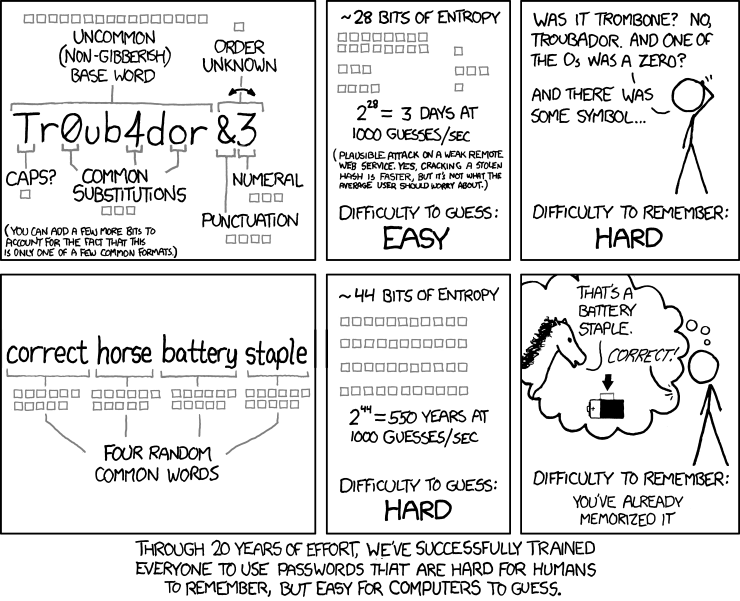
Passwords, passwords, and more passwords.


Wow. 
That is really the only description (appropriate to put on this family-suitable blog). At one point, a student came in with an actual connection issue and said that he would come back later because of the line of students needing passwords reset. Just insane.

So here is the thing. I can understand not using a password for months and forgetting what it was. That is going to happen. But we were resetting passwords that were created yesterday and that DID NOT have overly burdensome complexity requirements. (Although, we are reconsidering the complexity requirements of our primary logins).

This is a growing conundrum as we use more and more personalized websites with login requirements. It's also a balancing act between convenience and actual security and faux-security (if you have to write every overly-complex password down, then it is less secure). 

With the constant background of "I need my password reset" firmly established, the day divided itself into two distinct categories. While I love it when technology and learning integrate, today there was clearly a world of tech and a world of teaching. Feel free to skip around.


Tech-Geek: Websites and Resources


Early morning email came in explaining that a significant number of resources for the class were on blip.tv and that students with iPads could not view them. A quick look at the website showed that the videos were clearly in flash players, so i could understand the issue. Interestingly, though, there was a press release about blip.tv moving to an HTML5 mobile version (read iPad) back in April of 2010.

Empowering support of a wide array of technologies is going to become more and more of an issue with teachers and students. Opponents of BYOT call this the "lowest common denominator" problem and if it is handled wrong, it could become this. 

If the primary use of technology is to have the same lesson or task replicated over and over with each person holding each device, then the task becomes finding the content that is able to be read on the lowest powered/most restrictive device. -- If that is all we do with BYOT, then buy everyone netbooks and save some money. 

If content delivery becomes a minor part of the educational process, though, then we can find the standards that work cross-platform (i am not  a fan of having teachers double-post in multiple formats -- they have a job to do) -- YouTube for video, PDF for reading material, MP3 or Soundcloud for audio, etc. This is the VERBS not NOUNS discussion. Tell students what you want them to DO not HOW you want them to do it.

Corollary: The @40ishoracle is spending a lot of time this weekend playing around with .docx files and the iPad and Edmodo -- sometime pages opens it, sometimes not. Seems to work in oncloud, but not always. Could have something to do with iOS being updated. Part of me wants this problem solved so that we know limitations and parameters. Part of me wants to click file-saveas-PDF and be done with it (like we do with kids who try to turn in Pages files to Windows teachers).


Teach-Geek:

Tech-Geek: Routing Electrons

Let's look at some numbers. 3rd period (almost every student has a 3rd period class) we have about 1/3 of the students actively using devices across the network on day to. capacity on the wireless controller looks to a potential bottleneck as we are 50% capacity. -- We start mapping out a solution to reroute traffic across a VLAN that will not go through the controller after authentication. It's more complicated than our current setup but will be much more efficient. Estimated time - 8 hours. Next week's project.

Teach-Geek: Making Choices

Sat down with a student and his iPad. we went through a list of digital tools that he might want for his iPad. His father had placed heavy lockdown software on the system so that he could not add any new apps without a password. -- tablets without apps are smoothly transitioning oversized cameras.

Tech-Geek: Need More Paper!

Printing. There is a lot of time and effort putting into getting paper with appropriate ink splattered or heat sealed in various patterns. Chrome's CloudPrint is a 90% solution and works great in a number of ways but really does require the chrome browser to be the most effective on Macs (and that chrome print app is awesome). We had a lot of hopes pinned on HP's ePrint solution, but in enterprise level practice, we kept noticing some serious delays. Our engineer went to the interwebs and found a study (yeah, I should link to it, but don't have the source) -- that indicated an 80% or so print within the first 2 minutes, 18% within a half hour, and 2% un-notified fail rate --unacceptable. Placed the printers in the same vLan as student wireless and that gives the HP ePrint app, iOS, and MACs the ability to print directly.

Teach-Geek: Simplifying the Process

Overall, the counseling department is doing some interesting things with AMDG and the cloud. They are using shared docs to keep track of changing numbers in classes during schedule change (replacing the scratch whiteboard that is typical in most schools) and sharing specialized learning profiles with teachers through secure shared docs making it hard to leave the paper laying around and easy to update and notify teachers of changes -- no more reinventing the paper wheel.

Tech-Geek: How much YouTube can a Network take if a Network could take YouTube

I could've used the stormtrooper pic.
At one point, we are seeing 80% of the bandwidth allotted to students being used for YouTube. While not surprising, we start to tweak the caps on that specific app in order to not block out students trying to get to other sites. We are also starting to see our upper limits being touched. Next week's data will give us some more information about whether we need to increase our total bandwidth anymore. But before that...Tech is taking its first day off in 25 days -- hellooo state fair!

Reflection:

In "What is Strategy?", Michael Porter notes that a competitive advantage is sustainable when one is "performing different activities from rivals' or performing similar activities in different ways." BYOT is starting to have that feel. We are not buying the bigger, better #shinypretty. We are not placing all of our hopes in one specific solution. We are not trying to increase productivity solely through efficiency. We are tweaking things in the background so that faculty and students can use their own technology to the best of their ability. We are working with teachers to identify the best skills to operate in a world of technology integration and choice. We are finding places in and out of the curriculum to give students experiences that develop these skills.