Sunday, August 12, 2012

BYOT DayByDay 2: High-Tech, High Teach

The BYOT Day by Day Series will capture the first few weeks of implementation of the full BYOT program at Brebeuf Jesuit. Brebeuf Jesuit is 1:1 BYOT w/ financial aid support for over 25% of its student population in the form of technology grants. It will try to capture some of the tips, tricks, and pitfalls. It will highlight the successes and a few of the frustrations.

Note: I notice that i keep writing this later and later into the morning. This is less to do with my thought process today than with my discovery of stumbleupon (currently my third biggest referrer) - that's all i needed to add to my life!

We went into Day 2 expecting as much frustration as the let down in a superhero franchise. The number two is associated with that over-the-top penguin, doctor octopus, and lycra disco costumes from the phantom zone -- but it also gave us the Joker and Luke's hand getting cut off, so it can't all be bad (did i mention stumbleupon?).

Seriously, we were going to be a man down today (network administrator getting ready to have a baby), we knew there would be a huge spike in user activity (the real network test), and yesterday had just gone a little too smoothly...


Passwords, passwords, and more passwords.
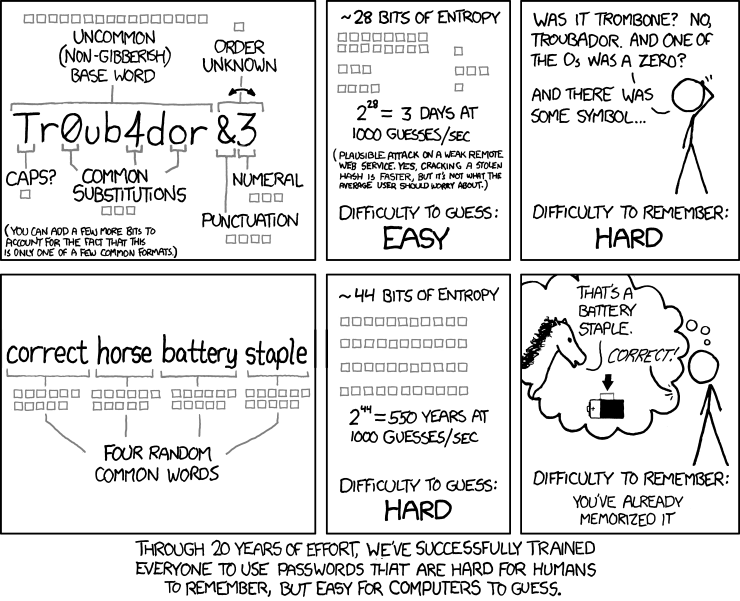


Wow. 
That is really the only description (appropriate to put on this family-suitable blog). At one point, a student came in with an actual connection issue and said that he would come back later because of the line of students needing passwords reset. Just insane.

So here is the thing. I can understand not using a password for months and forgetting what it was. That is going to happen. But we were resetting passwords that were created yesterday and that DID NOT have overly burdensome complexity requirements. (Although, we are reconsidering the complexity requirements of our primary logins).

This is a growing conundrum as we use more and more personalized websites with login requirements. It's also a balancing act between convenience and actual security and faux-security (if you have to write every overly-complex password down, then it is less secure). 

With the constant background of "I need my password reset" firmly established, the day divided itself into two distinct categories. While I love it when technology and learning integrate, today there was clearly a world of tech and a world of teaching. Feel free to skip around.


Tech-Geek: Websites and Resources


Early morning email came in explaining that a significant number of resources for the class were on blip.tv and that students with iPads could not view them. A quick look at the website showed that the videos were clearly in flash players, so i could understand the issue. Interestingly, though, there was a press release about blip.tv moving to an HTML5 mobile version (read iPad) back in April of 2010.

Empowering support of a wide array of technologies is going to become more and more of an issue with teachers and students. Opponents of BYOT call this the "lowest common denominator" problem and if it is handled wrong, it could become this. 

If the primary use of technology is to have the same lesson or task replicated over and over with each person holding each device, then the task becomes finding the content that is able to be read on the lowest powered/most restrictive device. -- If that is all we do with BYOT, then buy everyone netbooks and save some money. 

If content delivery becomes a minor part of the educational process, though, then we can find the standards that work cross-platform (i am not  a fan of having teachers double-post in multiple formats -- they have a job to do) -- YouTube for video, PDF for reading material, MP3 or Soundcloud for audio, etc. This is the VERBS not NOUNS discussion. Tell students what you want them to DO not HOW you want them to do it.

Corollary: The @40ishoracle is spending a lot of time this weekend playing around with .docx files and the iPad and Edmodo -- sometime pages opens it, sometimes not. Seems to work in oncloud, but not always. Could have something to do with iOS being updated. Part of me wants this problem solved so that we know limitations and parameters. Part of me wants to click file-saveas-PDF and be done with it (like we do with kids who try to turn in Pages files to Windows teachers).


Teach-Geek:

Tech-Geek: Routing Electrons

Let's look at some numbers. 3rd period (almost every student has a 3rd period class) we have about 1/3 of the students actively using devices across the network on day to. capacity on the wireless controller looks to a potential bottleneck as we are 50% capacity. -- We start mapping out a solution to reroute traffic across a VLAN that will not go through the controller after authentication. It's more complicated than our current setup but will be much more efficient. Estimated time - 8 hours. Next week's project.

Teach-Geek: Making Choices

Sat down with a student and his iPad. we went through a list of digital tools that he might want for his iPad. His father had placed heavy lockdown software on the system so that he could not add any new apps without a password. -- tablets without apps are smoothly transitioning oversized cameras.

Tech-Geek: Need More Paper!

Printing. There is a lot of time and effort putting into getting paper with appropriate ink splattered or heat sealed in various patterns. Chrome's CloudPrint is a 90% solution and works great in a number of ways but really does require the chrome browser to be the most effective on Macs (and that chrome print app is awesome). We had a lot of hopes pinned on HP's ePrint solution, but in enterprise level practice, we kept noticing some serious delays. Our engineer went to the interwebs and found a study (yeah, I should link to it, but don't have the source) -- that indicated an 80% or so print within the first 2 minutes, 18% within a half hour, and 2% un-notified fail rate --unacceptable. Placed the printers in the same vLan as student wireless and that gives the HP ePrint app, iOS, and MACs the ability to print directly.

Teach-Geek: Simplifying the Process

Overall, the counseling department is doing some interesting things with AMDG and the cloud. They are using shared docs to keep track of changing numbers in classes during schedule change (replacing the scratch whiteboard that is typical in most schools) and sharing specialized learning profiles with teachers through secure shared docs making it hard to leave the paper laying around and easy to update and notify teachers of changes -- no more reinventing the paper wheel.

Tech-Geek: How much YouTube can a Network take if a Network could take YouTube

I could've used the stormtrooper pic.
At one point, we are seeing 80% of the bandwidth allotted to students being used for YouTube. While not surprising, we start to tweak the caps on that specific app in order to not block out students trying to get to other sites. We are also starting to see our upper limits being touched. Next week's data will give us some more information about whether we need to increase our total bandwidth anymore. But before that...Tech is taking its first day off in 25 days -- hellooo state fair!

Reflection:

In "What is Strategy?", Michael Porter notes that a competitive advantage is sustainable when one is "performing different activities from rivals' or performing similar activities in different ways." BYOT is starting to have that feel. We are not buying the bigger, better #shinypretty. We are not placing all of our hopes in one specific solution. We are not trying to increase productivity solely through efficiency. We are tweaking things in the background so that faculty and students can use their own technology to the best of their ability. We are working with teachers to identify the best skills to operate in a world of technology integration and choice. We are finding places in and out of the curriculum to give students experiences that develop these skills.

Friday, August 10, 2012

BYOT DayByDay 1: Let the games begin! (and knock on some wood)

So, I want to gratuitously steal this analogy from @40ishoracle, because it is too perfect for the description. Its a lot like a wedding. Years of planning, talking ad nauseum, trying to account for every last detail and every contingency...and then the day is here.

Looking back...

Building off of some simple answers to a few survey questions three years ago:
Teachers: "What would you need to transform your classroom in the next 3-5 years?"
Students: "What is the biggest change in technology you would like to see?"

Then there were focus groups...
and meetings...

Some intense technical sessions:
"Ok, so now lets see if we can support every single device, keep the filters engaged, use the same login they use for the library, and give them the ability to print"

Lots of impromptu visioning sessions with teachers in the Resource Room (with coffee!)...
A late night mapping of an entirely new network backbone...
Scribbled mathematical notations to figure out how much data was going across the firewall each second...

"Gingerbread supports authentication now. Android is go!" (geek high-fives all around)

Making the pitch: there is no BYOT without financial aid. Every student deserves choice...
Conferences, pilots, presentations, and more...

Discovering Hattie's Law: "worried that they're not really taking notes? simple. tell them to email them to you. They can email these things, right?" -- veteran teachers handle tech like a boss.

lots of discussion...with parents, with students, with teachers...
IT crew pulling the 18 hour shifts to make sure its all ready for...

The Big Day - Rocky Start, or is it?

The first thiing I hear as I walk in the door, we have this awesome freshman. Knows his stuff. Has his codes. Had trouble connecting to the wireless. -- ugh. Techs go into the scramble. Visions of the wireless being down on day one fill our heads. One tech pulls out an iPad, another uses an android phone, the third grabs a netbook. -- two connect just fine. The third gets a blank screen.

Earlier in the summer, we had devised a shortcut that would take students directly to the login screen. Typing that in did not help our single blank screen. Network admin says, "Try this one instead." The new address works - Whew.

New problem: There are 50 signs around the building with the old shortcut... "To the label maker!" -- The intern begins making labels with the new address to place over all the incorrect signs.

1st Period -- The rush?

Two kids walk into the tech area. One is an upperclassman who has forgotten his AMDG (Our Google Apps for Education domain - Ad Majorem Dei Gloriam, "For the Greater Glory of God" -- Don't judge. "Skynet" was a close second) password - easy. Second is a Macbook running Safari - refreshed the browser and done.

A teacher who is a self-described luddite comes in: "It worked like a charm. Students had the computers out and were using them in 0-hour. Three kids didn't bring them, but they know the expectation now. Smooth sailing!" -- I think my jaw dropped a little.

15 minutes go by. Nothing.

No panicked phone calls. Help desk requests are routine. -- We begin prepping one of the remaining mobile carts for delivery. I goto print out "EdLine" access codes for my remaining students (4 parent codes. No students. -- They were all activated and in the system).

Period 3 - #Digcit Class


We've started to pick up on the pattern. Students who transferred after the main data/user upload are not always in the  correct wireless group. Sporadic checkboxes. I go to my class - it is a small one and they are quiet and nervous. We walk through logging into the system and changing passwords. We talk about security and the basic rules of the network. All student activate their AMDG accounts -- only one has an issue. It is solved by the end of the period. I spend the period teaching, not tech-ing. Bliss.

Student conversation in the hallway:
"Have you connected to the wireless, yet?"
"We did 1st period. I don't know how, but my teacher walked us through it."
"Can you show me?"
"I don't know if I remember"
-- not perfect, but I'll take it. (Seriously? It's three steps!)

The first tweet about BYOT:

Period 6 - What do you mean we don't have photos? I have to BLOG!

Little known fact? The fifth fundamental force:
Attraction of Glowing Apples
Yeah. Sorry about that.

It was a nerve-racking day.

About this time, we began to see a pickup in traffic as the newness of school had settled in and student began using breaks to get IT support. But the line was never more than a single student (good) and it was still primarily transfer-students with a missing account (usually one of three) or forgotten passwords.

We saw lots of laptops, including one sweet gaming rig from Alienware. We heard rumors that one student had a backpack with a charging battery built into it.

Teachers were coming to the Teacher Resource Room to talk about their next steps. A few parent emails. A few student emails.

Introduced a lot of teachers to the power of Google Docs and, as teachers do, many of them began to stretch the boundaries of the system as they thought about other things they could do with environment.

We are, of course, knocking on virtual wood as we move into day two. One of my student-followers on twitter chimed in during #BYOTchat last night: "Hold off on that all clear till tomorrow when most teachers want first day of BYOT" -- he is absolutely right.

But I will take a day like today over a day of crashing systems and unmet expectations any day of the week.

Reflection

BYOT is really the first step in an educational transformation. A device in every student's hands...empowering each family to make a CHOICE that is individualized and tailored to a learning style and comfort level -- that is the ground floor.

Students and teachers take the next steps together as they learn new ways to research, create, reflect and experience -- even to lecture :). When we finished the day, the @40ishoracle and I stared at eachother both a little shocked that three years of planning and preparation and discussion and writing had led to this moment -- like a wedding:

"well, we did it..."
"yeah. now it's time to do the next thing..."

But, for now, the "Next thing is learning and teaching. Pretty cool, being a school and all.

Thursday, August 9, 2012

BYOT DaybyDay: 0 - The chaos before the storm

The BYOT Day by Day Series will capture the first few weeks of implementation of the full BYOT program at Brebeuf Jesuit. Brebeuf Jesuit is 1:1 BYOT w/ financial aid support for over 25% of its student population in the form of technology grants. It will try to capture some of the tips, tricks, and pitfalls. It will highlight the successes and a few of the frustrations.

Its 3am on the first day of school. A thunderstorm outside has been painting the sky with brilliant patterns of lightening for the better part of the night. As I sit here in the soft computer glow of a new Chromebook (Samsung 550 - oh the pretty), I am trying to compare this school opening to previous ones and figure out if this week has been more intense than previous openings as we prepare for the first day of school. Non-educators have almost as many misconceptions about the week before school ("oh, you must be enjoying the calm before the storm - heh heh") as they do about the ever-shorter weeks between graduation and the new year ("it must be so nice to have #summersoff).

If You Build It...

One of the smaller IDFs - so many wires to be wireless

So many projects were put in place in preparation for BYOT. The most significant and time-consuming was a backbone and wireless network overhaul. Last year we upgraded the network to wireless-N to increase speed and prepare for new devices. This year we moved each wireless access point to a full Gigabit switch (faster data from one part of the building to the central switches -- fewer bottle necks of data), increased the number of Access Points by 30%, and cleaned out, organized and labeled every wire closet so that we could quickly diagnose and troubleshoot in those precious first days of school.

Out tech philosophy has always been a corollary of "if you build it, they will come" -- something along the lines of "If it is consistently reliable, they will use it." For this reason, we always start with the infrastructure and work our way outward. This year has been no exception, although it is a little nerve-racking fine-tuning and adjusting levels 24 hours before students hit the network.

Exercises in Extroversion

Our assistant principal is constantly trying to understand how the @40ishoracle and I can be introverts when we clearly enjoy speaking to people and even in front of people. We do it, but WOW is it draining. We have been talking BYOT from coast-to-coast (literally) all summer. But there is a different flavor when talking about it in your own backyard. At the opening back-to-school meeting, we reiterated some of the high points of the BYOT infrastructure and support. Questions and comments ranged from the hyper-practical "How do we tell kids to connect to the wireless?" (Answer: Lots of signs posted throughout the building) to the philosophical "But I won't know how to do [insert any technical function] on all of these different devices!" (Response: True. You focus on teaching -- kids will figure out the how and tech will back them up. Paradigms are shifting). -- All-in-all, our teachers are amazing. They took the foundations laid in the BYOT bootcamps and ran with it. 

Note: two of my favorite classroom policies were shared at that meeting -- "Come to class with your device charged up and ready for 40 minutes of learning!" & "Give yourself time to play. If you are not sure how to do something your device, it will take extra time to learn. Don't be late. No Excuses" -- Just brilliant.

The day before school begins is new student orientation and new parent orientation. More extroversion. 10 minute Q&A in front of a packed chapel of parents. I went for the joke at every opportunity. It is exciting listening to our new President tell these parents how BYOT aligns so strongly with our school's mission (long-time readers already know this from the WHY BYOT? series). I heard afterwards that there was one parent who did not know about the 1:1 program. Obviously, not a regular reader of the blog :). I imagine that was a disconcerting moment.

A Last Minute Catch

Heading into the home stretch of the day before, we are walking through every possibility and realize that a procedural change (not having a day where we pass out access codes during the summer) was going to derail us a little with Freshmen. Our logins are not "ACTIVE" until a student logs into a school computer and is forced to change his or her password. At that point, the credentials are passed to the wireless login server. So every student with their own device is not on our network UNTIL they have logged in once. That was a painful e-mail to write to teachers who planned BYOT activities on day one.

Enabling Printing in a Paperless World

Trying to find as many ways to for students to print from as many devices as possible has been a challenge. We finally settled on Google Cloud Print (tied into our AMDG - Google Apps for Education) with HP E-print as a quick backup (we have 5 printers throughout the building that have their own e-mail address labeled right on the printer). Shaping the firewall and network to prioritize printer jobs seems odd, but when your printer server sits outside the building, you want to do everything you can to speed up the process. Cloudprint is still SO much faster. Might configure a printer just of iPrint on the student wireless as well. It is a lot of time and effort to enable something that is in a natural decline (that being paper), but it is a traditional comfort zone for teachers and students, so it cannot be ignored.

Charging Stations are Awesome

American Locker has these wonderful self-locking charging stations. 15 individual slots with a plug. Students place the device. Plug it in. Set a combination and lock the drawer. The units have quick-access keys for the student who forgets the combination. We were even able to get them in a color that matches the decor. 

We have placed two of them in the student commons area and one in the library. Now its just a matter of seeing how many students are able to read the three step instructions with pictures taped to every unit. -- Thinking of picking up a few more of these.

Oh Yeah -- The Classroom

In the midst of all this preparation, we also have a new semester of the Digital Citizenship course, complete with a new focus on information-filtering skills and PLN development. You know that the stress is high when you feel guilty taking an hour to do some big-picture lesson planning.
#Digcit broken down by lesson

Phone Calls, E-mails, and Drop-ins, Oh My

My heaviest parent-contact day in the last 10 was last friday with 8 phone calls and 7 emails. Phone calls can last from 5-20 minutes and emails usually go back and forth about 3 times. They range from "we are between these two models - please choose" to "Soooo, tell me about this BYOT thing". Parents are generally more anxious than the students. They want the student to be prepared. They don't want to waste money. They are anxious about so much choice and freedom.

I am amazed at the number of parents who do not talk to their children about something like this. We live in a culture that has trained-by-advertising that there must be a single "right" choice and that there is a magic formula to success if only you have the right #shinypretty in your backpack. Many of these conversations end up being part of the counter-cultural message of a Jesuit school.

So that is what is going through my mind in this early morning. All things considered, it has been a long, exciting journey. Students are ready (one student told her nervous did-we-get-you-the-right-device mother "mom, we got this. it's all good"); Teachers are excited and a little nervous; IT is exhausted (we have completed over 100 work orders in 3 days in addition to all the BYOT prep and regular getting-ready-for opening routines), but ready for the opening day onslaught. Not bad for the start of a school year.

Questions? drop me a comment below.

Wednesday, August 1, 2012

A small fish in a big pond of Fark

This is a post that I have been hesitant to write, because it seems SO self-serving, but enough people on my social networks have asked about the experience and it has gotten me thinking about some larger issues, so there you go. Interested in the article that got picked up by Fark.com? Read on. Just want the rant? skip to the reflection.
My first tweet about it: Wow...just wow.

How the Fark it happened:

The subject of the post has to do with the #theatershooting and some thoughts I had on digital citizenship. You can read it HERE. What I do not detail in the post is that I was on vacation in Northern Michigan at the time of writing, so at 11:00 PM or so (while playing TICKET TO RIDE), I posted (knowing from experience that this pretty much doomed the post to initial low numbers, but ah well).

I didn't look at my email until 7am (comics to be read and all). A friend of mine emailed that he was enthusiastic about the article and wanted to flag it on Fark.com. Here is the thing: I don't really know what happened next. I know that I received another communication that it was going up on the national boards about 2am, which means one or more people with the power to pull the trigger liked what was written or at least thought it worthy of discussion/flaming. :)

Since it had been up for about six hours, I logged in to see if i noticed any spike in numbers. I had more views at that moment than any other post...ever. In fact, it had already doubled my most popular post in the wee hours of the morning between 2am and 8am. *jawdrop*

It was a nice weekend. Numbers were off the scale. There were over a hundred comments on Fark.com and another handful on the post itself (which is rare for my blog). The comments were generally positive and a few reached the level of insightful, supportive, or interesting. There was a little thread degeneration and 2nd amendment grandstanding. There were also a number of people who thought that the post was tl;dr and verbose (in that it used words like verbose :) ) -- in other words, it was a good exercise in the discourse which has been my theme for the summer.

My fark-enthusiast friend told me that it was relatively well received... a lot more positively than most blogs/first time posts, so that was nice to hear. My in-laws began asking me what to do with this new found fame, and I did briefly entertain the idea of follow-ups or trying to create a fark-acceptable voice -- and I cringed internally. It took me a number of years to check my ego in order to be a better teacher, techie, and human being and I could see that door to the worst part of my personality opening a crack. (hence me not even wanting to write this reflection).

The Farking Aftermath (yes, now i'm just having fun)

  • My blog almost tripled in numbers. There was a lot of secondary pick-up from other blogs and regeneration sites and analytics does a pretty good job of figuring which hits are spam (interestingly, older posts saw a much higher increase in comment spam than the popular one).
  • I picked up a few followers on the blog and a few more followers on twitter.
  • A lot of FB friends (and twitter colleagues) were excited to see the post on Fark, which was flattering and cool.
  • Numbers on the blog are back to normal. The post that started it all is still the most popular one day-to-day except for the day of a new entry (it has replaced the both "defining BYOT/D" post and "Tweeting about Lord of the Flies" as my constant background noise entry).

Reflection:

It is kind of a thrill and an ego boost to see the kind of numbers that I assume some of the more famous bloggers get regularly (although I am not talking about uber-numbers...wow, its no wonder marketers need Klout or some equivalent to succeed).

But what i realized...(and maybe this is why I am writing this)

I think that we as educators in social media are at risk of falling into the same type of trap that I reference in the posting and to a greater extent in my breakdown of PLNs, confirmation bias and echo chambers in postings over this last summer. 

When I log into #edchat, or #byotchat, #flipclass or #pblchat, etc., I know that I am going to be chatting with hard working, innovative teachers who, for the most part, agree with me in theory if not in the details. We all believe in the importance of individualizing for students and feel that the culture of standardized testing is leading us down the wrong path. We believe that there is a wide gulf between the educators who care for kids, work with them day-to-day and try to instill a love of subject matter and life-long learning from the politicians, corporate education lobbyists and talking heads who seem to have the inside track to hearings on capital hill. 

When we discuss new ideas or ways to get started on a new method of learning, the conversations and links are both thrilling and overwhelming. But when we discuss the state of education, we all do the twitter equivalent of shaking our heads (literally, #smh) or making fun of the powers-that-be. I say this not to diminish the power of the former (it is the new professional development) or to discount the latter (we work in a world with far too little camaraderie and support). I say this because the conversation needs to be held beyond the walls of our various hashtag-PLNs.

We, the committed and engaged educators, have a responsibility to ourselves and our students to take these conversations into the marketplace of ideas. We need to share our perspective and worldview with non-educators. Because if enough people outside of our field begin to weigh-in on the ridiculousness that is being spouted in the name of an ill-conceived measure of progress, we might actually be able to change something.
This one is going around on Facebook right now. Ha!

My suggestions:

  1. Be loud and in some cases obnoxious about what is going on in education. When someone brings up an educational idea in conversation, share with that person what the impact of that policy would be. We are the classroom teachers and our opinion matters. 
  2. Refuse to be labeled as part of the status quo. My friend (and former debater) @JakeBonifield really drove this one home for me this week. If we allow ourselves to be labeled as defenders of the status quo then we face two problems. First, we lose the ability to share changes that we are making and to contribute to the discussion of problems that we actually face. Second, and more insidious, we get to be written off in the discourse of education as self-interested and protectionist. Look, is it silly to base teacher compensation on a test score that has been shown to have alternate causality well out of the teacher's control? absolutely. But if the only thing people hear from us is "merit pay is bad", then we become the whiners who can be ignored.
  3. Begin with Parents and Students. As we have been working on our BYOT program and introducing our concept of digital citizenship to our community, I have been amazed at the acceptance and enthusiasm from parents, alums, and even students. When they hear that we have been looking at the problems of modern culture and its impact on education and working with technologists, experienced educators, and families to address those concerns they are thrilled. And they tell their friends. And the word spreads.
  4. Continue the conversation in the general discourse. As we find our voices as reasonable advocates of change that will actually improve education, we need to message that not just on twitter but on newsgroups, sites, and other places where people gather to discuss. Refer interested people to the robust conversation that is taking place on the best educational blogs. (thx. to @dugitman of Downtown Comics for making the next step clear).
Sometime in the last five years and unbeknownst to us, we became the whipping boy for all that was at issue in education. The cultural shift happened fast and sudden and made it so that some of us were unable to respond with logic or reason or even a "seriously?" 

The recovery from that is going to be long and difficult because we, as educators, don't have the money or the influence to get to speak on Capital Hill like the representatives of the Gates Foundation. Change is going to take time because politicians are almost without exception two-faced on the issue: praising specific individual teachers but decrying faceless "bad educators" in the next soundbyte.

But we have our schools, our learning networks, and social media. We can use our voices within the populous to share our expert perspective. We can talk to others about positive changes that we are making and how we are measuring and demonstrating the impact of those changes on our students.

If enough of us do this, then we can begin to break into the channels of the common discourse. We can become the voices that must be heard. We can be invited to share our ideas and visions, our successes and our challenges. We can break through the money-influence barrier that separates us from the politicians who make our lives more difficult.

Heck, we might even get an article on Fark.com.

Monday, July 23, 2012

Spinning the Definition: an Analysis of "Highly Qualified"


It started with a really simple tweet:

Tweet in reference to Washington Post Answer Sheet
The article I referenced describes a decision by the US House of Representative Appropriations Subcommittee to extend the definition of "Highly Qualified Teachers" to include bachelor-degree holding candidates that are still in training to be a teacher or that have recently graduated from training preparation programs such as Teach for America.

I quickly became embroiled with @msmooreenglish, a TFA graduate, in a twitter chat that ranged through the meaning of Highly Qualified, the good and bad of TFA, and other issues. To be clear, my complaint is not with Teach for America or other teacher transition programs. I enjoyed my preparation at Bradley University, but I believe their should be other paths into the field and two of my most respected colleagues have come to education through transition-to-teaching programs (yes, i just went with the "but I have a fill-in-the-blank friend" defense).

My problem is that the requirements for Teach for America and the training that ensues, do not meet the standard of "highly qualified" that was in my head (note: this becomes an important distinction, later):
  • Requirements: Bachelors Degree, 2.5 minimum GPA, US Citizenship
  • Training: A five+ week institute that covers the teaching essentials: practice teaching, observation, feedback, reflection, lesson planning, curriculum and more.
  • Common State Requirement: Passing subject specific test
My counterpart was not arguing against me, but pointed out that Teach-for-America, in opposition to the Answer Sheet's characterization, has high standards of acceptance (fewer than 10% of applicants are accepted, GPA requirement, etc.) and that many of the people entering, herself included, do it to become teachers and not as a career stepping stone. While I think there are some statistical arguments that could be made in counter, she didn't disagree with the crux of my point:

Bachelors + 5 Weeks of training does not make one highly qualified.

I felt a blog post brewing, but realized that I didn't have enough information to make an informed argument about the differences yet. I quickly flipped to the Indiana DOE website to find the checklist for a traditional teacher, fully expecting to create a chart that would show in no uncertain terms what puts the "HIGHLY" in HQT.

My but that is a confusing and not very explanatory or user-friendly site.

So I went to certifcationmap.com which was MUCH clearer. According to the site (other states are similar - some more and some less rigorous), to be a highly qualified teacher in Indiana...Get ready:
  • Bachelor's Degree
  • Completion of a teacher preparation program (traditional or transition available). This MAY require a basic skills test for math, reading, and writing, but there are opt-out paths.
  • And a subject specific test
Now, we could nitpick a few things here:

  • Teach-for-America is working hard to place math and science and asks candidates to be open to the area in which they will teach, so you could argue that candidates will be placed out of their field of expertise -- but that not generally the experience of TFA candidates and, regardless, a subject mastery state test is relatively common.
  • You could argue that semesters of classes and longer periods of reflection and feedback make for a stronger preparation than a 5-week summer school intensive (I probably would make that argument, but not strongly).
  • We could read a lot into the political, economic, and motivational reasons for getting as many teachers classroom ready as possible in a time where staff is being cut and people are leaving the teaching field because of workplace conditions, lack of job security, and a feeling disempowerment with regard to how they are viewed as professionals (psst...that's you "value-added-metrics").


But, for now, lets just talk about definitions:

In order to be a HIGHLY QUALIFIED TEACHER in the United States, you need the standard degree beyond High School, some training in classroom management and a little practical experience, and some demonstration that you know your subject matter.
  • A doctor who graduates medical school with a lot of clocked classroom hours, tons of testing, and a not-insignificant number of hours of clinical, hands-on experience becomes a licensed doctor called a "resident" -- because they still need three or more years of supervised practice (although they do get to wear the long coat)
  • Lawyers who pass the bar may join firms with strong training programs as become junior associates. {see comments below}
  • Mechanics, plumbers, construction workers apprentice for a time period before getting the titles of Journeyman or Master
The dictionary definition of "highly qualified" is roughly "fulfilling necessary requirements to a high degree" (dictionary.com of "highly" and "qualified"). I believe the common-man definition also includes the secondary implication that they are "high in the hierarchy" -- or in other words, not novices.


But, and this might be important, in education "Highly Qualified" is the common man equivalent to "MINIMALLY Qualified" or if that is too harsh, "Basically Qualified."


I am sure that it sounds much better in a political stump speech to say that we want every teacher to be "highly" qualified. But the common man implication of that term does not match the reality of the beginning teacher. We become highly qualified as we have experience, reflect on practices and techniques that work and don't work in the actual day-to-day grind and get feedback from our peers and supervisors.


We should not be classifying our teachers based on what sounds good in a soundbyte. We should not give any teacher designations which make parents and students believe something that is not true. It is word-play like this that makes it more difficult to justify professional development dollars or release time for master teachers to mentor. It becomes easier to discount the impact of an experienced educator on the life and learning of a child It becomes more likely that parents will trade in the teacher-student relationship for a low-cost, low-quality youtube video that walks through the steps of a problem without addressing its meaning.


Rather than debate on whether one particular training program should be given the golden ticket of being qualified to teach a class without hand-holding, lets go back to the basics of what we should expect in teacher preparation and, more importantly, in those critical three years when the teacher is first introduced to the classroom. Let's not only "raise the bar" for teachers, but give them the support they need after they get their certification. Let's acknowledge that a new teacher is not yet "highly" qualified, but can get there with time and effort while at the same time providing an environment that allows students to succeed.


People learn by reflection on their experiences. Its true of students in the classroom. Its true of teachers beginning their careers. Let's honor the learning process in our schools -- and ask the politicians to do the same.

Friday, July 20, 2012

The Information Skills for the 24/7 News Cycle Age: An Analysis of the Reporting of #theatershooting

Abstract: an analysis of high-impact news stories and the 24 hour analysis-reporting cycle as it impacts the teaching of communications and information literacy.

I think the best description of the news-commentary-begets-more-news cycle I have heard came from Jon Stewart on the daily show. I looked (lightly) for the specific clip, but could not find it. If I do, I will be sure to link to it (thx to commenter Slowdog for the link). Essentially:

  • News Channel Reports factual data
  • During the commentary/analysis period, the data is interpreted to draw a more meaningful/slanted conclusion to the benefit of the station, political bias, commentator, ratings, etc.
  • During the next NEWS period, the conclusion is reported as breaking news about the original story citing experts, sources, etc.
This is one of the examples that we use in #digcit to discuss PLN bias and the need to be more savvy about news in the modern era than ever before.

Tragic News Reporting in a 24/7 World
When I woke up this morning, I had every intention of working on a blog post ranting on the House committee hearings to give "Highly Qualified" designation to Teach-for-America graduates or finish up my #bbw12 posts with thoughts on the last keynote...


but, when it rains, it pours.

The first item on my news-reader described the tragedy of the Colorado shooting at the premiere of "Dark Knight Rises" midnight showing -- details are still coming in about this awful event (which is part of the point) and I will leave it to others to assign blame and find meaning...that is for another day and more ambitious people than me.

As I walked into the living room, the TV was already on a national news channel piecing together information and trying to put some meaning or reason upon the chaos. There were very few details at that point and within about 30 minutes the repeat of information made it clear that all of the essential data that the news had, I had absorbed. One hour later (Note: I am in a house full of people watching the news -- my inclination would have been to change the channel -- "0" on Feeling according to the Myers-Briggs), only one new piece of information was being reported:
the mother of the suspect had said to ABC news, "You have the right person. I need to call the police. I need to fly to Colorado," (exact words from Mercury News).
When the mother's statement was released, a careful caveat was given, namely that the statement a) could have been nothing more than confirming a name, b) could be that statement of a person in shock or coping with overwhelming information (certainly), c) did not imply much of anything on face.

My wife and I left the cabin to replace a flat tire.

When we returned, the news was still on. There was still only one story. The significant change was that we had moved out of the fact-news part of the news cycle/day and into the commentary part of the day, which was filled with analysis..

A few hours later, the mother's same statement was being picked apart by multiple retired profilers, three news analysts, and a supplemental scroll of social media commentary along the bottom of the screen. One expert went so far as explain that this mother's statement along with the incident itself was enough to show that there would probably have been indications of psychopathic tendencies demonstrated as early as age 5 (I added the emphasis) - so much for those caveats, neh?

As the afternoon commentary gave way to a news break, my jaw dropped as the news reporter updated the facts of the case known, including a tidbit that experts have begun piecing together a profile of the suspect, including potential childhood signs of behavior. After searching for an hour, looking through different sources, and checking my handy-dandy PLN, there was no indication of this information beyond the speculative comment of one person who had researched no background, conducted no personal interviews, and had no firsthand contact with the suspect, parents, neighbors, or even a kindergarten teacher.

The Stewart Cycle was complete.

Reflection: The Impact of the News-Commentary Symbiosis on Classroom Teaching

I hesitated to write this one so early, since I do NOT want to trade on the misery of others (even we strong "T"s have some couth). But this was such a clear example of something that I suspect goes on every single day. And, if it does, we need to completely rework what we think of in terms of Communications 101, the teaching of research and biases, and even some of the newer lessons on #infowhelm such as PLN development and filtering skills.

Roughly speaking, students should be developing the following skills or, lacking that, should be learning systems that will give them the following information:

Trackback Mechanisms: The ability to trace the origin of a piece of information to its original source. This becomes particularly complicated in the 24-hour news-commentary-news cycle since the need to tag sources in a 30 second soundbyte is often severely diminished to "experts" or "this just in, some say that..."

Development of Strong, Muli-level, Variable bias PLNs: A persons learning network, the web of trusted sources, must include more than echo-chamber inducing conclusions, particularly in an age where commentators provide the analysis that becomes the next hour's news brief. This will be a longer post as we get closer to the school year and the information literacy/research section of the #digcit class. (I started discussing this as it applies to classrooms here, applied to to politics in the Big Tents post, and added a little bit of religion to the mix in this post --ok, this one i think about a lot).

Opportunities to practice Claim Analysis: So much of what we are told takes place in a tone of incontrovertible facts (complete with colorful infographics) that we must allow students the chance to pick apart the actual data and see if the conclusion matches. We cannot rely on the the fact-checking of the news agencies, but must instead use their articles as the source of our own fact-checking.

Credential Analysis: I watched at one point as a CIA profiler, an FBI former profiler, and a psychiatrist who consulted on multiple spree killings went at each other in a barely moderated forum. They referred to the others as ill-informed, dangerous, and irresponsible. I am sure that it made for great TV, but in terms of developing any kind of understanding of the topic at hand, the undercutting made for awful conclusion drawing. We must help students develop a filter of not just information but also a filter of the credentials of potential sources. The critical questioning ability that used to only be necessary for reporters, lawyers, and job interviewers is now an essential skill for well-informed citizens in general.

This is in addition to an added emphasis on the development of information filtering systems (both automated such as RSS feeds and manual scans for much of what was describe above). And introductory lessons on logical constructions and common logical fallacies, would probably also be necessary to be able to pick apart some of the issues I have described.

Where do we teach this? At Brebeuf Jesuit, the first taste of this will come formally in the Digital Citizenship class. Every Freshman takes the course. In order to increase the time given to this we have moved away from other topics that we have felt are less vital. But a one semester freshman class will not be enough. Opportunities to practice this level of information criticism must be used throughout high-school and college (and probably introduced even earlier). Application opportunities exist in Social Studies, English, Religion and more.

We are past the time where we can rely on the conclusions of experts and those who interview the experts to act as our filters. We are past the time where students need only be taught to make sure that a source has the  proper bona fides to be trusted.

It is time that we take responsibility for our own information management systems and develop tools and curriculum that provide students the skills and capacity to take responsibility for theirs.

Monday, July 16, 2012

Educational Analytics: A #bbw12 Idea that Might Not Be Ready for Prime(number) Time

JDs note: This was originally going to be my final blogpost from #bbw12. Turns out I had a lot to say about analytics. Khan Academy Keynote review later in the week.

I am sitting on a porch lakeside in Michigan trying to get motivated to write the last blog on #bbw12. Although, as we get farther and  farther away from the sultry weather, the dazzling lightshows, and amazing food, I realize that there are only a few more things to cover...Away we go...

But first...

Interlude: G-drive and Chromebooks go great together
When I powered up my chromebook yesterday (yes, I have been thinking about typing for over a day now), I was happy to see an upgrade for the old Chromium OS. Clicked the restart and when I logged in, didn't notice much difference. But as I started to flip through G+ photos to prepare for the blog and some updates to the IHSFA website (yeah, I got a webmaster gig), Look what I saw:

Screen capture, saved to G-Drive, Edited in Aviary, Linked to Blog - Cloud Win
first mentioned way back in my "To the Clouds" review of G-drive and apps, I longed for my G-drive to be integrated into the file system of the chromebook so that other apps would see the files with save&open functionality. Now its a reality. Haven't played much to see if it hold cross-users, but this boosted my productivity a lot.
End Interlude

An Introduction to Analytics: What they are, why they matter and what educators need to know

I wish that title described what this blog was going to be about, but I am not sure if I was able to glean from this session what the succinct description said it would be about. So here's what i got:

Ellen Wagner, @edwsonoma, gave the presentation. All credit to her, she made me think a lot about analytics. The session began with a picture on the screen of a tornado barreling down the road -- the simple message: analytics are not going anywhere. We need to learn how to deal with them in education.

She began by describing the levels and roles of analytics. It is not just seeing patterns in data...in fact, that might be considered the lowest level of analysis. It is also looking to find actions that can be taken based on those patterns to influence outcomes. Even better, to be able to predict actions that WILL BE TAKEN based on the digital breadcrumbs left of actions that were taken in the past. Sounds like a lot of science fiction? It probably should: This is what Google, Amazon, and other big-techs have been working on for years (Note from speaker: I won't even go to a shopping website that doesn't have a decent suggestion engine). As data migrates to the cloud and computers have the power locally or cloud-based to crunch the numbers, these predictions become a lot more useful than knowing that JD will buy anything featuring JoCo or @feliciaday.

OK: lots of data. Lots of computing power. We will have the ability to predict and work in advance instead of constantly playing a reactionary game of catch-up. No problems so far...

Question One: To Mine or not-to-mine
Wagner draws a distinction between research, which is predominately empirical analysis and business use, which is a lot of predictive data-mining. "We have been trained that data mining is bad," she notes. She then goes on to explain differences on the structure, collection, and tools based on these two different outlooks. But she begged a question that was not ever answered? Is Data Mining Bad or were we all taught wrong in our master's classes? It is not enough to say, "Business does it". If there are inherent problems with data-mining, those need to be addressed BEFORE we adopt these processes as the educational norm.

She reiterates that educational data is already being tracked and crunched now and that there is no way to avoid it. She talks about analytics maturing to be the biggest thing to hit the classroom since computers


She points out that we (and by "we" she means "the data whisperers" -her AWESOME term - who do this analytic magic) are not sure where to start, which metrics will be most useful, or which permutations to use. -- No wonder some educators are nervous!


She lays out some of the challenges: siloed data (LMS, transactions and outcomes, latent data, demographic data, perceptual data, financials, operations... *whew*). She lays out some of the methodological differences that need to be addressed (including that data-mining question above). She refers to this and the half-hearted attempt to analyze this as leading to "bowls of data spaghetti"

Question Two: Which is the Dog? Which is the tail?
Another challenge she draws out but does not pin down is the move to personalize education. She acknowledges that personalization does (and may continue to) play directly against the need to extract normalized and useable data for the prediction engines. Wow. When put that way, i have a sinking feeling that all of these data acolytes might just be paying lip-service to Student-Centered learning -- say it ain't so Gates Foundation!

Her penultimate example was Moneyball -- a baseball team using analytics to analyze what it takes to win so that they could hire accordingly. "They solved their problems through recruiting...we will have to do it through other means" -- don't get excited. She didn't say what those means were.